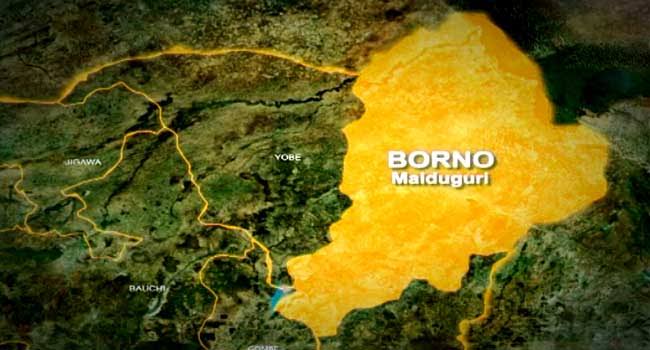
Borno State has recorded its highest-ever school enrolment figure, with 1.8 million learners captured in the 2024/2025 and 2025/2026 Annual School Census (ASC) Report.
Commissioner for Education, Science, Technology and Innovation, Engr Lawan Abba Wakilbe unveiled the report on Friday at the Ministry of Education Work Hub in Maiduguri which indicates a jump of more than 1 million pupils over nine years.
He described the figures as a proof that the state’s rebuilding of its education system is paying off.
“When you look at where we started, 766,551 learners in 2017/2018, and see where we are today, this is not just a number; it is evidence that parents and communities once again trust our schools with their children’s future,” he said.
The commissioner attributed the renewed public confidence in education and sustained state investment in rebuilding and expanding the sector to the improved enrolment which grow steadily from 766,551 in 2017/2018 to the current 1,801,295.
Engr Wakilbe commended Governor Babagana Zulum for his sustained commitment to education, and the Minister of Education, Dr Maruf Tunji Alausa, for driving the national education data agenda, including the Digital National Education Management Information System (DNEMIS).
He also thanked enumerators, head teachers, Local Government Education Authorities and EMIS staff who conducted the census.
The Commissioner for Education said the teaching workforce across primary, junior secondary and senior secondary levels rose from 15,563 in 2024/2025 to 17,565 in 2025/2026.
At the senior secondary level alone, the number of teachers grew from 2,314 to 2,998 and are projected to reach 3,998 in 2027 following the recruitment of 1,000 additional senior secondary teachers in August 2026. Including facilitators supporting Sangaya and mass literacy programmes, the state’s combined teaching workforce now stands at an estimated 19,316.
The Census, according to the commission, shows that the number of functional public secondary schools rose from 34 in 2021 to 129 in 2026, and that the state achieved 100 per cent reporting coverage across pre-primary/primary, junior secondary, senior secondary, and science and technical schools in this census cycle.
He added that the establishment of the Arabic and Sangaya Education Board, the development of High Islamic Colleges, and the ongoing registration and verification of Sangaya centres, enumerators, facilitators, and Islamiyya schools reflect the state’s push to integrate Sangaya education into the wider system formally.
The event was attended by the executive chairman, SUBEB, Prof Bulama Kagu; the executive chairman, BSSEB, Prof Yusufu Gana Balami; the executive secretary, Arabic and Sangaya Education Board, Dr Abdulkadir Abdulkarim; the permanent secretary of the ministry, Hajiya Yakaru Mustapha; the permanent secretary, SUBEB, Dr Hyelni Mshelia. AGILE coordinator, Engr Ibrahim Baba; representative of the commissioner for Planning and Economic Development, Alhaji Adamu Idris Bako; Dr Yusuf Isma, who led the UNICEF and donor partners’ delegation; and Mohammed Abdullahi, director, Borno Civil Society Organisations’ delegation.
Also present were Suleiman Askira (director-general, Statistics), Alhaji Abba Bukar (chairman, SBMC) and Abba Kurama (DPRS, representing the executive secretary, Education Trust Fund).
We’ve got the edge. Get real-time reports, breaking scoops, and exclusive angles delivered straight to your phone. Don’t settle for stale news. Join LEADERSHIP NEWS on WhatsApp for 24/7 updates →
Join Our WhatsApp Channel