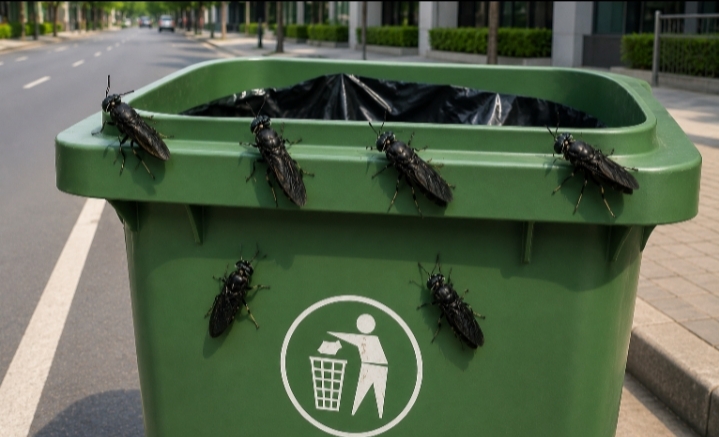
ScientistsScientists in Africa have developed an innovative way of turning organic waste into protein-rich animal feed using Black Soldier Fly (BSF) larvae, opening a new frontier in the continent’s efforts to cut feed costs, reduce imports and tackle mounting waste.
The technology allows the larvae to feed on restaurant food remains, market waste and agro-industrial by-products before being harvested within 14 to 21 days and processed into protein meal for fish, poultry and pigs.
Presented by a Ugandan scientist, Dr Okonya Joshua Sikhu on the sidelines of the 9th Africa Agriculture Science Week (AASW9) in Abuja, the innovation was described as more than an alternative feed ingredient, with the potential to create an integrated business model producing animal protein, BSF oil and organic fertiliser from waste.
The scientist said the technology could address one of the biggest challenges confronting African livestock producers: the high and unstable cost of feed ingredients.
According to Sikhu who is the programme officer, agricultural technology and innovations at the Association for Strengthening Agricultural Research in Eastern and Central Africa (ASARECA ) between 50 and 70 per cent of feed ingredients in some African markets are imported, exposing poultry, fish and pig value chains to international commodity price shocks, freight disruptions and supply shortages.
Sikhu noted that BSF production model sought to reverse that cycle by converting waste into three commercial products. The larvae provide protein meal for fish, poultry and pigs; BSF oil offers an energy-rich ingredient containing lauric acid; while frass, the residual material from the process, can be used as an organic fertiliser to improve soils and crop productivity.
He said, “BSF is not ‘just another feed ingredient’. It is a circular mini-factory with three monetisable outputs… If feed is the biggest cost, why are we still importing protein while our cities throw away nutrients every day?
BSF makes a city problem investable. We are financing the infrastructure that turns market waste into animal protein, regenerates soils and protects farmers from import shocks”.
“Youth and women are not beneficiaries at the edge. They are operators, aggregators, distributors and owners.
The smallest livestock in the value chain may become the biggest lever for feed security, climate action and rural enterprise,” he added.
According to him, evidence emerging from East Africa is strengthening the case for commercial adoption.
Particularly, he said, trials in Kenya and Tanzania have shown promising tilapia performance when fishmeal is partly replaced with BSF larvae meal, while research in Rwanda has recorded faster tilapia weight gain where soybean meal was partly substituted with BSF larvae meal.
Kenyan evidence has further indicated lower chicken feed costs following partial replacement of fishmeal with BSF, alongside improved pig growth with BSF larval meal.
The scientist, however, said the industry would require coordinated investment across the entire value chain to become fully bankable.
The scientist urged investors to finance facility upgrades, support feed mill and farmer-group trials, back youth- and women-led agribusinesses and support testing, certification and regulatory standards.
The technology also offers an environmental opportunity, with the presentation noting that diverting organic waste into BSF bioconversion systems could reduce methane emissions associated with waste disposal while producing organic fertiliser and locally sourced feed.
We’ve got the edge. Get real-time reports, breaking scoops, and exclusive angles delivered straight to your phone. Don’t settle for stale news. Join LEADERSHIP NEWS on WhatsApp for 24/7 updates →
Join Our WhatsApp Channel