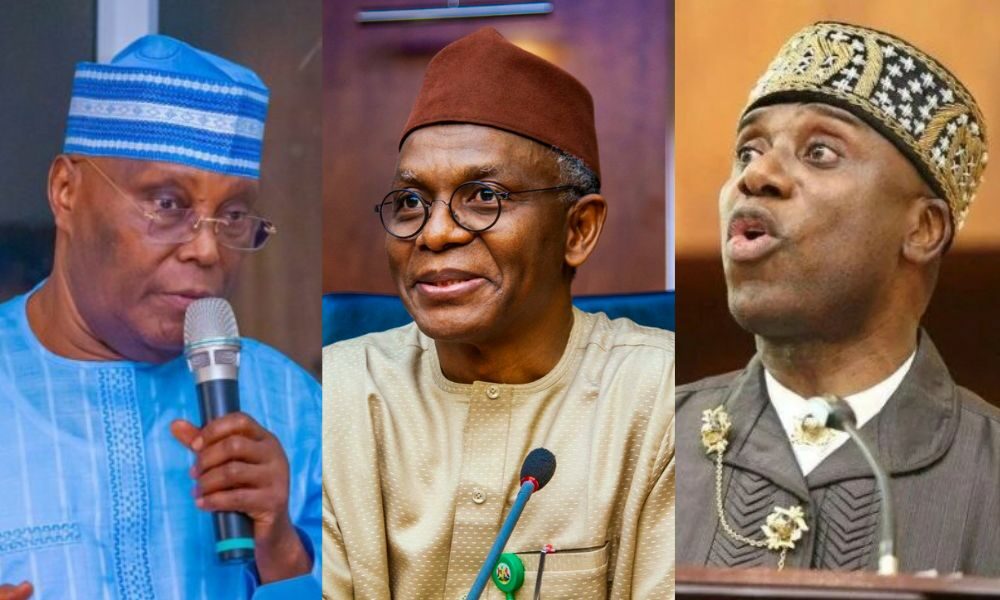
Last weekend’s by-elections for the National Assembly held in some states of the federation provided an interesting political barometer. For political observers like me, it was an opportunity to see if the new kid on the block, African Democratic Congress (ADC) led by former vice president Atiku Abubakar, former Kaduna State governor Nasir El-Rufai, and former Rivers State governor Rotimi Amaechi, could show their political strength.
However, it was not to be. According to official results, the All Progressive Congress (APC)won 12 of the 16 constituencies contested across 12 states. The All Progressives Grand Alliance (APGA) secured two seats, while the Peoples Democratic Party (PDP) and the New Nigeria Peoples Party (NNPP) won one seat each.
The ADC? They got a resounding zero – a political goose egg that must have been harder to swallow than bitter leaf soup.
The outcome dealt a serious setback to the bloc of opposition leaders who had publicly announced their resolve to work together against the ruling party ahead of future elections. Their grand coalition suddenly looked as effective as an umbrella in a thunderstorm.
Presidential spokesman Bayo Onanuga couldn’t resist the opportunity to gloat. In a post on his X handle on Monday, he mocked the coalition after INEC declared the results. “How is the market now?” Onanuga wrote, in a thinly-veiled jab at the coalition which had styled itself as a formidable political force ahead of the polls.
What lessons have we learned from these by-elections? Plenty, and most of them are as predictable as Nollywood movie plots.
First, a typical Nigerian politician is a sore loser of the highest order. Elections are only considered free and fair when they win, and when they lose, democracy is suddenly in danger. Also, once you hear a candidate start shouting and condemning the Independent National Electoral Commission during vote counting, he is losing the election. This has become as reliable as sunrise – the louder the complaints, the bigger the loss.
I have said it several times on this page that no matter the good intentions of INEC for free, fair and credible elections, our politicians are always one step ahead. They’ve turned election rigging into an art form that would make Picasso jealous.
Secondly, it’s obvious that vote buying still remains one of the greatest dangers to our democracy. I heard that in some places, votes were sold for as high as N30,000. That’s more than some people’s monthly salary! No matter how much you preach to the electorate not to sell their votes, they will still do it because of the grinding poverty in the land.
Some will even tell you, “What’s the guarantee that the person who didn’t offer to buy my vote will do well in office? So let me collect my own share now and let tomorrow take care of itself.”
This logic, while flawed, is understandable when you consider that most Nigerians are living from hand to mouth. When politicians show up with cash and rice during elections and disappear for four years, people naturally want to maximise their returns during the brief window of opportunity.
They banned phones from polling booths and there was an outcry about vote buying evidence. But how can we solve this problem? No matter how much we preach about it, it will be business as usual. Sadly, vote buying has come to stay in Nigerian elections like malaria in the rainy season.
The bye election results also show that the opposition ADC still has a lot of work to do to wrest power from the APC or even get some good showing in future elections. It’s not enough to think that because Nigerians are angry with the APC, the votes will automatically flow to ADC. It doesn’t work like that in Nigerian politics.
Many factors come into play, and name recognition, structure, and money remain supreme.
After all, most of the people in ADC are political tourists coming from the PDP or APC. Some of them have spent considerable time in both parties, jumping from one platform to another like political nomads.
Changing party acronyms doesn’t automatically confer sainthood on them or erase their political history.
Atiku Abubakar, for instance, has been in PDP, APC, and now ADC. His political CV reads like a travel itinerary – he’s been everywhere! El-Rufai was in PDP before joining APC, and now he’s in ADC. These are not new faces with fresh ideas; they’re the same old wine in new bottles.
The harsh truth is that Nigerian voters are not as naive as politicians think. When they see the same faces that failed them in other parties forming a new coalition, they naturally ask: “What has changed apart from the party logo?” Until ADC can answer this question convincingly, they’ll continue to struggle.
The opposition parties need to understand that being angry or disgruntled alone is not enough to win elections. Righteous indignation doesn’t translate to votes in the ballot box. They need to engage more with the grassroots, lay out clear policies, and explain why they deserve another chance after their previous failures.
Although I must commend the way ADC has been issuing statements on national issues. They’ve shown more intellectual engagement than most opposition parties. But statements don’t win elections – structures, money, and voter appeal do.
Meanwhile, the PDP and Labour Party are just on life support at the moment. The PDP is still struggling with internal crises and leadership issues, while Labour Party seems to be a one-election wonder that has lost steam after 2023. Their silence during these bye elections was deafening.
For ADC and other opposition parties, these bye elections should serve as a wake-up call. You can’t defeat an organised party with press releases and social media activism. You need structures on the ground, grassroots mobilisation, and most importantly, resources to compete.
The coalition also needs to address the elephant in the room – trust. How can they convince Nigerians to trust them when they couldn’t even trust each other enough to present joint candidates in some constituencies? Unity is not just about taking photos together; it’s about making difficult compromises and presenting a united front.
Come to think of it, if ADC couldn’t win a single seat in bye elections with all the political heavyweights they claim to have, what makes them think they can challenge for the presidency in 2027? They better go back to the drawing board and do some serious soul-searching.
As we approach 2027, the opposition needs to understand that Nigerian voters want alternatives, not recycled politicians. They want fresh ideas, not old faces in new parties. Until they provide this, the APC will continue to win elections, not because they’re loved, but because the opposition is offering nothing better.
The market, as Onanuga asked, is clearly not favourable to the ADC. They need to either improve their product or close shop.
We’ve got the edge. Get real-time reports, breaking scoops, and exclusive angles delivered straight to your phone. Don’t settle for stale news. Join LEADERSHIP NEWS on WhatsApp for 24/7 updates →
Join Our WhatsApp Channel