Despite the federal government’s appeal for waivers from shipping companies and terminal operators, chaos and operational disruptions continue to plague Nigeria’s seaports following the rollout of the National Single Window (NSW) platform.
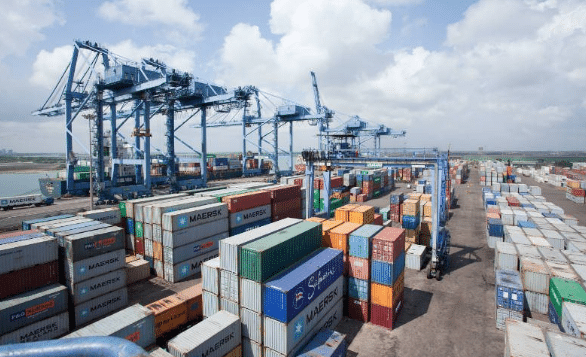
Industry stakeholders say the situation has degenerated into widespread confusion, with thousands of containers currently trapped across major ports, significantly slowing cargo clearance and raising concerns about the new system’s efficiency.
As a result, importers are incurring millions of naira in demurrage and storage charges, further compounding the already high cost of doing business in the maritime sector.
The mounting financial burden is also beginning to ripple through the supply chain, raising fears of delays and potential price increases for goods in the domestic market.
Industry experts attribute the crisis to inadequate preparatory work before the initiative’s launch.
According to them, the committee overseeing implementation failed to carry out comprehensive sensitisation and stakeholder engagement, leaving many operators unprepared for the transition.
They note that a system originally designed to streamline trade and enhance efficiency has instead become a major bottleneck. For instance, stakeholders argue that the “single window” expected to facilitate trade has become a clog in the wheel of cargo clearance and evacuation at the ports.
Further findings reveal that at least 10,000 containers have been delayed due to persistent system integration challenges.
Key regulatory agencies, including the National Agency for Food and Drug Administration and Control (NAFDAC) and the Standards Organisation of Nigeria (SON), are reportedly struggling to synchronise their processes within the new platform.
Confirming the development, an official of the Nigerian Shippers’ Council (NSC) disclosed that complaints from importers have surged since the introduction of the system.
According to the official, who craved anonymity because she was not authorised to speak, the initiative has trapped thousands of containers at the ports.
“Cargoes are trapped, importers are accruing demurrage and storage charges from shipping Companies and Terminal Operators,” she stated.
Also speaking, the National President of the Association of Nigerian Licensed Customs Agents (ANLCA), Emenike Nwokeoji, explained that the push for waivers was driven by pressure from agents over mounting demurrage during the period the NSW experienced glitches.
According to him, “It is important that the public understands that we don’t own those cargoes that are trapped inside the ports due to the glitches suffered by the National Single Window during its implementation.
We clear cargoes on behalf of the Manufacturers Association of Nigeria (MAN), the Chamber of Commerce and Industry, the Importers Association of Nigeria (IMAN), amongst others. So, when we are complaining, it’s not because we own the cargoes, it’s because we take bullets on behalf of the cargo owners for the benefit of the common man on the streets.
“We are eagerly expecting the manner of waiver that will be granted to those cargoes affected by the National Single Window glitches. Of course, we are not expecting the shipping companies and the terminal operators to grant blanket waivers for all trapped cargoes. Only those affected by the National Single Window glitches should be considered for waivers.
“We are monitoring the waiver implementation process. All cargoes affected by the National Single Window glitches should be considered for waivers by shipping companies and terminal operators. That’s our standpoint.”
Key challenges confronting the NSW include integration issues with regulatory bodies, failed documentation submissions such as manifest uploads from shipping partners and difficulties in transmitting Product Certificates for Form M and SONCAP required for PAAR processing.
Other issues include systemic data errors such as limited space for entering trader names, incorrect data formatting, missing 10-digit product codes, ambiguous error prompts, and difficulties linking Tax Identification Numbers (TIN) to user profiles.
Another clearing agent, Osifo Nwadinamuo, described the initiative under the current committee as frustrating, noting that it is too early in the NSW’s life cycle to experience such disruptive hiccups.
He warned that the situation could worsen in the coming weeks, alleging that the committee appears uncertain about how to resolve the crisis.
“The Single window project is a laudable project, it will facilitate trade and reduce the cost of doing business, but currently, as it is, the programme is not being handled as it should be,” he lamented.
He added that the government must take full control of the process rather than leaving it in the hands of a committee he believes lacks adequate knowledge of how similar systems operate in neighbouring countries.
Stakeholders warn that unless urgent corrective measures are taken, including system optimisation, stakeholder training, and improved inter-agency coordination, the policy risks undermining its core objective of trade facilitation.
There are also growing calls for a phased implementation approach and temporary relief measures to cushion the impact on importers.
Also speaking, a Customs broker and managing director of Mikky Excellency Nigeria Limited, Abdulazeez Babatunde Mukaila, said: “I’m one of the foremost enthusiasts that we’ve been waiting for this to come, to play. And I’m very enthusiastic and optimistic that, whatever the snag, we should be able to work around it, at least for a start. But I’m highly disappointed that with all the hype and what I thought was a stakeholder engagement, which is not always done on many other rollouts, we are still at this level.
“It just shows that something is fundamentally wrong. And the earlier we admit it and go back to the drawing board, the better. Having said that, shipping companies and terminal operators, they are businessmen. They pay billions of dollars to take over Nigerian ports. If you are in their shoes, would you take somebody’s stupidity and unpreparedness to rob off on your own business?
“How will you tell people to waive their overhead costs for a single window rollout that some people got money, claim expertise, and then they messed everything up at the launch point? How do you take somebody to lose money because of your own laxity? If I were a shipping line, I wouldn’t waive a damn. I would not.
He added that while the situation has exposed critical gaps, it also presents an opportunity to reassess the implementation strategy.
Meanwhile, Pius Amadi urged the federal government to suspend the NSW until the issues plaguing the system are resolved, warning that the current situation is causing severe losses.
“Presently, the glitch in the NSW is causing congestion at the port, and shipping companies and terminal operators are not ready to bear the failure of another company. Don’t forget that these people are also businessmen who don’t want to lose a damn, and I wouldn’t blame them for that because they are in business to make a profit.
“What we are telling the government and Shippers’ Council is to put the NSW on hold for now because a lot of cargoes are trapped at the nation’s ports presently due to the failure of the system. Our importers are becoming agitated as their consignments incur demurrage daily, and we, as agents, are also affected because we can’t clear our clients’ cargoes. We all welcome and support the rollout of the NSW, but as it is now, we are disappointed with the rollout of the platform,” he said.
He stressed the need for urgent government intervention to resolve the crisis and facilitate the clearance of stranded cargoes, warning that delays could further worsen congestion and economic losses.
We’ve got the edge. Get real-time reports, breaking scoops, and exclusive angles delivered straight to your phone. Don’t settle for stale news. Join LEADERSHIP NEWS on WhatsApp for 24/7 updates →
Join Our WhatsApp Channel