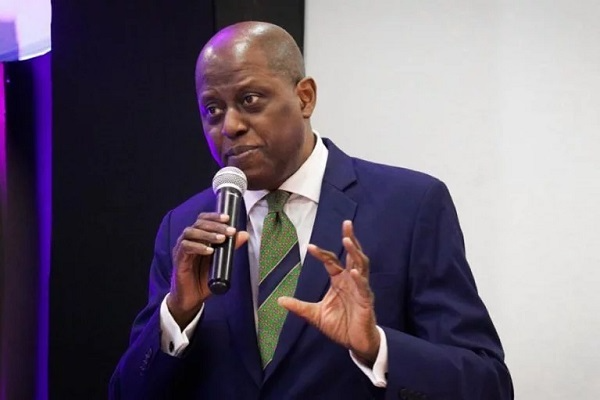
Governor of the Central Bank of Nigeria (CBN), Olayemi Cardoso, has advised company directors to place risk management at the heart of corporate governance, warning that the stability of Nigeria’s financial system will depend on how effectively boards respond to a new regime of stricter regulatory expectations.
Speaking at the induction ceremony of new members of the Chartered Institute of Directors Nigeria (CIoD), in Lagos, Cardoso said the post-recapitalisation era demands a shift from passive oversight to active stewardship, with directors required to anticipate and manage risks in an increasingly complex financial environment.
His remarks come on the heels of the conclusion of the latest recapitalisation exercise in the banking sector, a reform aimed at strengthening resilience, boosting investor confidence and positioning institutions to support long-term economic growth.
Cardoso stressed that recapitalisation alone would not guarantee stability unless matched by robust risk governance frameworks at the board level.
He pointed to the introduction of Risk-Based Capital Requirements as a defining policy shift, noting that capital adequacy would now be measured not just by size, but by how well it aligns with an institution’s risk profile.
“The era of regulatory forbearance is over,” he said, urging directors to take full responsibility for ensuring compliance and embedding risk awareness into strategic decision-making.
He outlined key expectations for boards, including stronger oversight of credit, market and operational risks, as well as ensuring that capital planning reflects both current exposures and emerging threats.
According to him, directors must discourage reckless lending and avoid excessive risk-taking that could undermine financial stability.
The CBN governor also referenced recent regulatory interventions to underscore the consequences of weak governance. He recalled the dissolution of boards and management of three banks in 2024 over governance lapses, as well as earlier actions taken during the 2009 banking crisis triggered by insider abuses and poor board oversight.
“These episodes reinforce a consistent lesson: where governance fails, the regulator must act to protect depositors and the wider economy,” he said.
To strengthen board accountability, Cardoso highlighted a raft of measures introduced by the apex bank, including tighter rules on insider-related lending, enhanced disclosure requirements, and stricter “fit and proper” criteria for directors. He added that succession planning directives and mandatory board evaluations were designed to prevent leadership gaps and improve continuity.
He maintained that the new regulatory framework is not punitive but enabling, providing directors with the tools to exercise disciplined and forward-looking stewardship.
Cardoso emphasised that their roles extend beyond boardroom formalities to safeguarding institutional integrity and rebuilding stakeholder trust. “Directors must act as custodians of stability in a period of elevated regulatory scrutiny and rapid economic change,” he said, noting that the banking sector’s central role in the economy means governance standards must reverberate across all industries.
Also speaking, President of the Chartered Institute of Directors Nigeria, Adetunji Oyebanji, urged members to move beyond ceremonial participation and play a more active role in shaping policies that will define Nigeria’s economic trajectory.
Oyebanji stressed that membership of the Institute goes beyond prestige, describing it as a dynamic platform that derives strength from the intellectual contributions of its members.
“The value of your membership is not a static benefit, it is a dynamic ecosystem. Its strength depends entirely on the intellectual and professional energy you invest back into the Institute,” he said.
He explained that the Institute serves as a strategic bridge between the private sector and government, amplifying members’ concerns on industry trends and regulatory frameworks through structured engagement with policymakers.
“Through our institutional framework, your individual concerns regarding industry trends or regulatory models are amplified. We engage with government and regulatory bodies on your behalf, providing a form of professional insurance that protects the integrity of your vocation and the stability of your business,” he added.
The CIoD president, however, cautioned that the relevance of the Institute in national development would depend largely on the active participation of its members rather than financial contributions alone.
“For the Institute to remain important in national development, it requires more than your subscription; it requires your intellectual capital,” Oyebanji said.
We’ve got the edge. Get real-time reports, breaking scoops, and exclusive angles delivered straight to your phone. Don’t settle for stale news. Join LEADERSHIP NEWS on WhatsApp for 24/7 updates →
Join Our WhatsApp Channel