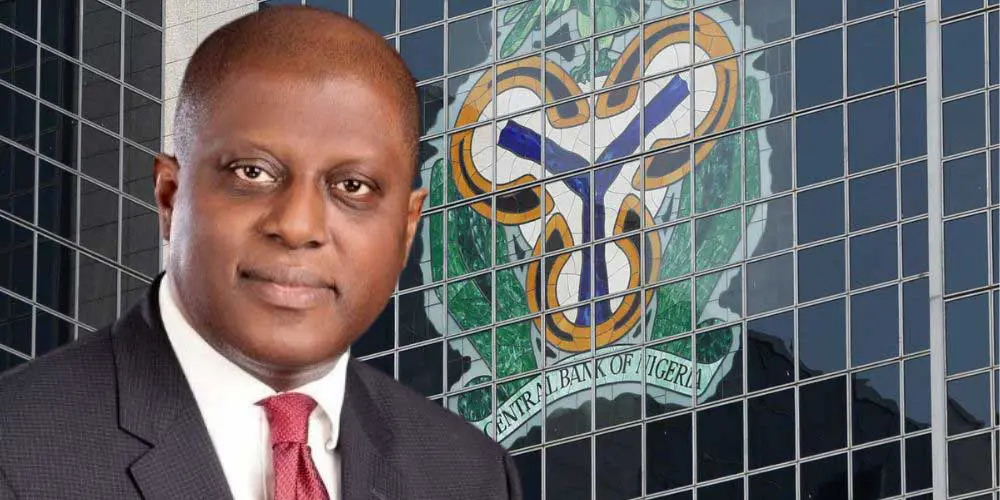
This article highlights some of the monetary policy reforms of the Central Bank of Nigeria that recently won it the global recognition as Central Bank of the Year. MARK ITSIBOR reports
In the austere halls of global finance, recognition is rarely handed out lightly. It is earned through discipline, tested by crisis, and validated by results. For the Central Bank of Nigeria (CBN), the journey from the edge of economic instability in 2023 to global acclaim in 2026 tells a story of reform, resilience and restored credibility.
That story reached a defining moment in London, where the Central Banking Awards Committee named Nigeria’s apex bank Central Bank of the Year 2026.
The recognition, part of the 13th annual Central Banking Awards, placed the CBN among the world’s most effective monetary authorities—an outcome few would have predicted just three years earlier.
In 2023, Nigeria’s macroeconomic landscape was marked by deep structural imbalances. Inflation was rising sharply, the naira was under sustained pressure, and foreign exchange liquidity had dried up.
The country faced a backlog of approximately $7 billion in unmet FX obligations, while multiple exchange-rate windows distorted price discovery and widened arbitrage opportunities.
Investor confidence had weakened significantly, and the financial system itself risked being undermined by inconsistent policy signals. The situation demanded urgent and decisive intervention.
When President Bola Ahmed Tinubu assumed office in May 2023, his administration moved quickly to initiate sweeping economic reforms, including the removal of fuel subsidies and the liberalisation of the foreign exchange market. However, these measures initially intensified macroeconomic pressures, triggering currency volatility and pushing inflation to a 28-year high of 34.80 per cent by December 2024.
It was within this complex and volatile environment that Olayemi Cardoso took over leadership of the CBN in October 2023. His appointment marked a turning point in the central bank’s policy direction.
From the outset, Cardoso and his team signalled a clear departure from previous approaches. The emphasis shifted decisively toward orthodox monetary policy, institutional transparency and market-driven mechanisms. The goal was not merely to stabilise the economy, but to rebuild credibility—both at home and abroad.
One of the most critical reforms undertaken by the CBN was the restructuring of Nigeria’s foreign exchange market. The bank dismantled the long-standing multiple exchange-rate regime and replaced it with a unified, “willing-buyer, willing-seller” framework.
That transition was supported by the introduction of an electronic foreign exchange matching system, which brought real-time transparency, improved regulatory oversight and enhanced price discovery.
The impact was immediate and far-reaching. Market distortions began to ease, speculative pressures reduced, and the gap between official and parallel exchange rates narrowed dramatically—from over 60 per cent in 2023 to less than two per cent by late 2025.
Equally important was the CBN’s effort to clear the backlog of FX obligations that had weighed heavily on investor sentiment. By addressing these liabilities, the central bank restored confidence among businesses in key sectors such as aviation and manufacturing, which had struggled with access to foreign currency.
These reforms also contributed to a significant rebuilding of Nigeria’s external reserves. By November 2025, gross reserves had climbed to $46.7 billion, the highest level in nearly seven years. Unlike previous periods, this growth was driven largely by improved FX inflows, stronger non-oil exports and renewed investor participation, rather than heavy reliance on external borrowing.
The International Monetary Fund (IMF) acknowledged these gains, noting that Nigeria’s FX reforms had strengthened market functioning, improved liquidity and enhanced credibility in price formation.
While stabilising the exchange rate was critical, the CBN also faced the urgent challenge of curbing inflation. Years of accommodative monetary policy, combined with structural inefficiencies and fiscal pressures, had entrenched inflationary dynamics in the economy.
In response, the central bank adopted a firm tightening stance. The monetary policy rate was raised from 18.75 per cent in 2023 to 27.5 per cent by late 2024, signalling a strong commitment to price stability. Though the policy initially increased borrowing costs, it helped to anchor inflation expectations and restore discipline to the financial system.
By early 2026, the results had become evident. Inflation declined sharply to 15.10 per cent, with food inflation easing significantly. This allowed the CBN to cautiously begin easing rates, reducing the policy rate to 26.5 per cent while maintaining a vigilant stance against inflationary risks.
Beyond headline policy adjustments, a defining feature of the CBN’s reform programme was its focus on institutional integrity and governance. Cardoso’s leadership prioritised transparency, accountability and operational efficiency within the central bank.
Quasi-fiscal interventions—previously used to channel credit into various sectors—were discontinued, in line with the CBN’s statutory mandate. These interventions, though initially intended to stimulate growth, had contributed to excess liquidity and inflationary pressures.
Internally, the bank undertook a comprehensive restructuring. Staff rationalisation exercises were carried out to eliminate redundancies and strengthen operational efficiency, while a new compliance framework was established to oversee financial crime supervision, corporate governance and market conduct.
Digital transformation also became a cornerstone of reform.
The CBN deployed advanced analytics and artificial intelligence tools to enhance decision-making, improve regulatory oversight and boost productivity. These initiatives not only modernised the institution but also aligned it with global best practices.
The banking sector, a critical pillar of economic stability, also benefited from targeted reforms. Recognising emerging risks related to capital adequacy and systemic resilience, the CBN introduced a comprehensive recapitalisation programme in 2024.
Under this initiative, banks were required to raise fresh capital based on their operational licences, with strict criteria ensuring that capital consisted of paid-up share capital rather than retained earnings. The response from the industry was robust, with over 30 banks accessing capital markets and a majority meeting the new requirements ahead of the March 2026 deadline.
In parallel, the CBN advanced its transition toward Basel III regulatory standards, strengthening risk management frameworks, enhancing liquidity monitoring and improving stress-testing mechanisms. These measures have reinforced the resilience of Nigeria’s financial system in the face of both domestic and global shocks.
Financial system reforms extended beyond traditional banking. The CBN also intensified oversight of digital finance, fintech operations and payment systems, recognising their growing importance in Nigeria’s evolving financial landscape.
Through its regulatory sandbox, the bank supported innovation while ensuring compliance with regulatory standards.
Another milestone achievement was Nigeria’s removal from the Financial Action Task Force grey list in 2025. While this outcome reflected coordinated efforts across multiple agencies, the CBN played a central role by strengthening anti-money laundering controls, improving reporting standards and enhancing supervisory frameworks.
This development significantly improved Nigeria’s international financial standing and reduced transaction frictions for businesses operating across borders.
Global financial institutions and rating agencies have taken note of these reforms.
Upgrades to Nigeria’s credit outlook by major agencies reflected improved macroeconomic fundamentals, stronger reserves and enhanced policy credibility. Investor appetite also rebounded, as evidenced by the oversubscription of Nigeria’s 2025 Eurobond issuance.
For the Central Banking Awards Committee, these cumulative achievements underscored a central theme: the restoration of confidence.
Confidence in the naira as a more stable currency. Confidence in Nigeria’s financial markets as transparent and functional. And confidence in the CBN as an institution capable of delivering on its mandate.
Yet, even as the global recognition highlights progress, the path ahead remains demanding. Inflation, though moderating, is still above desired levels. The banking sector recapitalisation programme must be fully completed, while ongoing reforms in financial market infrastructure require sustained commitment.
There is also a broader institutional challenge—strengthening the legal and operational framework governing monetary policy. Calls to modernise the CBN Act to reinforce central bank independence and prioritise price stability reflect the next phase of reform.
Nonetheless, the transformation achieved over the past two years represents a significant shift in Nigeria’s economic trajectory.
From a period marked by uncertainty and fragility, the country has moved toward greater stability and credibility. This transition has not been without cost. Policy tightening, currency adjustments and structural reforms have required sacrifice from businesses and households alike.
But for policymakers, the long-term objective has remained clear: to build a more resilient, transparent and sustainable economic system.
The recognition of the Central Bank of Nigeria as Central Bank of the Year 2026 ultimately reflects more than a set of policy actions. It signals a broader institutional reset—one defined by discipline, clarity of purpose and a commitment to global standards.
As Nigeria continues its economic recovery, the CBN’s experience offers a compelling case study in how decisive leadership and coherent policy can restore stability, rebuild trust and reposition an economy on the global stage.
We’ve got the edge. Get real-time reports, breaking scoops, and exclusive angles delivered straight to your phone. Don’t settle for stale news. Join LEADERSHIP NEWS on WhatsApp for 24/7 updates →
Join Our WhatsApp Channel