
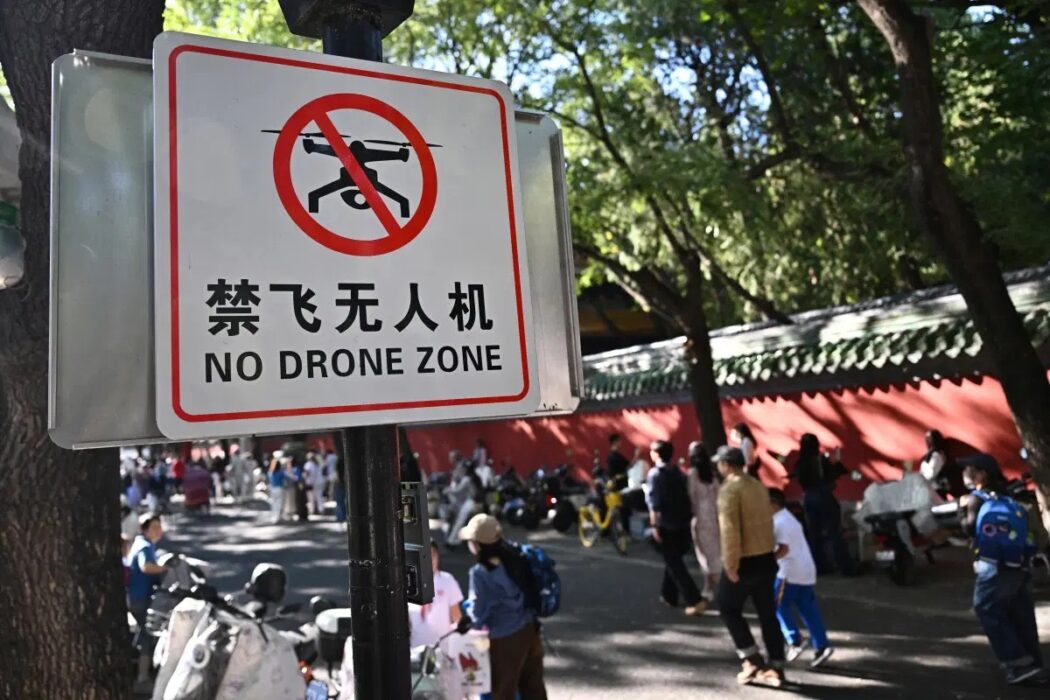
China has announced a ban on the possession and storage of drones in Beijing, citing the need to strengthen security in the capital.
The new regulations, announced on Sunday, will take effect on November 15 and prohibit residents from possessing or storing unmanned aerial vehicles (UAVs) within the city.
The rules also ban the transportation of drones and their components into Beijing, while drone flights within the capital’s airspace will remain prohibited without official authorisation.
Authorities said the measures were necessary to “safeguard the security of the capital.”
Under the new regulations, drone owners in Beijing will be required to dispose of their devices or move them out of the city before the November 15 deadline.
Those who fail to comply could face confiscation of their drones and fines.
The authorities will provide subsidies to owners who surrender their drones for disposal, while registered drone owners will also have the option of selling their devices back to the government.
Alternatively, owners can make use of free shipping services to send their drones outside Beijing.
The latest measures further tighten restrictions introduced in May, when Beijing banned the sale of drones but allowed existing owners to retain their devices, subject to registration.
Concerns over airspace security in the Chinese capital, which has a population of about 22 million, were heightened in June after a small plane crashed into the city’s tallest skyscraper, killing the pilot and injuring 13 people.
Commenting on the new drone restrictions, Drew Thompson, a senior fellow at the S. Rajaratnam School of International Studies at Singapore’s Nanyang Technological University, said the decision reflected the political sensitivity of Beijing.
“The outright ban is really an indication of how politically sensitive Beijing is and how important it is politically to the Communist Party,” Thompson said.
“The Communist Party is trying to achieve absolute security and a complete ban on drones in the capital is one way to approach that.”
He said the restrictions went beyond concerns about possible terrorist attacks, noting that drones could also be used for surveillance and counter-intelligence activities.
He added that the ban was not just about “terroristic threats” but also potentially about counter-intelligence, since drones are also used for surveillance.
Drone flights in Beijing’s airspace already require permission from the authorities.
However, the new regulations allow for possible exemptions where drones are required for special purposes, including counter-terrorism operations, agriculture, disaster relief and research.
We’ve got the edge. Get real-time reports, breaking scoops, and exclusive angles delivered straight to your phone. Don’t settle for stale news. Join LEADERSHIP NEWS on WhatsApp for 24/7 updates →
Join Our WhatsApp Channel