
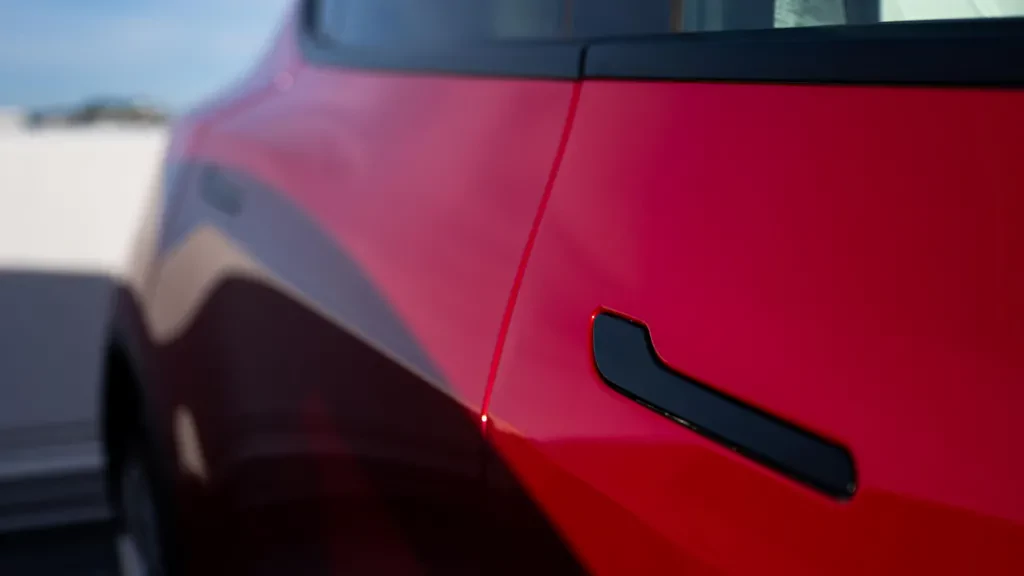
China will ban the use of hidden or “flush” car door handles from next year, citing growing safety concerns, a move that could reshape vehicle design globally and particularly affect electric vehicles popularised by Tesla-style minimalism.
The new regulation, announced on Monday by the Ministry of Industry and Information Technology, will take effect on January 1, 2027. It requires all vehicles to be fitted with mechanical door handles on both the interior and exterior, ensuring doors can be opened even if electronic systems fail.
Car models already approved for sale will be granted a two-year grace period to comply with the new standards. While the rules apply to all vehicles, they are expected to impact EVs the most, as many rely on retractable or electronic handles to improve aerodynamics.
Authorities said the changes were aimed at improving automotive safety, following rising concerns that sleek door designs may become unusable during emergencies. In one widely reported incident last October, rescuers struggled to open the doors of a burning Xiaomi electric vehicle after a crash in Chengdu. The driver, who was reportedly intoxicated, died at the scene.
Flush door handles were first popularised by Tesla with the launch of the Model S in 2012 and were later widely adopted by Chinese EV manufacturers seeking high-tech appeal and marginal efficiency gains from reduced drag.
Analysts said the decision reflects China’s growing influence as a global automotive rule-setter. Bill Russo, founder of Shanghai-based consultancy Automobility, said the regulation is likely to be echoed in other regions, particularly Europe, as Chinese EV platforms increasingly shape global design norms.
Under the new rules, all doors except tailgates must feature an exterior mechanical release. Interior handles must also be more visible, including the use of permanent graphic markings.
China, the world’s largest EV and passenger vehicle market, is already exerting significant influence on global standards. Data released last month showed that BYD overtook Tesla in global EV sales last year for the first time.
Tu Le, founder of Sino Auto Insights, said automakers selling vehicles across multiple markets will now face tough design decisions. “Companies like Tesla, Kia and other global manufacturers will need to choose whether to redesign for China alone or apply the changes worldwide,” he said, noting that the transition could be costly for brands relying on unified global designs.
We’ve got the edge. Get real-time reports, breaking scoops, and exclusive angles delivered straight to your phone. Don’t settle for stale news. Join LEADERSHIP NEWS on WhatsApp for 24/7 updates →
Join Our WhatsApp Channel