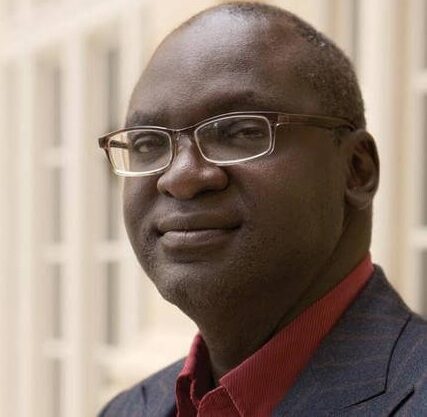
International human rights lawyer Emmanuel Ogebe has stated that the wave of mass killings in Nigeria has a precise religious dimension, arguing that attacks accompanied by chants of “God is great” in Arabic were beyond ordinary communal violence.
Speaking on ARISE News Prime Time on Monday, Ogebe warned that the patterns of violence in the Middle Belt and parts of northern Nigeria reflect systematic and targeted assaults on communities identified by faith.
“There’s no doubt that there is collateral damage. But the fact of the matter is, in the US a couple of weeks ago, a National Guardswoman was shot in the head by a guy screaming ‘God is great’ in Arabic. The people who killed Alice’s family were screaming, ‘God is great’. You cannot look at both situations and say religion was not a factor,” he said.
According to him, the attacks followed identifiable patterns. “These folks are very systematic because they look at the communities that they are certain fall within a certain identity and they target them,” Ogebe added.
Reacting to United States President Donald Trump’s renewed designation of Nigeria as a ‘Country of Particular Concern’ over alleged Christian persecution, the lawyer said the decision was justified and overdue.
“The designation is justified and has been justified for many years. The commission that made the recommendation began making recommendations, I think, in 2009. For about 15 years, they’ve been recommending, and it’s only happened twice,” he stated.
Ogebe recalled that similar action should have been taken after the 2000 Shariah riots. “By the year 2000, we had the Shariah riots in northern Nigeria that killed 3,000 Christians across four states. At that time, they should have recommended Nigeria for designation,” he said.
Describing his experience documenting atrocities over the years, Ogebe said the scale of killings has been devastating. “It’s very depressing work. None of us would have anticipated that Nigerians would be dying in droves like they are now,” he noted.
He cited recent incidents to underscore his point. “On 13 June, there was a massacre in Yelwata. The number of people killed that night — 278 — was more than the people killed in the war between Iran and Israel, in which missiles and aeroplanes were used,” he said.
He also referenced attacks in Plateau State. “That same night, 54 people were slaughtered in ZK, Plateau State… That is what genocide looks like.”
Dismissing arguments that the violence is primarily driven by competition over land, Ogebe said religious ideology remains central. “The message is, let’s go and take out the infidels. So from the very beginning, there’s a religious connotation,” he stated.
He narrated an encounter involving a Fulani herdsman employed by the spouse of a judge, “One day, he came back and said, ‘I nearly killed an idiot infidel today.’ We are saying that judicial officers are frustrated because of the impunity of these people.”
Ogebe also pointed to statements by Boko Haram’s founder. “Mohammed Yusuf preached, and he said, ‘Listen, you are wiping out the infidels.’ He said Yar’Adua flew me on a presidential jet and begged me to stop killing the infidels, and I’m not going to do it,” he said.
On allegations against Fulani ethnic militias, he described the acts he said were intended to instil terror. “One of their hallmarks is, if they meet a pregnant woman on the farm, they will slaughter her, pull out the foetus and butcher it. It doesn’t get more graphic than that,” Ogebe said.
He added that displacement has been widespread. “There are over 300 communities in the Middle Belt now that have been sacked and are occupied by Fulani ethnic militias. And I can’t point to one Fulani village that has been occupied,” he said.
Rejecting descriptions of the violence as farmer–herder clashes, Ogebe said, “When you come into a community, and you kill a three-year-old and a four-year-old, a three-year-old cannot clash with you. These are invaders who are coming in and wiping out people on their ancestral lands. It’s not a clash.”
He disclosed that his work with the International Criminal Court had progressed beyond preliminary stages. “After they investigated, they finally indicted not only Boko Haram but the Nigerian Army for atrocities. They have indictments as we speak. It is a lack of political will to proceed — that’s why it hasn’t happened,” he said.
Ogebe also reflected on U.S.–Nigeria relations. “The US and Nigeria have had amazing historic relationships. But right now we’re at a point where there’s a real drift,” he said, warning of a more rigid posture from Washington. “They’re at a point where they’re saying, if you will not protect your own people from being killed, we’ll go ahead and do it ourselves.”
We’ve got the edge. Get real-time reports, breaking scoops, and exclusive angles delivered straight to your phone. Don’t settle for stale news. Join LEADERSHIP NEWS on WhatsApp for 24/7 updates →
Join Our WhatsApp Channel