
The push for compressed natural gas (CNG) and electric vehicles (EVs) is driving the expansion of Nigeria’s automotive industry, with the number of functional vehicle assembly plants nationwide now reaching about 40, the National Automotive Design and Development Council (NADDC) has said.
The director-general of NADDC, Joseph Osanipin, disclosed this in Abuja at a media workshop organised for members of the Commerce and Industry Correspondents Association of Nigeria (CICAN), where he called for increased private-sector investment in CNG conversion centres, refuelling stations and EV charging infrastructure.
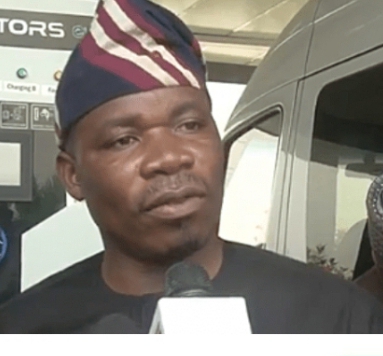
Osanipin, who was represented by NADDC’s director of public relations, Mrs Susan Taiwo, said the industry had recorded a major turnaround from more than two decades ago when virtually no assembly plant was operational.
“When we started, those of us who were there know that there was no assembly plant in Nigeria that was working.
“But by the special grace of God, we have almost 40 assembly plants now that are functioning, at least 40 that are assembling cars here in Nigeria,” he said.
He identified Innoson Motors as the largest assembly plant and cited Mikano, traditionally known for power-generating equipment, as another company that has ventured into vehicle assembly.
According to Osanipin, the industry is now entering another phase of transformation as Nigeria embraces cleaner transportation technologies, particularly CNG and EVs.
He described the shift as part of a broader “clean air revolution,” stressing that Nigeria must keep pace with the global transition towards alternative-energy vehicles.
The NADDC boss further disclosed that the Council had commenced licensing CNG vehicle conversion centres across the country and was training technicians in all six geopolitical zones on the conversion and installation of CNG systems.
“We are creating centres for conversion, for CNG, worldwide and nationwide,” he said, adding that hundreds of technicians were being trained in each geopolitical zone.
He urged investors to establish CNG refuelling stations and EV charging facilities nationwide, arguing that inadequate infrastructure could slow the adoption of alternative-energy vehicles.
On electric vehicles, Osanipin said NADDC had conducted pilot projects in selected universities and installed charging stations, but stressed that scaling up the infrastructure required substantial private-sector investment.
“There is no way you can travel with an electric vehicle now in Nigeria if investors don’t come in and start putting charging stations all over,” he said.
He said widespread charging infrastructure would give EV owners greater confidence to undertake long-distance journeys across the country.
Osanipin said NADDC was positioned to serve as a catalyst for the transformation of the automotive industry, rather than being the sole investor in the sector.
“The automotive industry is not a government industry. It is for individual investors to come in and take up from where we stop and invest, especially in the new trend of CNG and electric vehicles,” he said.
He called for increased private-sector participation in charging infrastructure, CNG conversion and other emerging areas of the automotive value chain.
Osanipin urged investors to build on the foundation laid by NADDC and take advantage of opportunities emerging from Nigeria’s transition to CNG and electric mobility.
“We cannot be left behind. We have to dance to the trend,” he said.
We’ve got the edge. Get real-time reports, breaking scoops, and exclusive angles delivered straight to your phone. Don’t settle for stale news. Join LEADERSHIP NEWS on WhatsApp for 24/7 updates →
Join Our WhatsApp Channel