
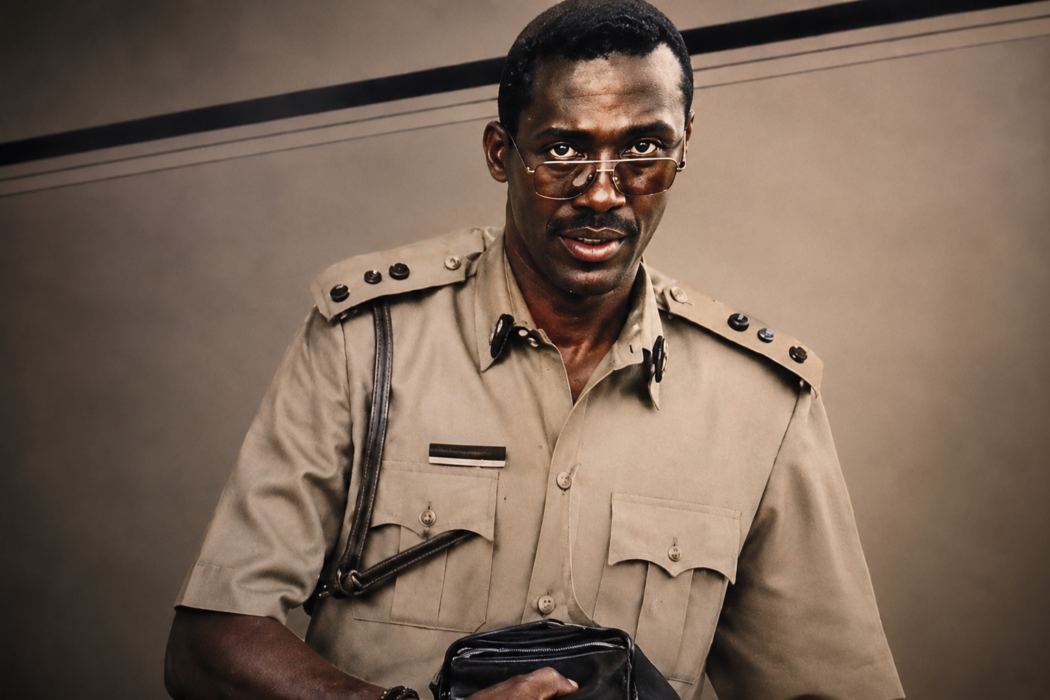
More than three decades after the military dictatorship of late Head of State, Gen. Sani Abacha, one of the regime’s most controversial security officers, Col. Frank Omenka (rtd), has publicly defended his role during the era widely associated with arbitrary detentions, torture and gross human rights abuses.
Speaking during a webinar hosted by The Experimental Leadership in Africa (TEL Africa), Omenka came under intense scrutiny from veteran journalists, pro-democracy activists, and former detainees, who questioned his apparent lack of remorse for the methods employed by security agencies during the Abacha years.
The session, moderated by veteran journalist, Adeolu Adewunmi, featured notable participants, including former editor and pro-democracy activist Kunle Ajibade and publisher of Premium Times, Dapo Olorunyomi. It quickly evolved into an emotional reflection on one of Nigeria’s darkest political periods.
While participants recounted experiences of repression and state brutality, Omenka remained largely defiant, insisting that his actions were dictated by military duty rather than personal conviction.
Throughout the tense exchange, the retired military officer repeatedly framed his role as that of a disciplined soldier carrying out lawful orders.
“As far as I was concerned, I did my job to the best of my ability. I could have made mistakes, but professionally, I did my job. I did my job very, very well,” Omenka said.
When pressed on whether he regretted his actions during the military era, he remained unyielding.
“I wasn’t looking at morals. I was looking at the assignment. I was a soldier. I followed orders. I had to account for my duties to my superiors. There were no emotions or sentiments attached to what I did,” he stated.
Col. Omenka added, “I was under command. I had superiors to report to and account for my duties. I did what I was trained to do, and I followed orders. “I did my job. I did my job clearly, and there is no room for apology here.” Meanwhile, his comments drew sharp reactions from several participants, particularly those who suffered detention and persecution during the Abacha regime.
For Ajibade, who was imprisoned under the military government, Omenka’s responses reflected a troubling absence of remorse. “For there to be penance, there must be contrition, and it’s obvious he is not contrite,” Ajibade said. He argued that the passage of more than three decades should have provided sufficient opportunity for reflection.
“Thirty-three years ought to be enough for you to reflect on all this very terrible conduct. We are all human beings. People make mistakes, but you haven’t shown any sense of remorse at all,” he added.
The emotional weight of the discussion deepened when Olorunyomi recounted his family’s ordeal during the military era. According to him, his wife and child were detained for 38 days by security operatives despite having no direct involvement in political activities.
Olorunyomi reminded Omenka of the trauma endured by his family and argued that such actions reflected the indiscriminate nature of state repression at the time.
Responding, Omenka distanced himself from the incident, insisting that the detention occurred before he assumed responsibility for the operation.
“That was before I took over,” he said, adding that he had to be discreet, not blow his cover due to his relationship with Olorunyomi, which dated back to their school days, until the release of the mother and child. However, Olorunyomi maintained that the larger system Omenka represented was built on intimidation, fear and impunity.
The webinar participants also highlighted the psychological impact of military-era interrogations, arguing that emotional abuse often left scars as deep as physical torture. The discussion took another dramatic turn when Omenka openly recalled one of his interrogation remarks directed at journalist Chris Anyanwu during detention.
While recalling the incident, he said, “If you cry blood, we will assume that you are menstruating from the wrong end.” The comment shocked many participants, who said it reflected the cruelty and intimidation that characterised military intelligence operations during the period.
When confronted over the statement and the broader allegations of emotional abuse, Omenka rejected suggestions that he sanctioned torture.
“When they say people under me were doing these things, how can they do it in my office without me knowing I was in charge? But I did not touch anybody, I did not kill anybody,” he said.
He maintained that his responsibilities were largely operational “I carried out my job. If they said, ‘Take them to prison,’ I took them to prison. That was my duty,” he added.
In one of the webinar’s more revealing moments, Omenka spoke about his life after leaving Nigeria and the financial difficulties he now faces. He narrated that, contrary to widespread assumptions that former military officers amassed enormous wealth during the Abacha years, he left the country with virtually nothing.
“I have no house in Nigeria, I have no money, I have nothing in Nigeria,” he said. According to him, survival has largely depended on the goodwill of old friends and former classmates “Friends have been supporting me. Childhood friends, classmates. They have been supporting me,” he disclosed.
He added that he occasionally earns income through academic engagements and speaking opportunities “I did some lecturing here. Some university issues you want to do, those that know you invite you, call, and you participate. I survive by sheer grit,” he said.
While dismissing long-standing claims that he accumulated substantial assets while in office, Omenka said: “People wrote that I had a ranch, horses and all that. Wishful thinking. I have nothing, not even the house they said I had in Ikoyi.”
The retired officer also revisited one of the most contentious episodes of the Abacha era—the alleged 1995 coup plot. He rejected claims that the coup allegation was fabricated to silence political opponents. Omenka insisted that intelligence reports available at the time pointed to a genuine threat.
“There was a coup, Beno Fadile said there was a coup. People should stop saying there was no coup,” he stated.
He, however, spoke about the nation’s current security. The former military personnel expressed concern about Nigeria’s current security situation, warning that the country risks sliding into deeper instability if urgent measures are not taken.
“Nigeria is bleeding. We are turning very rapidly into a militia state,” he warned. While drawing comparisons with Sudan, he cautioned that unchecked violence and insecurity could push Nigeria towards a dangerous future. To address the challenge, Omenka advocated for civilian armament and the mobilisation of retired military personnel to support community security efforts.
“Why can’t Nigerians be armed with at least double-barreled guns? Why can’t retired soldiers be regrouped and issued rifles officially to defend communities? No person will want to put their head into fire when bullets are coming from the other side,” he argued.
According to him, banditry and insurgency continue to thrive because many communities remain defenceless against heavily armed criminal groups.
For many participants, however, Omenka’s proposals for addressing contemporary security challenges did little to resolve lingering questions about accountability for the abuses committed during the military era.
Consequently, moderator Adewunmi acknowledged the significance of the discussion and indicated that the conversation on Nigeria’s democratic journey, accountability and reconciliation would continue in future engagements, amidst many observers.
We’ve got the edge. Get real-time reports, breaking scoops, and exclusive angles delivered straight to your phone. Don’t settle for stale news. Join LEADERSHIP NEWS on WhatsApp for 24/7 updates →
Join Our WhatsApp Channel