
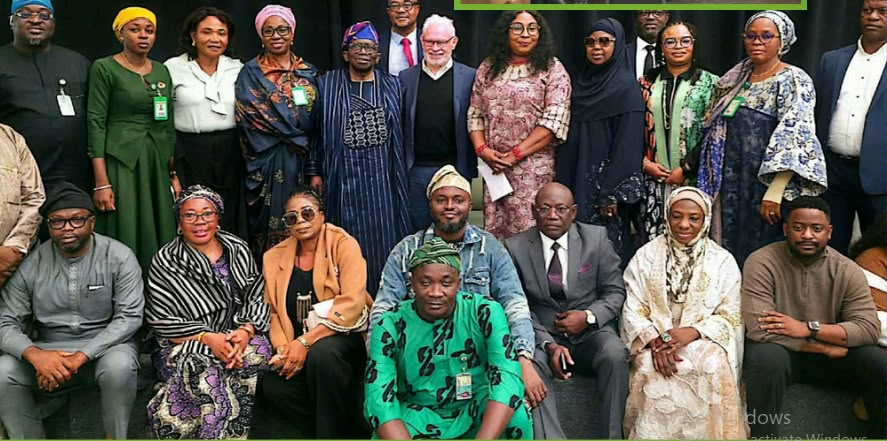
The National Commission for Persons with Disabilities (NCPWD) is exploring lessons from Canada’s Disability Tax Credit scheme as Nigeria considers ways to strengthen social protection and economic empowerment for persons with disabilities.
The commission said its delegation examined the Canadian model during a five-day study mission on poverty reduction through economic and social investment held in Ottawa from September 21 to September 25, 2026.
In an interaction with journalists yesterday, the commission said the mission, organised by the Federal Ministry of Humanitarian Affairs and Poverty Reduction, brought together representatives of various federal ministries, departments and agencies, as well as some state governments.
According to the commission, the Canadian scheme provides a tax credit to eligible persons with severe and prolonged impairments or their supporting family members to help reduce the additional financial burden associated with disability.
Eligibility is determined by the functional effects of an impairment rather than diagnosis alone. Qualification for the credit may also provide access to other federal support programmes.
Lawrence Idemudia, director of Social Integration at the NCPWD, who represented the executive secretary, Ayuba Burki Gufwan, told journalists that the engagement offered opportunities to examine how social protection, employment, skills development and enterprise support could be integrated into poverty reduction policies.
He said the Canadian experience demonstrated that poverty reduction should be approached as an economic and social development responsibility rather than solely as a humanitarian or welfare intervention.
Nigeria has an estimated 35.5 million persons with disabilities, according to figures cited by the commission. Idemudia said the country could explore ways to strengthen support for this population through disability identification, targeted social protection, livelihood programmes, assistive support, and economic empowerment.
According to him, the delegation also examined Canada’s Job Bank concept, a national employment platform that provides information on vacancies, in-demand occupations, wage levels, skills requirements, and labour market trends.
Idemudia said such a system could help Nigeria improve access to employment information and identify opportunities to match persons with disabilities with suitable jobs.
He also highlighted the commission’s efforts to implement a five per cent employment quota for persons with disabilities in Nigeria’s civil and public services under the relevant disability legislation.
According to him, the proposal attracted interest during the delegation’s engagements with Canadian stakeholders.
However, the commission did not provide details on the current level of implementation of the quota or the number of persons with disabilities employed under the policy.
Idemudia also discussed the proposed Farm Cities Project, which the commission is pursuing in partnership with the Peace for Humanity Foundation.
He said the initiative was intended to link poverty reduction with entrepreneurship, skills acquisition, employment and enterprise development.
The delegation also highlighted a proposed reality television talent programme being developed in partnership with Discovering Ability in Disability (DADI).
According to Idemudia, the programme is expected to identify, train, and showcase talented persons with disabilities, creating opportunities for them to develop their abilities.
He called on stakeholders and members of the public to support both initiatives through partnerships and investment.
The commission did not disclose the projected costs, implementation timelines or number of beneficiaries. However, the study mission considered a proposed Nigeria-Canada Poverty Reduction and Social Investment Platform to facilitate continued knowledge exchange, technical cooperation, investment mobilisation and partnerships between institutions in both countries.
Idemudia said such a mechanism could help Nigerian institutions adapt relevant lessons from Canada’s social protection and employment systems to local conditions.
He revealed that the NCPWD delegation comprised himself and Fatsuma Zainab Suleiman-Shehu.
We’ve got the edge. Get real-time reports, breaking scoops, and exclusive angles delivered straight to your phone. Don’t settle for stale news. Join LEADERSHIP NEWS on WhatsApp for 24/7 updates →
Join Our WhatsApp Channel