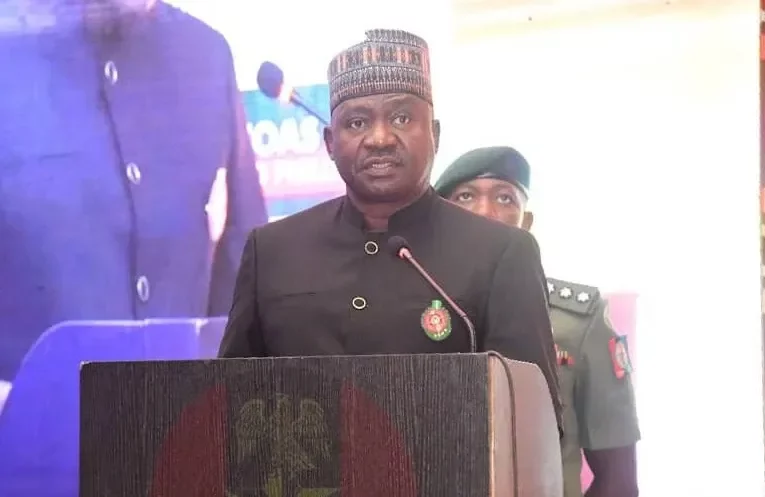
The Minister of Defence, General Christopher Musa (retd.), has said he was among those singled out for arrest by officers accused of plotting to overthrow President Bola Tinubu, and that he would have been shot if he had resisted.
Musa made the disclosure on Sunday during an interview on Channels Television’s Sunday Politics, days after the military announced that 16 officers arrested in October 2025 would face trial over an alleged coup plot.
The former Chief of Defence Staff said he became aware that he had been listed as a target by the plotters. “I was also a target. I was supposed to be arrested, and if I refused, I was supposed to be shot,” he said.
“But that’s the job. Anybody who goes into a coup zeros his mind; you know that if you succeed, well and good; if you don’t, you accept whatever consequences follow. Again, I think these people were a very unserious bunch who really didn’t understand what they were doing.
“If you look at the calibre of the individuals, I don’t know what got into their heads to think they could take on the armed forces like that. Even Nigerians would have stood against them. Remember, Nigerians have resisted military rule for quite some time.”
In October the military announced the arrest of 16 officers for acts described as indiscipline and breaches of service regulations. Last week authorities said further investigations linked some of the officers to allegations of attempting to overthrow the government, conduct they described as contrary to the ethics and professional standards of the Armed Forces of Nigeria.
The Director of Defence Information, Major General Samaila Uba, said those against whom there is a case to answer would be arraigned before a military judicial panel in accordance with the Armed Forces Act and other relevant service regulations. He added that the process aims to ensure accountability while observing fairness and due process.
Military winning war against terrorism, says Defence Minister
The Defence Minister also told Sunday Politics that the Nigerian military is gaining the upper hand against terrorism despite operational setbacks.
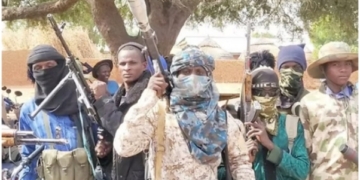
He said the High Command is not yet convinced that Brigadier General Musa Uba is dead, notwithstanding a video circulated by the terrorists purportedly showing his execution. “As we speak, we are within the Timbuktu Triangle and we are around the place. To Nigerians, we are not sure he is dead. We haven’t seen any corpse yet,” Musa said.
“If you notice the video, normally when they shoot they leave the body for you to recover. We are still hoping General Uba is alive. He is classified as missing in action, not killed in action yet. Until we have stronger belief, we have rumours he may still be alive. We are hopeful.”
Musa said troops have removed several terrorist and bandit leaders from the battlefield in the North-East, North-West and North-Central. He explained that military operations are expanding into Niger and Kwara states in the North-Central to prevent terrorists from infiltrating farther south. “That would be very dangerous. They try to get soft targets, hit them, set fire to buildings and create a perception of success,” he said.
“But we’re winning. I’m glad we’re winning. For example, in December, for the first time in the South-East, people came from abroad and didn’t want to return — that had never happened before.”
He acknowledged that extremists will continue to seek soft targets to inflict pain but said security agencies will not relent. “No country is 100 per cent secure, but we are working, we’re winning, and we will continue to work harder.”
Musa described asymmetric warfare as particularly difficult because opponents driven by ideology often have nothing to lose. “It is painstaking and requires time to pursue thoroughly. In the past we had many attacks everywhere; now they are limited to very few,” he said.
He criticised past governments for failing to address the problem early. “Ideally, this wouldn’t have lasted this long if we had had the capability and will to act decisively. But such moves would also provoke responses from human rights bodies.”
Musa said Nigeria is not employing mercenaries, although it is receiving assistance from friendly nations. He stressed the need for functional local government administration and reliable databases. “If our local governments work, we will be able to identify criminals locally. Leaving everything to the federal government makes things cumbersome. State governments should empower local governments to hold weekly security meetings and report regularly.”
He highlighted concerns about unofficial motor parks being used to ferry weapons and drugs, and called for official identification of motor parks to prevent abuse.
Musa cautioned religious and traditional leaders against making inflammatory remarks. “Words are very powerful. When you say certain things you can aggravate an already tense situation. We must speak to unite the country, not to divide it. What you say today may be misinterpreted and could lead to deaths.”
He urged long-serving leaders to allow a new generation with fresh ideas to lead. “If you have been doing the same thing since independence and you are getting nowhere, you need to change. This problem didn’t start today; it has been going on for a long time and we must be proactive.”
We’ve got the edge. Get real-time reports, breaking scoops, and exclusive angles delivered straight to your phone. Don’t settle for stale news. Join LEADERSHIP NEWS on WhatsApp for 24/7 updates →
Join Our WhatsApp Channel