
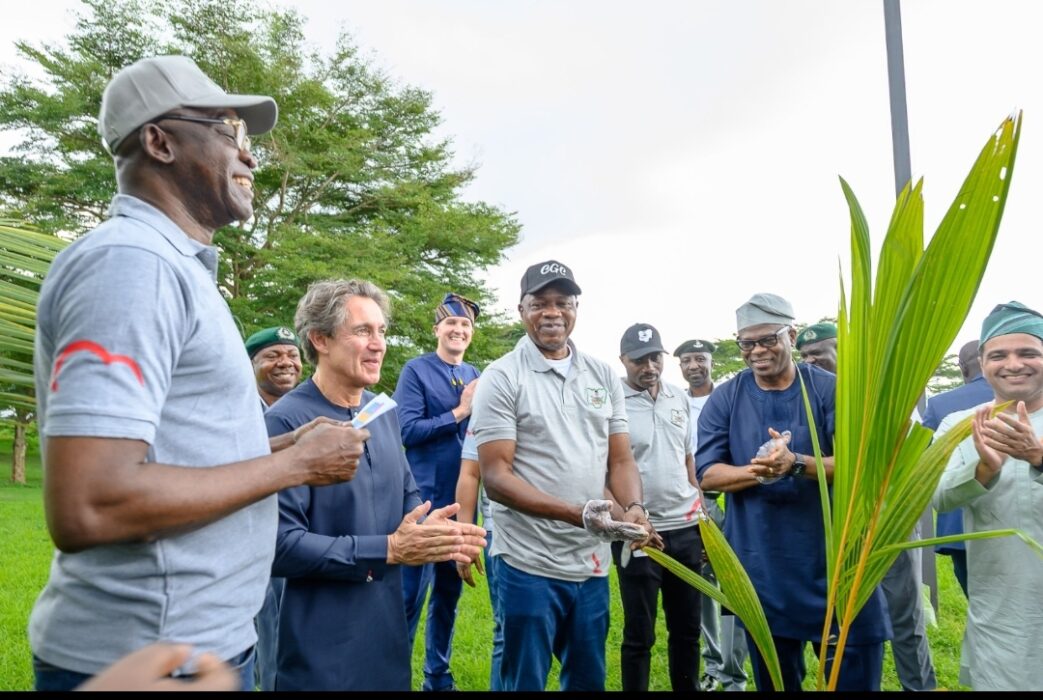
The Nigeria Customs Service (NCS) and manufacturers are deepening collaboration on trade facilitation, regulatory compliance and export development as part of efforts to improve the ease of doing business and strengthen Nigeria’s manufacturing competitiveness.
Comptroller-general of Customs, Bashir Adewale Adeniyi, stated this during a visit to BAT Nigeria’s manufacturing facility in Ibadan, where he inspected the company’s operations and held discussions with its management on customs compliance, excise administration, exports and manufacturing competitiveness.
Adeniyi said stronger collaboration between Customs and manufacturers would help balance revenue mobilisation with trade facilitation, creating a more conducive environment for compliant businesses to expand production, investment and exports.
“The more you pay attention to revenue and trade facilitation together, the more you create an environment where business can be done with greater ease, and the higher the potential for turnover and economic activity,” he said.
“I know the level of compliance that you have demonstrated, not just in the importation of your raw materials, but also in your factory and excise operations. What I have seen today reflects a high level of transparency, governance and accountability,” he stated.
He also expressed support for BAT Nigeria’s planned participation in the Authorised Economic Operator (AEO) programme, describing the company as a strong candidate based on its compliance record.
The AEO programme provides trusted traders with proven compliance records with benefits such as faster clearance and less intrusive customs controls.
Adeniyi further pledged Customs’ support for the expansion of Nigerian-made products into international markets, assuring manufacturers that the service would continue to facilitate legitimate exports and collaborate with international counterparts where necessary.
Adeniyi said the growth of the Company’s operation demonstrated the impact sustained investment could have on Nigeria’s industrial development.
He recalled that the government’s economic agenda at the time focused largely on backward integration and import substitution.
“When you talk about a Nigerian operation of a multinational company, and you see the facility that existed more than 20 years ago and return to find that the story has continued to evolve positively, as a Nigerian, you cannot but be delighted,” he said.
Speaking on the importance of government-industry engagement, managing director of BAT Nigeria, Yarub Al-Bahrani, said sustained collaboration remained critical to strengthening domestic manufacturing and economic activity.
“A modern manufacturing facility is not an island. Its impact extends across the wider economy through the people it employs, the suppliers it supports and the logistics networks within its value chain,” Al-Bahrani said.
He added that BAT Nigeria’s engagement with Customs went beyond regulatory compliance to include cooperation on sustainable manufacturing, trade and broader economic development.
We’ve got the edge. Get real-time reports, breaking scoops, and exclusive angles delivered straight to your phone. Don’t settle for stale news. Join LEADERSHIP NEWS on WhatsApp for 24/7 updates →
Join Our WhatsApp Channel