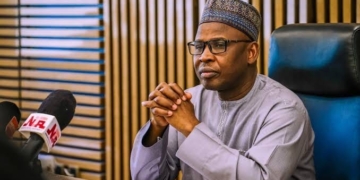

The President of the Nigerian Bar Association (NBA), Afam Osigwe, SAN, has accused government officials of weaponising the Cybercrimes Act to silence dissenting voices, warning that the law was increasingly being used to suppress free speech under the guise of fighting cybercrime and defamation.
Speaking during an interview on ARISE News’ Prime Time show on Wednesday night, Osigwe described the trend as a deliberate attempt to stifle criticism and shrink Nigeria’s democratic space.
“Free speech is being muzzled in Nigeria under the guise of charging people to court and investigating them for cybercrime and criminal defamation,” he said.
He lamented that journalists, activists, and ordinary citizens were being arrested and prosecuted for expressing critical opinions online, often under loosely defined provisions of the Cybercrimes (Prohibition, Prevention, etc.) Act.
“Even when the matters are ordinarily bailable, judges and magistrates are increasingly appearing to be tools in the hands of politicians and ‘big men’ and refuse bail even where there is no basis for not granting it,” Osigwe stated.
The NBA President accused the judiciary of complicity in the trend, warning that such conduct undermines public trust in the courts.
“If our judges become willing tools in giving public officials what they desire, to put those who criticise them out of circulation, then there’s something wrong. The judiciary becomes a willing tool in the hands of the oppressors and thereby becomes an oppressor itself,” he cautioned.
Osigwe stressed that the suppression of dissent through misuse of the law amounts to “a violation of the right to freedom of expression and an abuse of the democratic space.”
He added that public office holders should be held to a higher standard of accountability rather than using state institutions to intimidate citizens.
“If they deprive people of the ability to criticise and hold them to account, then democracy dies,” he said.
LEADERSHIP reports that the Cybercrimes Act, first enacted in 2015 and amended in 2024, was designed to tackle internet fraud, cyberterrorism and related offences. However, critics have consistently faulted sections criminalising “cyberstalking,” arguing that the vague language allows authorities to target journalists and online commentators under false pretences.
We’ve got the edge. Get real-time reports, breaking scoops, and exclusive angles delivered straight to your phone. Don’t settle for stale news. Join LEADERSHIP NEWS on WhatsApp for 24/7 updates →
Join Our WhatsApp Channel