
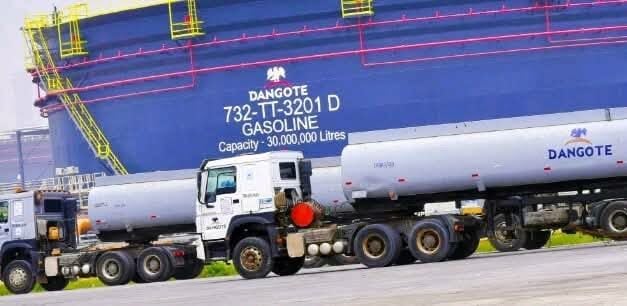
Africa’s largest refinery, the Dangote Refinery and Petrochemicals, has reduced output at its primary petrol unit by 34 per cent since May 21, industry monitors say, a move that has cut export volumes and highlighted the plant’s growing influence on regional fuel supplies.
Industry tracker IIR Energy told Reuters the refinery’s Residual Fluid Catalytic Cracking Unit (RFCCU) was operating at reduced rates after a flue gas slide gate valve developed a fault. Repairs are “almost complete,” IIR said, and the unit is expected to return to full capacity by mid‑June.
“Initially, lighter crude being processed led to insufficient feed for the RFCCU. By the end of May, the unit was also affected by a slide gate valve issue,” IIR said in an emailed update.
Dangote Group did not respond to requests for comment.
When LEADERSHIP reached out to the Dangote Group spokesman, Anthony Chiejina, he promised to revert. However, there was no response as of press time.
The RFCCU is a key conversion unit that turns heavier residual oils into higher‑value fuels such as gasoline, diesel and liquefied petroleum gas.
Because the unit increases the volume of transport fuels extracted from each barrel, disruptions can directly reduce petrol output, exports and refinery margins.
Kpler, a commodities analytics firm, reported that gasoline exports from the refinery fell from about 81,000 barrels per day (bpd) in April to 17,000 bpd in May, and have averaged roughly 10,000 bpd so far in June.
The 700,000‑bpd Dangote refinery — the world’s largest single‑train facility — came into full operation earlier this year after years of construction and billions of dollars in investment.
The plant was built to cut Nigeria’s long-standing reliance on imported petrol despite the country’s sizable crude production.
Since ramping up, the refinery has supplied increasing volumes to Nigeria and neighbouring West African markets, shifting regional trade flows that were previously dominated by European and other external suppliers.
That growing footprint has made even short outages closely watched by traders, marketers and governments across the continent.
The temporary cut at the RFCCU comes amid rising oil prices and heightened geopolitical tensions in the Middle East, which have pushed global fuel costs higher.
In Nigeria, where pump prices remain sensitive to international crude prices and exchange‑rate movements, any decline in domestic refining output risks feeding public concern and market volatility.
IIR Energy said the RFCCU should be back at full rates within days, but noted that the incident underscores the Dangote refinery’s increasing importance to Nigeria’s energy security and Africa’s refined‑product supply chain.
We’ve got the edge. Get real-time reports, breaking scoops, and exclusive angles delivered straight to your phone. Don’t settle for stale news. Join LEADERSHIP NEWS on WhatsApp for 24/7 updates →
Join Our WhatsApp Channel