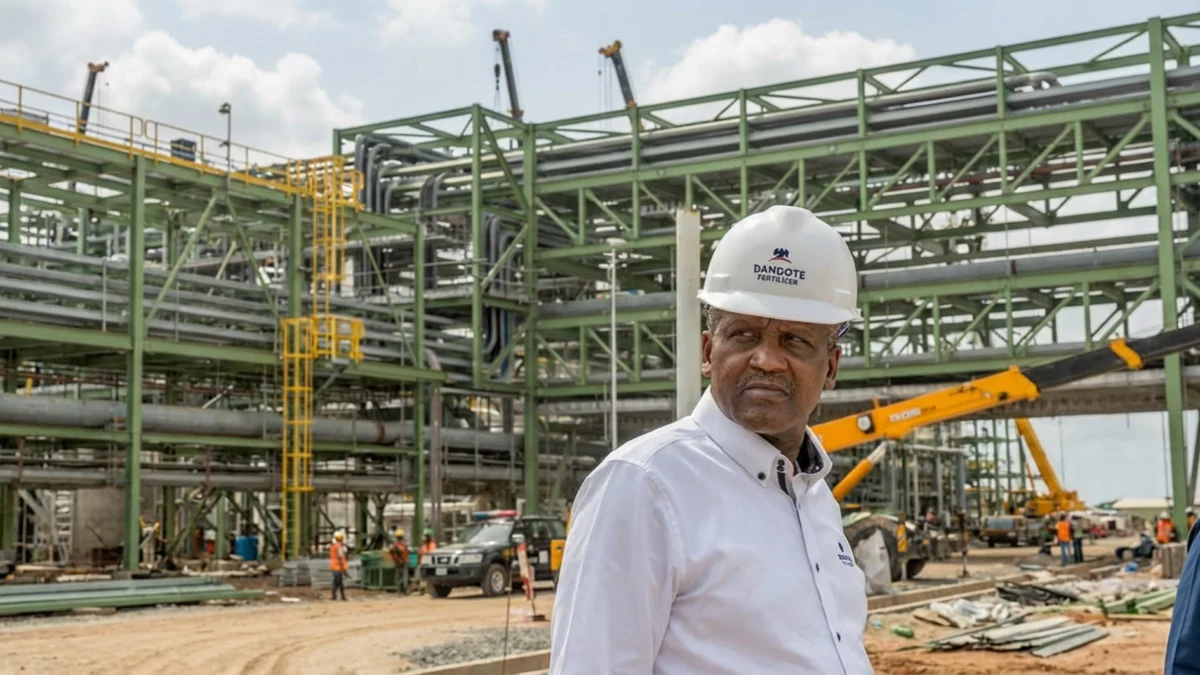
Dangote Refinery is considering hiring more of locally skilled engineers and services to reduce dependence on imported workforce.
To achieve this the Dangote Petroleum Refinery and Petrochemicals is engaging the Nigerian Content Development and Monitoring Board (NCDMB), for stronger local capacity to maintain and operate refineries, as industry stakeholders seek to reduce dependence on imported technology and services.
The position was discussed at a Joint Technical Committee retreat held by both organisations in Lekki, Lagos, under the theme “Beyond Compliance: Partnering for Sustainable Nigerian Content Development.”
Both parties urged a decisive transition from mere regulatory compliance to a stronger national commitment anchored on technological innovation and sustainable financing. They emphasized that these pillars are critical to deepening Nigerian content and driving accelerated industrial growth.
The retreat convened key stakeholders from the oil and gas sector alongside representatives of relevant government institutions, fostering collaboration to tackle operational challenges and broaden indigenous participation across Nigeria’s energy value chain.
At the heart of the discussions was a shared imperative: to ensure that Nigerian content transcends statutory obligations and becomes a sustainable national economic strategy that creates jobs, develops technical expertise, strengthens local supply chains and retains greater value within the country.
In his keynote address, the Executive Secretary of NCDMB, Engr. Felix Omatsola Ogbe, represented by the Senior Technical Adviser and Director of the Project Certification and Authorisation Director (PCAD), Engr. Austin Uzoka, identified commitment, technology and financing as three fundamental requirements for building a resilient Nigerian content ecosystem.
He challenged stakeholders to look beyond compliance and confront the deeper questions of industrial sustainability, particularly how Nigeria could maintain its major industrial assets, strengthen domestic supply chains and ensure that investments in critical infrastructure deliver lasting economic value.
Drawing attention to the challenges associated with the country’s publicly owned refineries, Ogbe, emphasised the need to safeguard the sustainability of the Dangote Refinery by developing the goods, works, services and supply-chain capabilities required to support its continuous operations. The central message was clear: constructing world-class industrial facilities is only part of the task; building and maintaining the indigenous capabilities that sustain them is equally important.
He stressed the need for credible supply chains capable of supporting industrial facilities, developing local capabilities and ensuring that such expertise remains resident in Nigeria. Without reliable domestic supply chains, he warned, the economic benefits of industrial investments could continue to flow outside the country, limiting local value creation and value addition.
On technology, the Executive Secretary underscored the importance of developing Nigerian expertise to operate, maintain and sustain industrial facilities, rather than relying indefinitely on external capabilities. He also highlighted access to financing as a major constraint facing indigenous businesses. High interest rates and delays in accessing funds, he noted, can prevent Nigerian enterprises from executing projects, expanding operations and competing effectively within the oil and gas value chain.
Ogbe further challenged stakeholders to consider how Nigeria could nurture the next generation of large-scale indigenous industrialists and support other Nigerian investors seeking to establish refineries and related facilities. Acknowledging Dangote Group’s pioneering contribution to industrial development, he urged the industry to help emerging indigenous investors succeed, noting that a stronger domestic refining sector would position Nigeria as a major oil and gas hub.
Beyond its regulatory responsibilities, NCDMB used the retreat to reiterate its commitment to creating an enabling environment in which Nigerian businesses can participate meaningfully, build technical competence and compete for opportunities across the oil and gas industry.
In his presentation, the Director of Planning, Research and Statistics (DPRS) and Chairman of the NCDMB/Dangote Joint Technical Committee, Mr. Omomehin Ajimijaye, urged contractors, vendors and service providers operating within the Dangote business ecosystem to comply with Nigerian content requirements, register on the designated digital platform, NOGICJQS and strengthen their participation in the industry.
Ajimijaye explained that the Board’s regulatory framework was designed to facilitate business growth and deepen indigenous participation, rather than create unnecessary bureaucratic bottlenecks. He identified four key compliance pillars: Nigerian content planning, workforce localisation, local procurement and capacity development.
Under these requirements, companies bidding for projects are expected to submit Nigerian content plans demonstrating how they will maximise indigenous participation. Employers must prioritise qualified Nigerians, procure locally available goods and services, and invest in skills development and technology transfer.
On expatriate employment, he explained that foreign personnel could be engaged where genuine skills gaps existed, but companies were expected to work with the Board to establish those gaps and develop succession plans that would progressively prepare Nigerians to assume such positions.
He described NOGICJQS as an important digital tool for supplier registration, prequalification, capacity verification and validation of technical expertise. Reliable industry data, he added, would help NCDMB identify skills shortages, connect businesses with qualified professionals and direct training investments towards areas of greatest need.
Ajimijaye commended Dangote Group for its collaboration with the Board since around 2019 in building capacity of Nigerians through local and overseas institutions, noting that some beneficiaries had subsequently secured employment within the group’s businesses.
He also underscored the importance of sustained investment in research and development to stimulate indigenous innovation, enhance competitiveness and enable Nigerian companies to export technical expertise.
Highlighting the impact of Nigerian content initiatives, he disclosed that the interventions had retained more than $10 billion in the Nigerian economy, generated over 50,000 direct and indirect jobs, and supported more than 50 million man-hours of training.
However, he noted that in-country value retention stood at approximately 61 per cent, below the 70 per cent target, and called for stronger collaboration among regulators, operators and service providers to close the gap.
He urged industry players to see Nigerian content not merely as an obligation but as an opportunity to expand businesses, develop technical expertise and build a more competitive domestic energy industry.
In his welcome address, the Group Vice President of Dangote Group, Dr. Edwin Devakumar, called for a fundamental shift from a compliance-driven approach to a culture of national responsibility, ownership and commitment. He maintained that laws and regulations alone could not deliver sustainable Nigerian content unless individuals, businesses and institutions genuinely embraced the responsibility of building Nigeria’s productive capacity.
“For sustainable Nigerian content development to succeed, it must not be seen as a regulatory burden. Every individual must regard it as something they genuinely want to do from the bottom of their heart,” he said.
Devakumar stressed that local content must go beyond sourcing raw materials to include skills transfer, workforce development and the growth of indigenous contractors into enterprises capable of executing increasingly complex projects.
The Director of Legal Services, NCDMB, Dr. Naboth Onyesoh, called for greater coordination among regulatory institutions, stressing that investment facilitation, petroleum regulation and Nigerian content compliance must work together to advance national economic interests. He argued that inter-agency engagement should clarify statutory responsibilities, eliminate unnecessary duplication and produce practical solutions rather than become a contest over institutional superiority.
Onyesoh challenged the perception that the Oil and Gas Free Zones Authority (OGFZA) was the sole regulator within free zones, explaining that its investment-promotion responsibilities did not override the statutory mandates of other government institutions. He noted that free-zone incentives designed to attract investment and improve the ease of doing business did not exempt operators from applicable federal laws. Depending on the nature of their operations, petroleum businesses remained subject to the relevant requirements of the Nigerian Upstream Petroleum Regulatory Commission and the Nigerian Midstream and Downstream Petroleum Regulatory Authority and NCDMB.
He also highlighted the roles of the Central Bank of Nigeria, customs and immigration authorities in facilitating financial transactions, monitoring goods and ensuring compliance with applicable regulations.
Reaffirming the importance of the Nigerian Oil and Gas Industry Content Development Act, 2010, Onyesoh said its provisions remained central to promoting indigenous participation, technology transfer, employment and domestic value retention. He cautioned against narrow interpretations that could exclude companies operating in free zones from contributing to local capacity development and the growth of Nigerian businesses.
“An incentive regime is a business advantage; it is not a regulatory exception,” he said.
The NCDMB legal director also highlighted the Board’s efforts to strengthen indigenous maritime capacity through the Nigerian Content Intervention Fund, which supports local companies in acquiring vessels and expanding their operations. He disclosed that the Nigerian Content Fund was partnering with Nigeria LNG Limited on a shipyard project at Snake Island to boost domestic industrial capacity. He also commended the Nigerian Maritime Administration and Safety Agency (NIMASA) for collaborating with the Board on vessel verification and indigenous participation in maritime operations. Onyesoh urged OGFZA and other agencies to intensify regular engagement, information sharing and joint resolution of operational challenges, noting that coordinated regulation would improve the ease of doing business, strengthen investor confidence, create jobs and ensure greater economic returns from Nigeria’s oil and gas resources.
Earlier, the Alternate Chairperson of the NCDMB/Dangote Joint Technical Committee, Dr. Ebele Oputa, described the retreat as a family meeting of key stakeholders united by a common objective: to place Nigerians at the centre of industrial development.
She acknowledged the contributions of participating government agencies and commended Devakumar for his longstanding commitment to Nigeria and investment in young Nigerians. She noted that his more than 33 years in the country and contributions to Nigerian content development had been instrumental to the collaboration.
We’ve got the edge. Get real-time reports, breaking scoops, and exclusive angles delivered straight to your phone. Don’t settle for stale news. Join LEADERSHIP NEWS on WhatsApp for 24/7 updates →
Join Our WhatsApp Channel