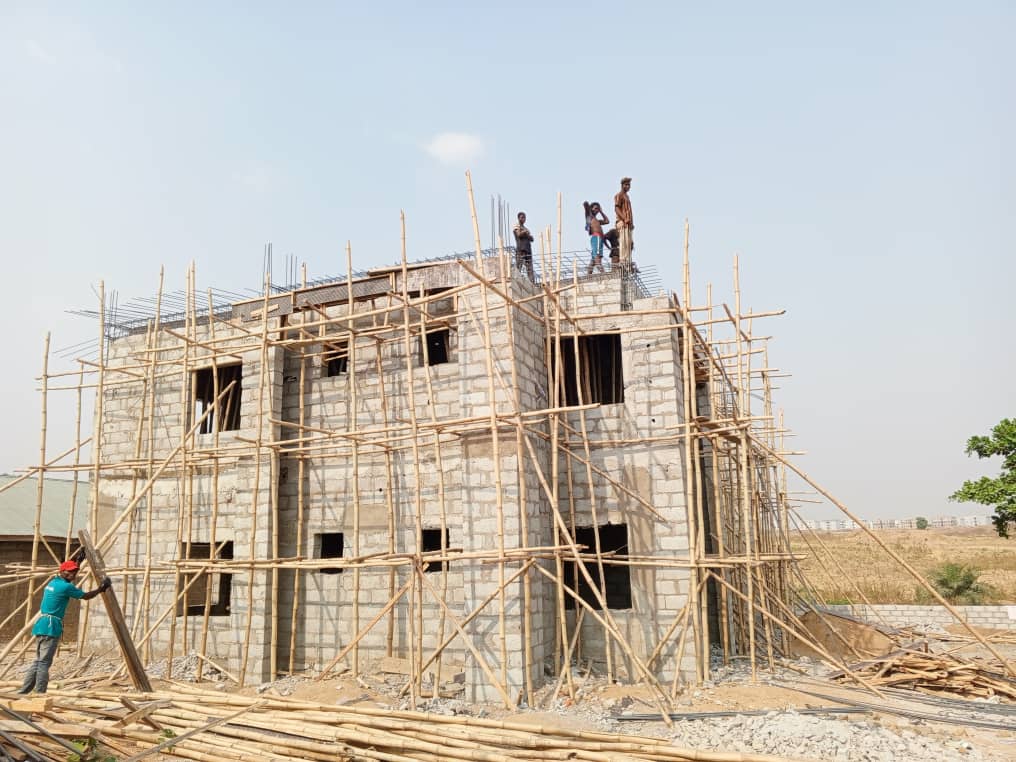
The managing director of Legendary Foreshore, Victor Ameh, has raised concerns about the rising cost of building materials, saying the trend is stalling housing projects and making it increasingly difficult for property developers to determine what the market can support.
Victor Ameh said the challenge confronting developers had gone beyond securing land or accessing finance, as rising construction costs were making it difficult to determine whether projects that appeared viable at the outset would remain economically sustainable by the time of completion.
He said sharp increases in the prices of cement, steel, aluminium, roofing materials, tiles, electrical fittings, plumbing components, labour and transportation were forcing developers to slow construction, suspend projects or reconsider their original plans.
According to him, developers were also struggling to understand the market because construction costs were rising faster than household incomes and purchasing power.
He said, “The biggest challenge for developers is no longer simply securing land or raising finance. It is determining whether a project that looks viable today will still make economic sense by the time it is completed.
Victor noted that the widening gap between the cost of constructing houses and what prospective buyers could afford had created significant uncertainty across the property market.
“While construction costs are rising rapidly, household incomes and purchasing power have not increased at the same pace. This has created a dangerous gap between what it costs to build a house and what prospective buyers or tenants are prepared or able to pay,” he said.
The development is particularly significant as the price of a 50kg bag of cement has risen to between about N12,500 and N15,000 in several locations, with some areas recording even higher prices. Reinforcement steel and other major construction inputs have also recorded significant increases.
For developers, the implication is that feasibility studies and project budgets prepared months earlier can quickly become outdated.
He said a project budgeted at a particular cost could require substantially more funding before the foundation was completed, while another round of price increases could occur before roofing, finishing and installation of fittings.
He noted that the uncertainty was forcing some developers to hold back investments rather than commit additional funds to projects whose eventual selling prices remained uncertain.
According to him, developers are increasingly confronted with three difficult options: absorbing additional costs and accepting lower profit margins, increasing property prices and risking the loss of buyers, or suspending projects until market conditions become clearer.“None of these options is attractive,” he said.
The pressure is particularly severe in the middle-income and affordable housing segments, where demand is high but effective purchasing power remains weak.
“There may be millions of Nigerians looking for houses, but only a fraction can afford the prices required to make new developments financially viable,” Ameh said.
As a result, developers are rethinking the type, size, location and specifications of properties they construct. Some are reducing unit sizes, negotiating more aggressively with contractors and suppliers, exploring partnerships and joint ventures, while others are adopting phased developments to test market demand before committing large amounts of capital.
He said construction finance remained expensive, but the unpredictable movement in building input prices had become one of the most difficult variables for developers to manage.
He added that steel, aluminium, electrical and plumbing materials were exposed to exchange-rate movements, while transportation and labour costs continued to increase.
The broader concern, he said, was that the cost crisis could further reduce the supply of affordable housing.
“A developer may have land, planning approval and access to finance, but still decide not to proceed because the expected return no longer justifies the risk,” he said.
Until construction costs, buyer affordability and expected returns become more predictable, Ameh said developers would continue to operate cautiously.
For Nigeria’s housing market, however, every project delayed, redesigned or abandoned could mean another potential home removed from a market already struggling to meet demand.
We’ve got the edge. Get real-time reports, breaking scoops, and exclusive angles delivered straight to your phone. Don’t settle for stale news. Join LEADERSHIP NEWS on WhatsApp for 24/7 updates →
Join Our WhatsApp Channel