
By OLUSHOLA BELLO & BUKOLA ARO-LAMBO, Lagos
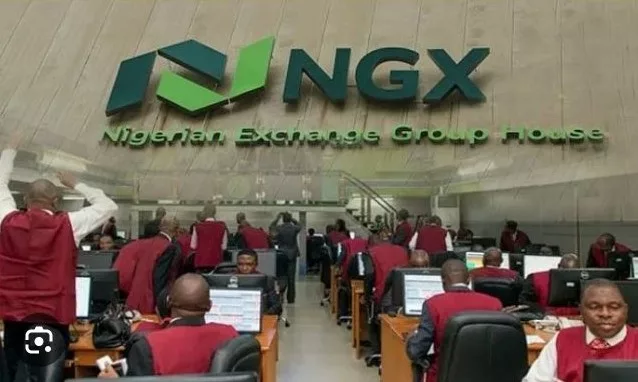
The Nigerian equities market’s 57 per cent rally in the first seven months of 2026 was driven predominantly by domestic capital and not foreign inflows, a development Coronation Asset Management attributed to greater market maturity and long-term resilience.
The managing director, Coronation Asset Management, Aigbovbioise Aig-Imoukhuede, disclosed this at the firm’s H1 2026 Capital Market Review and Outlook held yesterday in Lagos.
As of end-July, the NGX All-Share Index had gained 57 per cent, while total market capitalisation rose by N58.9 trillion to N158.2 trillion. The performance placed Nigeria among the world’s strongest-performing equity markets in dollar terms, according to Bloomberg data.
But Aig-Imoukhuede said the composition of participation was the most significant feature of the rally.
“These numbers are certainly worth celebrating. What changed was the scale of domestic participation, which expanded at a far more significant pace of 129.1 per cent,” he said.
By June 2026, foreign investors accounted for 12.1 per cent of total NGX transaction value, down from 27 per cent a year earlier. Foreign portfolio investors were also net sellers in H1 despite the broader market rally, partly because short-dated government securities offered yields close to 20 per cent.
“From a pure risk-adjusted perspective, that allocation decision was understandable,” Aig-Imoukhuede noted.
He identified domestic institutional investors, particularly pension funds, as key drivers following changes to investment thresholds by the National Pension Commission (PenCom). A resurgence in domestic retail participation also reinforced what he described as a structural shift in the investor base.
Aig-Imoukhuede rejected concerns that increased domestic participation represented a weakness.
“If anything, this is a sign of market maturity. Markets become more resilient when they are supported by savings rather than speculation,” he said.
Despite the strong performance, he cautioned that “the rally had been relatively narrow. The key question for H2 2026, he said, is whether Nigeria can attract a new wave of international capital as FX liquidity improves, reserves accumulate, and corporate earnings strengthen.”
He noted that FTSE Russell is reviewing Nigeria’s position within its Frontier Market Index framework, while S&P Dow Jones Indices has placed Nigeria on watch for possible reclassification from standalone to frontier-market status.
On monetary policy, Aig-Imoukhuede said Coronation’s base case is that the Central Bank of Nigeria will hold the Monetary Policy Rate at 26.5 per cent through year-end. Headline inflation stood at 15.43 per cent in July.
“Monetary-policy stability may not generate significant headlines, but it creates an environment in which long-term capital can be deployed with greater confidence,” he said.
Looking ahead, he urged institutional investors to focus on companies with strong earnings momentum, sound governance and adequate liquidity.
“The opportunity before us is not simply to deliver market returns. It is to build a capital market that is deeper, more trusted, more liquid and more globally relevant,” Aig-Imoukhuede said.
We’ve got the edge. Get real-time reports, breaking scoops, and exclusive angles delivered straight to your phone. Don’t settle for stale news. Join LEADERSHIP NEWS on WhatsApp for 24/7 updates →
Join Our WhatsApp Channel