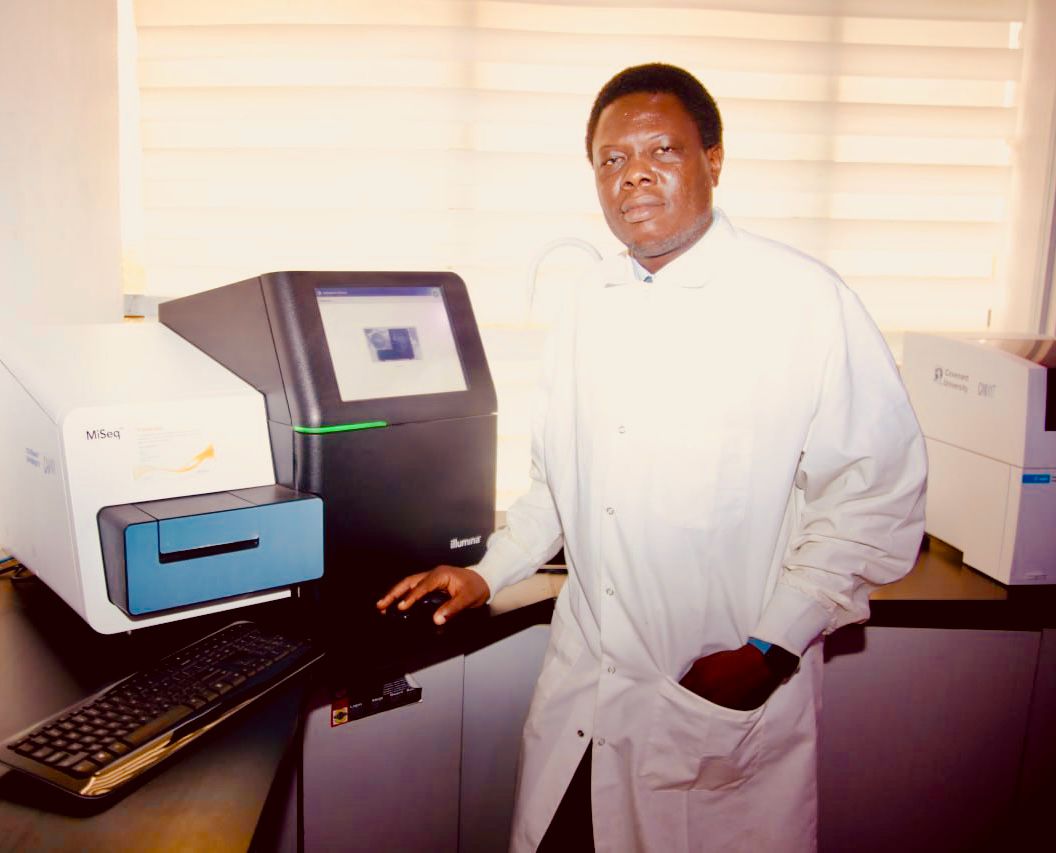
A don from the Department of Biochemistry of Covenant University (CU), Prof Solomon Rotimi, is making giant strides in breast cancer research.
The academic research paper published in the Technology in Cancer Research and Treatment journal was titled, “Screening of Germline BRCA1 and BRCA2 Variants in Nigerian Breast Cancer Patients.”
According to the WHO’s specialised cancer research agency, the International Agency for Research on Cancer (IARC), about 45 women died of breast cancer per day in 2022. This pattern was projected to increase due to many factors.
In Nigeria, this disease poses a particularly urgent challenge because women are often diagnosed at younger ages, present with more aggressive forms of the disease (especially triple-negative breast cancer) and frequently lack access to early detection or precision treatment options.
Although having family history of the disease and genetic factors are well-established risks, very little is known about the specific genetic factors driving breast cancer in Nigerian women.
The statement issued by the public relations officer of Covenant University, Chichi Ononiwu, said, Genes like BRCA1 and BRCA2, which are known to increase the risk of breast and ovarian cancer, have been extensively studied in Western populations – but far less so in African populations.
“Furthermore, where such studies have been done in Nigeria, they relied heavily on foreign expertise. Our team at Covenant University bridged this gap by publishing a first-of-its-kind, entirely local study in Nigeria to understand how changes (called ‘variants’) in the BRCA1 and BRCA2 genes may contribute to breast cancer among Nigerian women.
“In doing this, Professor Rotimi’s team used advanced technology (DNA sequencing) to examine both genes in the blood. They conducted all the laboratory work – from DNA extraction to sequencing and data analysis – locally at Covenant University’s Cancer Genomics Laboratory, which is under the Covenant Applied Informatics and Communication Centre of Excellence (CApIC- ACE).”
The following are the important findings of the study: About seven percent of breast cancer patients had harmful changes in BRCA1 or BRCA2 genes. These were found only in women with triple-negative breast cancer who also had a family history of cancer. It is important to note that these genes can be passed on to children.
“These harmful variants were not found in healthy women. We discovered unique BRCA gene patterns (called haplotypes) that are distinct in Nigerian women – patterns that are rarely or never seen in other populations.
“The team also found many other BRCA variants that, while not harmful on their own may play a role in cancer risk when combined with other factors.”
We’ve got the edge. Get real-time reports, breaking scoops, and exclusive angles delivered straight to your phone. Don’t settle for stale news. Join LEADERSHIP NEWS on WhatsApp for 24/7 updates →
Join Our WhatsApp Channel