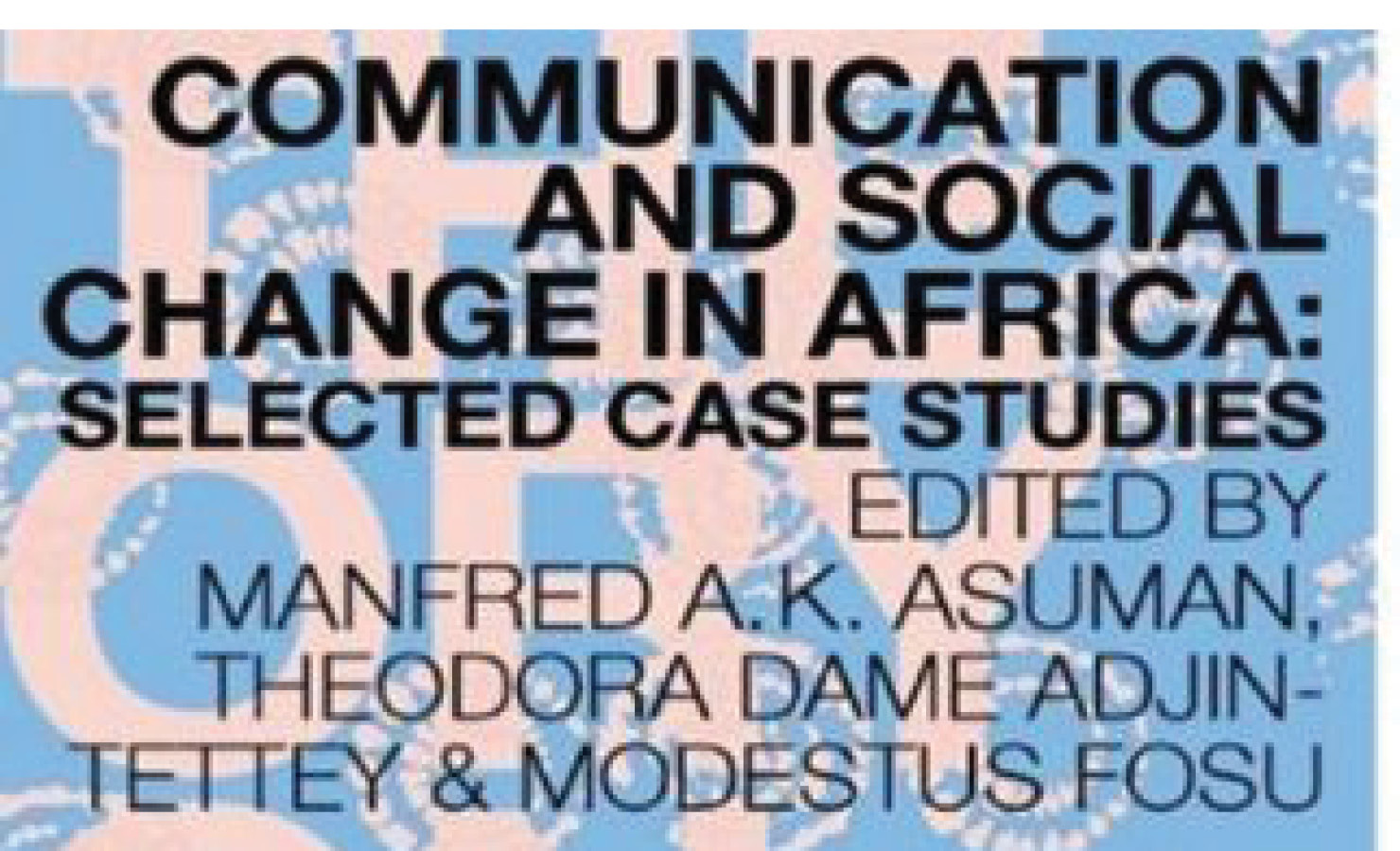
In its latest publication, ‘Communication and Social Change in Africa: Selected Case Studies’, the Development Research and Projects Center (dRPC) underscores the need to deepen the exploration of African indigenous communication approaches as means of driving social change and development in the continent.
Time and events have proven the western top-down, north-south communication approach ineffective in engendering the desired shifts and changes to Africa’s social institutions and behaviour in a manner that guarantees development and progress.
Thus, in these 13 chaptered, 237-page thematic publication, 25 African researchers from Nigeria, Ghana, Guinea Bissau, Malawi, South Africa and Tanzania, highlight evidence of the need for social and behavioural change to drive Africa’s development. They further emphasize the need to deepen exploration of the relative opportunities the African perspectives and approaches has to offer to the continent’s development, while presenting a democratic frontier to development communication research and practice in Africa via the positioning and provision of supporting cases for localized conceptualization, ideation and delivery.
This they did in three inter-related sections: first, ‘Communication, Social Action and Social Change’, which explores the supply side dynamics of using communicative social action to engineer social change through the prism of health intervention. Second, the ‘Conceptual Mapping of Key Issues in
Communication and Social Change’, that contends with indigenous communication systems inherent in indigenous cultural institutions, the role of social listening in a ‘noisy’ world and the power of the media (film) in fostering national stability. Finally, the third section, which explores ‘the Meeting Point Between Alternative Media and Social Change through Case Studies on Community Media, and Archives’.
Comprising of five chapters, the first section – holds Catalin Brylla and Rose Reuben’s ‘Communicative Interfaces for Social Change: Two Case Studies of Youth Advocacy in Tanzania’, addressing communicative interfaces in advocacy initiatives that aim to improve the well-being of marginalized groups; ‘Communication Matters: Investigating the Tension Between Healthcare Workers and Community Members During Disease Outbreaks in Malawi’ by Flemmings Fishani Ngwira, Kings Ferrels Kondowe, Mary Kamwaza and Andrew Chimpololo; ‘Communication and Mental Health Campaign for Sustainable Development in Nigeria’ by Toyosi Olugbenga, Samson Owolabi and Noeem Taiwo Thanny; ‘Marketing Tools For Framing Political Campaigns: Views From Political Party Executives From An Emerging Democracy, Ghana’, and ‘Advocacy Communications for Family Planning Policy Change In A Gates Foundation Funded Program in Northern Nigeria – The Experience of the Partnership for Advocacy in Child and Family Health 2025-2023’ by Judith-Ann Walker, Stanley Ukpai, Hassan Aliyu Karofi and Kareem Abdulrazaq.
Section two comprises chapters on ‘Harnessing the Power of Listening for Social Change in a Disrupted Media Ecology’ by Theodora Dame Adjin-Tettey and Anthea Garman; ‘Negotiating Media’s Role in a Fragile State: Journalists in Guinea-Bissau’s Current Political Crisis’ by Johanna Mack; ‘The Nigerian Film Industry and Societal Transformation: A Reflective Analysis’ by Khadijat Adedeji-Olona, and a ‘Conceptual Map of Communication Patterns of Traditional Akan’ – Extending The Indigenous Communications Literature’.
While Manfred Asuman’s ‘Exploring Community Radio as a Strategy for Social Change’, Emmanuel Essel and Eliza Govender’s ‘Voice, Listening, and Dialogue in COVID-19 Communication in Ghana: Community Radio and Hegemonic Resistance’, and Bukola C. Ajayi’s Adejoke ‘Ewaede Yoruba Archival System: Changing Media Narratives and Stereotypes of the Yoruba Woman’.
Edited by Manfred Antwi Kofi Asuman (University of Western, Ontario), Theodora Dame Adjin-Tettey (Durban University of Technology) and Modestus Fosu (University of Media, Arts and Communication, Accra), who conclude this near-decade in-the-making publication with a look into a future filled with comprehensive African voices in communication for social change; ‘Communication and Social Change in Africa: Selected Case Studies’ is an essential tool for communication scholars, practitioners, students, as well as individuals, government and policy institutions, who are genuinely interested in deepening their understanding and familiarization with the fast-changing global north-south socio-political realities, particularly as it pertains to Africa.
We’ve got the edge. Get real-time reports, breaking scoops, and exclusive angles delivered straight to your phone. Don’t settle for stale news. Join LEADERSHIP NEWS on WhatsApp for 24/7 updates →
Join Our WhatsApp Channel