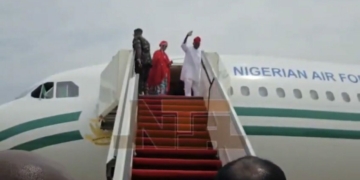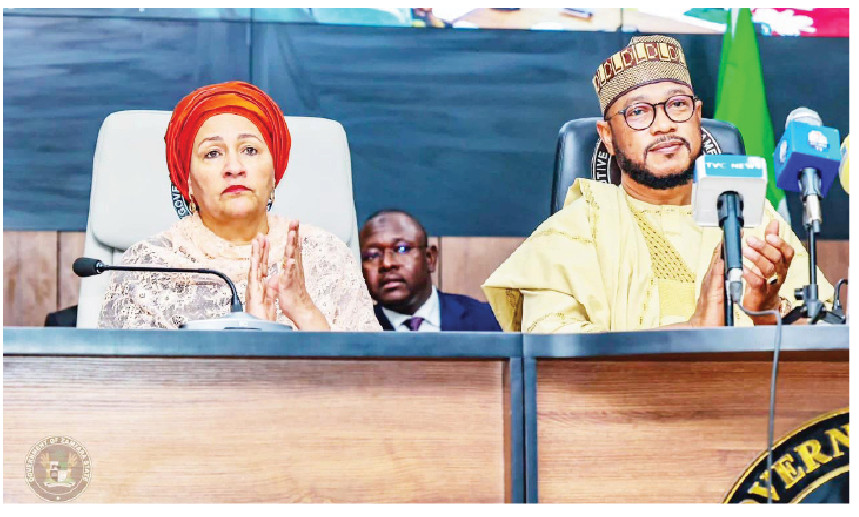
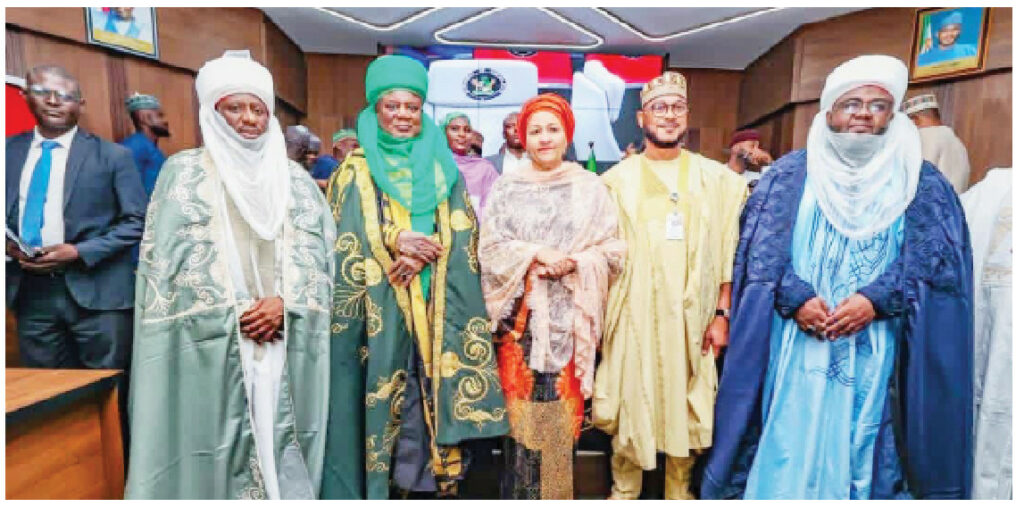
The United Nations (UN) Deputy Secretary-General, Amina Mohammed, said that Zamfara State is open and accessible, adding that the UN is willing to be a genuine partner to the state.
Amina Mohammed and her team paid an official visit to Zamfara last Thursday.
She conducted an on-site inspection in Maru Local Government and other locations.
The Nigerian-British diplomat, who urged 19 Northern governors to give women leadership roles, especially in the legislative arm of government, said the world is moving from analogue mining to digitally inclined mining.
The entourage of the United Nations Deputy Secretary-General included the UNDP Country Representative, Elsie Attafuah, and the Senior Special Assistant to the Deputy Secretary-General, Hadiza Elayo.
Others were the Country Head, UNODC, Cheikh Toure; the Country Head, UNICEF, Wafaa Saeed; the Country Head, IOM, Sharon Dimanche; the Country Head, UNHCR, Arjun Jain; the Country Head, UNAIDS, Krittayawan Boonto; and the Country Head, UNFPA, Francis Kuawu.
During the Zamfara State multi-sectoral briefings, Governor Dauda Lawal revealed his administration’s plans to advance sustainable development, climate resilience and inclusive growth through strategic partnerships.
The governor said that Zamfara is at a turning point, with a population of 5.3 million, and that the state’s economy is agriculture-driven, with 82 per cent of the population depending on agriculture. “Zamfara’s Six-Point Rescue Agenda is a deliberate strategy to stabilise, rebuild and transition the state toward inclusive and sustainable development.”
Amina Mohammed reiterated that presentations made by the Zamfara State Government were very clear. “This is enough for us to be able to partner.
“Investors want an enabling environment. Peace is what you need today for people to come. The Zamfara narrative focuses on conflict related to solid minerals, and this needs to change.
“What you showed us today is first and foremost your passion for what you want us to do, and that is what investors want. They want to know what you want.
“I am happy today to be here in Zamfara because I really want to show the world that we should pay attention to what is happening at the local level, because this is where people are weakest, where governance is weakest and where there are the fewest resources.
“When we visit, we give visibility to the effort that has been made and to the impact of what is happening elsewhere in the world on people who have nothing to do with what caused it in the first place.
“Zamfara State is accessible today, and it will be even more accessible because the road we travelled on is still under construction. When it is finished, it will revive the businesses and markets around it and, hopefully, by then, we will witness more peace.
“I see the mining, I see the potential, I see the market and the demand, but I also see the leadership here that is willing to look at the institution, framework and partnership to get the job done.
“There is a lot of hope and potential here. Everyone must play their role; this is not something the governor will do alone. The United Nations is willing to be a genuine partner to Zamfara State,” she said.
We’ve got the edge. Get real-time reports, breaking scoops, and exclusive angles delivered straight to your phone. Don’t settle for stale news. Join LEADERSHIP NEWS on WhatsApp for 24/7 updates →
Join Our WhatsApp Channel