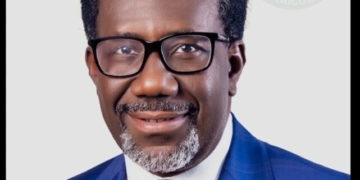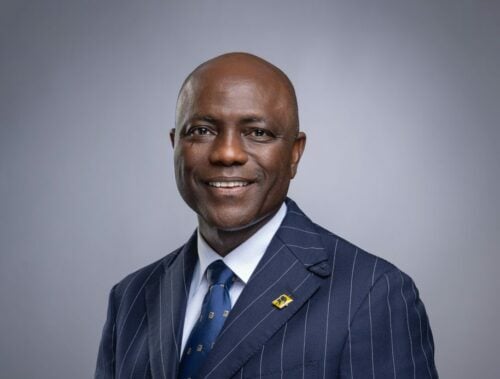
Nigeria’s economy is gradually emerging from a difficult reform phase and is now being repositioned for stronger and more sustainable growth, according to Segun Alebiosu, Managing Director and Chief Executive of First Bank of Nigeria, and Dr Yemi Kale, Group Chief Economist at Afreximbank.
Speaking at the FirstBank 2026 Nigerian Economic Outlook session, Alebiosu said the benefits of ongoing economic reforms were becoming increasingly visible across prices, market confidence and sectoral resilience, after a period of significant adjustment.
“I am sure we’re all looking to 2026 for several reasons. One, that the economic reform that is underway will accelerate within the year, because we have seen the difficult part and we’re seeing the benefit,” Alebiosu said.
He described Nigeria’s recent macroeconomic experience as evidence of an economy adapting rather than breaking under pressure, despite currency adjustments, inflation shocks and global uncertainty.
“Despite macroeconomic pressures, currency adjustment, evolving services, shifting trade dynamics and global uncertainty, our economy continues to demonstrate resilience across sectors. We have seen innovation, enterprise and reform taking root. These are not signs of fragility, they are signals of an economy repositioning itself,” Alebiosu said.
In his keynote address titled “The Great Recalibration: Mastering Resilience in an Era of Asynchronous Growth”, Dr Yemi Kale said Nigeria was benefiting from a broader global shift in which growth, inflation and capital flows were no longer moving in sync, creating both risks and opportunities for reforming economies.
“The global economy is no longer moving in sync. Growth, inflation, policy and capital flows are now asynchronous, reshaping risk, opportunity and strategy. There is no universal policy path or investment playbook. Resilience, credibility and adaptability now define winners,” Kale said.
He noted that Nigeria was beginning to see the benefits of tighter monetary policy, foreign exchange reforms, and improved trade dynamics, with inflation easing and confidence gradually returning to the markets.
“Nigeria is experiencing sustained disinflation, foreign exchange stability, improving trade balance and market confidence,” he said, adding that the first monetary policy easing in five years signalled a turning point. “This disinflation credibility enabled the first policy rate cut in five years and anchors the 2026 outlook.”
According to Kale, headline inflation had declined sharply from previous highs, supported by improved forex liquidity and easing supply side pressures, while forex unification had strengthened transparency and reduced volatility.
“Market-driven rate formation has replaced administrative pricing, improving transparency and investor trust. Monthly forex volatility is now trending below four percent, reflecting stronger inflows and better liquidity management.”
On growth, Kale said Nigeria’s economy was becoming more diversified than often portrayed, with services now accounting for the largest share of output, even as oil remained critical for foreign exchange and fiscal revenues.
“Nigeria is more diversified than the oil narrative suggests. Oil’s macro weight is small in GDP but big for FX and the budget. Services now anchor Nigeria’s growth momentum, driven by payments, digital trade, ICT, logistics and wholesale and retail activities.”
Looking ahead, the FirstBank MD said Nigeria’s competitiveness would increasingly be shaped by demographics, technology, climate priorities and regional trade integration, particularly under the African Continental Free Trade Area.
“Looking ahead to 2026 and beyond, the opportunities before us are vast. For Nigeria, success will depend on disciplined reforms, investment in human capital, scalable infrastructure and strong financial intermediation.”
He reaffirmed FirstBank’s commitment to supporting the next phase of growth, noting the institution’s long history of navigating economic cycles. “At FirstBank, resilience is not a slogan. It is a legacy spanning over 130 years. Today, we remain deeply committed to being the institution of choice, trusted, capital strong, digitally enabled and positioned to partner Nigeria’s next phase of growth.”
We’ve got the edge. Get real-time reports, breaking scoops, and exclusive angles delivered straight to your phone. Don’t settle for stale news. Join LEADERSHIP NEWS on WhatsApp for 24/7 updates →
Join Our WhatsApp Channel