
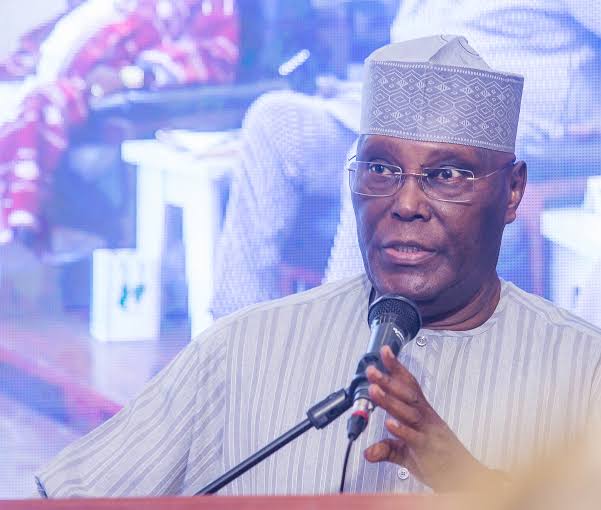
Atiku made his position known in a statement issued on Wednesday and signed by his Senior Special Assistant on Public Communication, Phrank Shaibu, in which he argued that the development raised concerns about constitutional liberties, the administration of justice, and what he termed the growing tendency to weaponise legal processes against political opponents.
The Opposition Leader noted that while courts possess discretionary powers to impose bail conditions, such powers must be exercised “judicially and judiciously.”
According to him, conditions that are excessive, unreasonable, or impossible to fulfil undermine the essence of bail and effectively amount to detention through procedural means.
“The law is settled that an accused person remains innocent until proven guilty. Bail exists to preserve that constitutional protection. It was never designed to become a sophisticated instrument for punishment before conviction,” Atiku said.
Questioning the conditions imposed on El-Rufai, he added, “When a court insists on conditions that require a defendant to produce a serving Grade Level 17 federal civil servant who must also own verifiable property in Maitama or Asokoro and satisfy a maze of additional requirements, Nigerians are entitled to ask a simple question: is the objective to grant bail or to ensure that bail remains unattainable?”
Atiku warned that the implications of such judicial precedents extend beyond the embattled former Kaduna State governor.
“This is not merely about one individual. It is about the principles that underpin a democratic society governed by the rule of law. Today it is El-Rufai. Tomorrow it could be any citizen whose liberty depends not on the law but on whether he can satisfy conditions that few Nigerians can ever meet,” he stated.
The former vice president stressed that the judiciary occupies a critical place in any democracy because it serves as the last refuge of citizens against abuses of power.
“At a time when public trust in institutions is under unprecedented strain, the judiciary must be careful not to create the impression that justice is available only in theory but unreachable in practice. Bail conditions should secure attendance in court, not guarantee continued incarceration,” he said.
“No democracy can thrive where citizens begin to suspect that legal processes are being used not merely to prosecute offences but to punish dissent. The strength of a democracy is measured not by how it treats those in power but by how it treats those who challenge power.
“The question of guilt or innocence is entirely for the courts to determine. What concerns every patriot is whether constitutional safeguards are being faithfully upheld. The right to liberty, the presumption of innocence, and the right to fair hearing are not privileges to be dispensed at convenience. They are constitutional guarantees,” Atiku stated.
The NDC presidential candidate warned that when bail conditions become effectively impossible to meet, detention becomes the punishment while trial becomes a mere formality.
“There is a name for a situation where a citizen is told he has been granted bail but is simultaneously subjected to conditions that make his release virtually impossible. It is called a constructive denial of bail. Courts must guard against such outcomes because they undermine the spirit of the Constitution,” he said.
“The judiciary is one of the last pillars standing between democracy and authoritarianism. It must never allow itself to become an instrument—whether deliberately or inadvertently—through which constitutional rights are weakened and personal liberties diminished.
“Nigeria’s democracy is strongest when justice is blind to politics, immune from pressure, and accessible to all. Anything less diminishes us as a nation,” he added.
We’ve got the edge. Get real-time reports, breaking scoops, and exclusive angles delivered straight to your phone. Don’t settle for stale news. Join LEADERSHIP NEWS on WhatsApp for 24/7 updates →
Join Our WhatsApp Channel