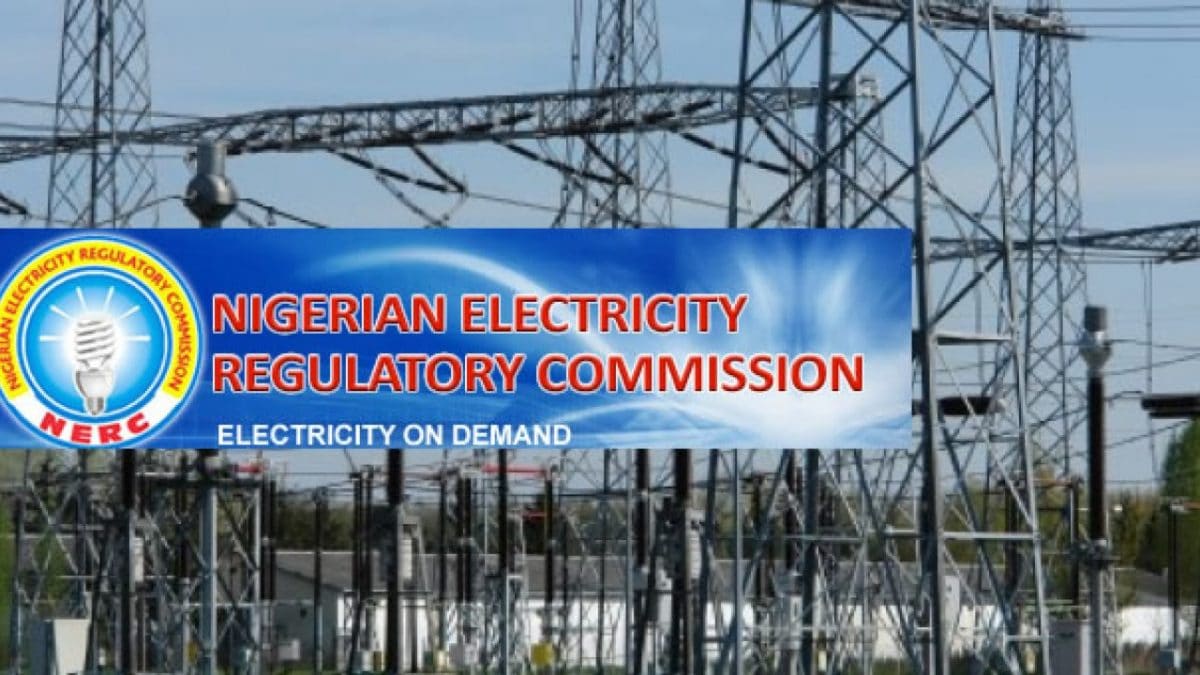
The federal government is expected to spend N358.32 billion on electricity subsidies in the first quarter of 2026, despite ongoing blackouts and operational problems across Nigeria’s power sector, the Nigerian Electricity Regulatory Commission (NERC) said.
NERC’s First Quarter 2026 Report showed that the subsidy arose because the government kept end-user tariffs frozen at July 2024 levels instead of moving to cost-reflective pricing.
The commission said the shortfall — the gap between actual generation costs and what distribution companies (DisCos) were billed — totalled N126.48 billion in January, N116.34 billion in February and N115.50 billion in March.
The quarter’s N358.32 billion subsidy averaged just over N119 billion a month and represented 51.95 per cent of the total generation invoice, the report said.
Although this burden dropped by N60.46 billion, or 14.44 per cent, from the N418.79 billion recorded in the fourth quarter of 2025, NERC warned that the reduction resulted from lower electricity purchases by DisCos rather than the adoption of cost-reflective tariffs.
“Because there are no cost-reflective tariffs across all DisCos, the government incurred a subsidy obligation of N358.32 billion,” NERC said. “The reduction was primarily driven by an 8.56 per cent drop in electricity offtake by distribution companies between the fourth quarter of 2025 and the first quarter of 2026.”
NERC said generation in the quarter attracted invoices of N689.72 billion. Under the current arrangement, the Nigerian Bulk Electricity Trading Plc (NBET) billed DisCos N331.40 billion, while the federal government assumed the remaining N358.32 billion through direct payments to NBET.
The regulator explained that subsidies are applied at source via DisCos’ remittance obligations, with the Ministry of Finance settling the outstanding portion directly with NBET.
NERC cautioned that this open-ended subsidy mechanism exposes the government to unpredictable liabilities as electricity volumes and generation costs fluctuate, especially with a rising share of thermal generation.
All three supplementary tariff orders issued during the quarter retained end-user tariffs at July 2024 levels, NERC added, in line with the government’s subsidy policy.
Despite the large subsidy outlay, supply worsened in Q1. Average available generation capacity dropped 17.45 per cent, from 5,400.38MW in Q4 2025 to 4,457.96MW in Q1 2026. Total electricity generation declined 9.64 per cent to 8,883.47GWh, and average hourly generation fell 7.64 percent to 4,112.72MWh/h.
NERC also reported two major system disturbances during the quarter that triggered widespread outages: a total grid collapse on 23 January 2026 and a partial collapse on 27 January 2026.
According to the report, preliminary findings attributed the total collapse to separation of the busbar at the Sapele Transmission Station, while the partial collapse was linked to inadequate reactive power support needed to maintain voltage stability.
The regulator warned that, without tariff reform or other structural fixes, the federal government will remain exposed to growing and volatile subsidy bills even as consumers continue to experience unreliable supply.
We’ve got the edge. Get real-time reports, breaking scoops, and exclusive angles delivered straight to your phone. Don’t settle for stale news. Join LEADERSHIP NEWS on WhatsApp for 24/7 updates →
Join Our WhatsApp Channel