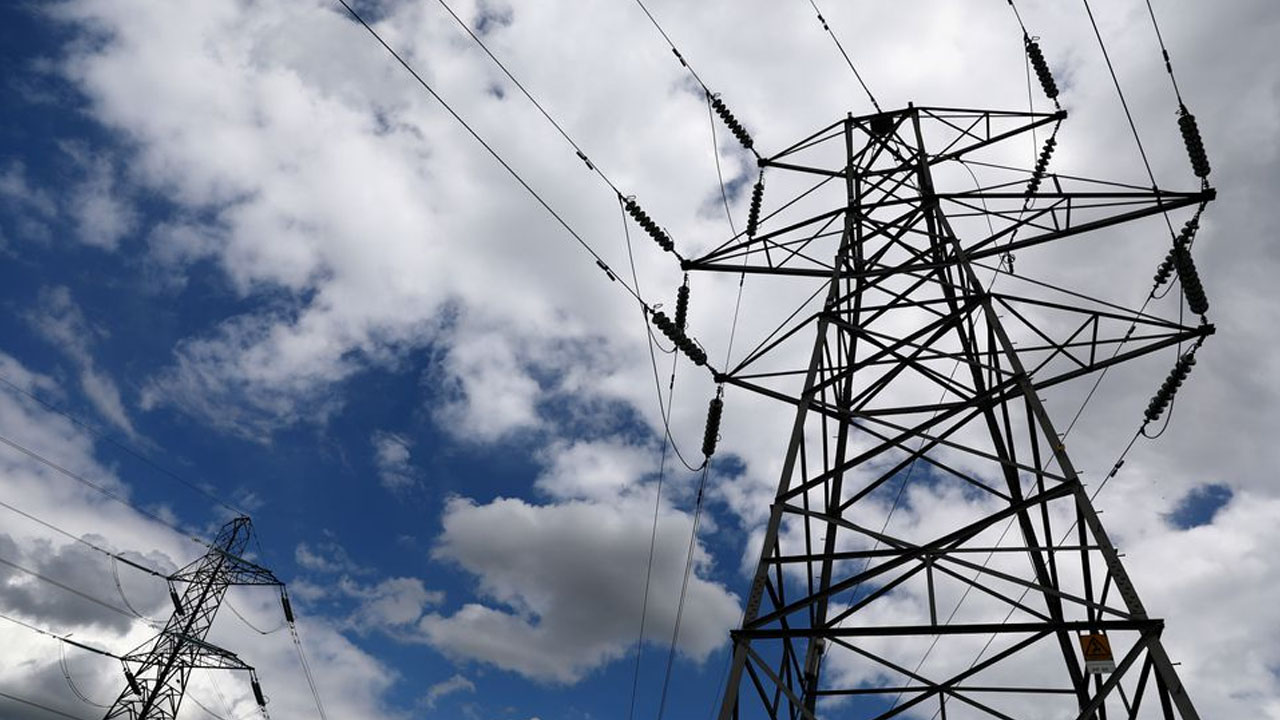
Five days. That’s all it took for Nigeria’s national grid to collapse twice in January 2026. The first failure occurred on January 23, plunging millions into darkness. Before the country could fully recover, the grid crumbled again on January 28.
For a nation that suffered more than 12 grid collapses in 2024 alone, this is no longer merely a technical problem. It is a governance catastrophe that exposes decades of policy failures, squandered resources, and a criminal absence of political will.
The statistics are damning. Nigeria, with over 200 million people, celebrated in 2025 when power generation peaked at 5,543 megawatts and maximum daily energy output hit 125,159MWh. These figures were trumpeted as achievements.
But context reveals the absurdity: South Africa, with just 60 million people, generates approximately 58,000MW. Egypt, with 104 million citizens, produces around 59,000MW. Ghana, whose population barely exceeds 33 million, generates about 5,000MW. Nigeria’s vaunted “record” generation serves a population four times larger than South Africa’s but delivers less than one-tenth of its power.
In our view ,this is not progress. This is national humiliation dressed up as accomplishment.What makes this crisis particularly galling is that Nigeria’s power generation capacity has stagnated below 6,000MW since the 1980s. Four decades of supposed development, multiple administrations, billions in loans, privatisation reforms, and countless promises have yielded essentially nothing.
The Olusegun Obasanjo administration promised transformation. The Goodluck Jonathan government pledged to deliver 40,000MW by 2020. The Muhammadu Buhari government allocated trillions and secured massive loans for power sector interventions.
Now, the Bola Tinubu administration inherits the same decrepit infrastructure, the same unreliable grid, and the same exhausted excuses.
The numbers on grid collapses tell their own story. Under the administrations of Presidents Buhari and Tinubu alone, the national grid has collapsed over 110 times. The critical infrastructure on which Nigeria’s economic survival depends has failed more than 100 times in less than a decade under just two presidents.
Each collapse disrupts businesses, destroys equipment, spoils perishable goods, shuts down hospitals, halts manufacturing, and drives up the cost of doing business as companies resort to diesel generators.
The economic hemorrhage is incalculable, but the pattern is clear: Nigeria cannot run a 21st-century economy on a grid this fragile and this fundamentally broken.
The government’s response has been to throw money at the problem without addressing the structural rot.
Research shows that Nigeria secured approximately 10 World Bank loans worth $4.36 billion over the past decade specifically to address power sector challenges. Billions more have come from other multilateral agencies and federal budgetary allocations. Yet despite these massive financial injections, the sector continues its downward spiral. The grid keeps collapsing.Generation remains pathetically low. Distribution losses remain astronomical. And Nigerians continue paying among the highest electricity tariffs in Africa for the worst service on the continent.
Technical experts have identified the core problems: inadequate maintenance of transmission lines, technical faults in aging infrastructure, and fluctuations in generation capacity. They have prescribed long-term solutions including comprehensive metering to reduce technical losses and theft, massive grid expansion to handle increased generation, and sustained investment in transmission infrastructure to prevent system collapses. None of this is new information.
These same recommendations have been repeated for decades. The problem is not lack of knowledge about what needs to be done. The problem is lack of political will to do it.
Experts estimate that Nigeria requires well over 30,000MW to attain power supply sufficiency for its population of more than 240 million people.
At current generation levels around 5,500MW, Nigeria is meeting less than 20 percent of its actual power needs. This gap cannot be closed through incremental improvements or minor reforms. It requires a complete overhaul of the sector’s governance structure, massive capital investment, and sustained political commitment over at least a decade.
The 2013 privatization of the power sector, sold to Nigerians as a transformative reform that would unleash private sector efficiency and capital, has proven to be another failed experiment. More than a decade after privatization, the sector’s performance has arguably worsened. The private operators complain endlessly about government interference, legacy debts, and regulatory constraints.
The government blames the operators for underinvestment and poor management. Meanwhile, ordinary Nigerians suffer through daily blackouts while paying tariffs that have increased multiple times since privatisation.
The constitutional amendment allowing states to generate and distribute electricity within their territories offered a potential path forward through decentralisation. Yet how many states have seized this opportunity?
The answer reveals the depth of the crisis: investment in power generation is expensive, technically complex, and requires sustained commitment. Most state governments, already struggling with basic governance functions and salary payments, lack both the financial resources and technical capacity to develop independent power systems. Those few states that have attempted it face regulatory hurdles, financing challenges, and the reality that building power infrastructure requires billions that most states simply don’t have.
The cost of continued failure is too high. Every grid collapse costs the economy billions. Every year of inadequate power supply drives away potential investors and condemns another generation of Nigerians to unemployment and poverty. The Tinubu administration must treat this as the emergency it is, not with rhetoric but with concrete action, measurable results, and visible accountability. Nigerians are tired of promises. They want power that actually works.
We’ve got the edge. Get real-time reports, breaking scoops, and exclusive angles delivered straight to your phone. Don’t settle for stale news. Join LEADERSHIP NEWS on WhatsApp for 24/7 updates →
Join Our WhatsApp Channel