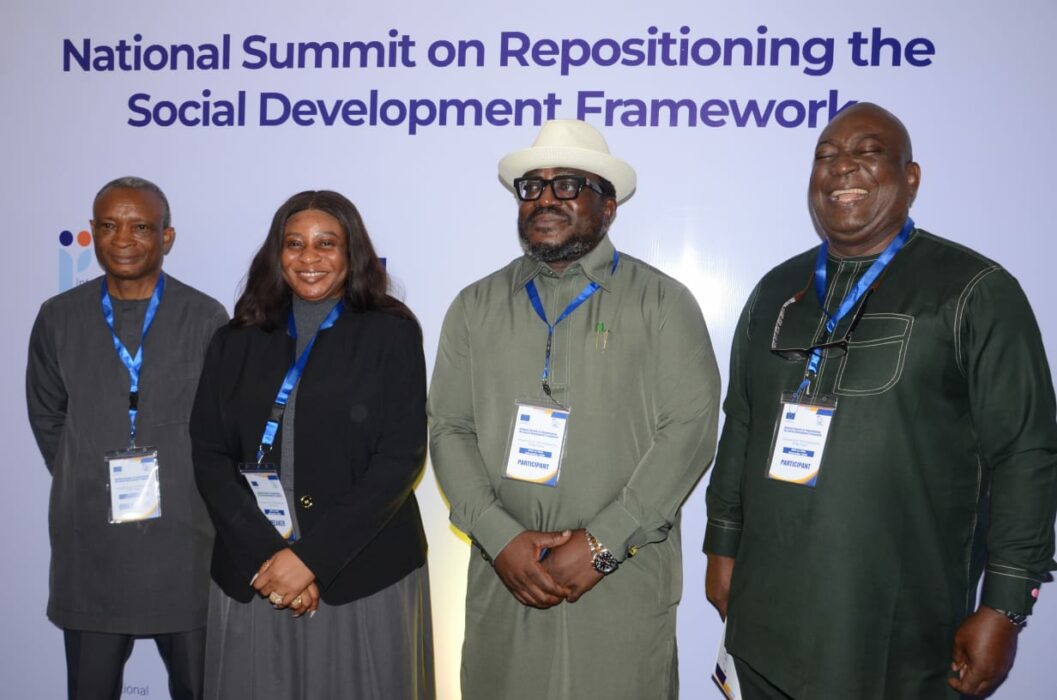
The European Union–funded CSO-Bridge Project has called for renewed national attention to Nigeria’s long-neglected Social Development Act, saying the legal framework is essential for strengthening civil society operations across the country.
Speaking in Abuja at the National Social Development Act Summit on Thursday, the Project Manager, Idem Akpan Udeokong, said the discussions were aimed at reviving awareness of the 1974 Act and the 1989 policy, which he described as “largely forgotten and underutilised”.
He said the summit was not intended to launch a new bill but to gather evidence that would guide future reforms.
“There is currently no new bill,” he clarified. “The purpose is to generate information that may eventually lead to a new policy or a revised Act.”
Udeokong noted that CSOs contribute significantly to national development across education, health, community support and youth empowerment.
“People limit their understanding of CSOs to advocacy groups, but they do much more,” he said.
He added that fragmentation across ministries — Women Affairs, Youth Development, Humanitarian Affairs, Budget and Economic Planning — had weakened coordination and blurred regulatory responsibilities.
Victor Obuzor, Chairman of the House Committee on Civil Society Organisations and Development Matters, stated that the National Assembly considered the reform process a legislative priority.
“Our Committee has begun reviewing the historical and technical gaps in the Act.
“We are engaging civil society and state institutions to support the development of a modernised, rights-based regulatory bill.”
He said the review also seeks stronger compliance frameworks without shrinking civic space.
“The revised Act must align with Nigeria’s economic and social realities,” he added.
The Minister of Humanitarian Affairs and Poverty Alleviation, Bernard Doro, represented by Deputy Director Peter Audu, stated that the timing of the summit was significant, as global efforts towards sustainable development were closely tied to gender equality and social justice.
He stressed the need to modernise the outdated Act to address current social challenges and strengthen collaboration across ministries.
Commissioner for Children, Gender Affairs and Social Development in Enugu State, Mrs Ngozi Enih, said weak coordination and inadequate funding remained major obstacles.
“Unity is essential for progress,” she said. “Many CSOs at the sub-national level are not united. Personal interest often overshadows collective interest.”
She appealed to federal and state lawmakers to increase budget allocations to ministries responsible for social development, saying officials often resort to personal funds to carry out their duties.
Enih added that outdated legal provisions and limited monitoring systems continued to hinder CSO efficiency, insisting that reforming the Act was a “national development imperative”.
We’ve got the edge. Get real-time reports, breaking scoops, and exclusive angles delivered straight to your phone. Don’t settle for stale news. Join LEADERSHIP NEWS on WhatsApp for 24/7 updates →
Join Our WhatsApp Channel