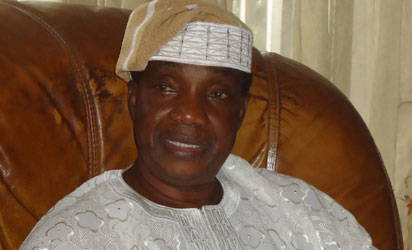
Former Minister of Power and Steel, Wole Oyelese has challenged governor Seyi Makinde to account for statutory funds due to the state’s 33 local government areas, insisting that his demand for financial accountability from the Federal Government must be matched by transparency within his own administration.
The former minister who is the convener of the Oyo State Grassroots Financial Accountability Initiative, in a statement on Thursday, urged Makinde to address questions surrounding local government finances.
He stressed that the state government could not legitimately demand accountability from Abuja while failing to provide a transparent account of funds meant for grassroots development.
The group acknowledged the governor’s right to demand payment of any outstanding funds legitimately owed to Oyo State by the federal government but maintained that such a demand did not absolve his administration of the responsibility to account for allocations due to the state’s 33 local governments.
“Governor Makinde, your demand for financial accountability from the Federal Government is legitimate, but accountability cannot be selective.
“If you insist that Abuja must release money due to Oyo State, the people of Oyo State are equally entitled to ask what has happened to the funds due to their 33 local governments in the past eight years,” the statement said.
The initiative said the issue went beyond political disagreements between the state and federal governments, arguing that the handling of local government finances had direct implications for the welfare of residents, particularly those in rural communities who depend on grassroots authorities for essential services.
According to the group, inadequate funding of local governments could undermine the maintenance of rural and community access roads, weaken primary healthcare delivery, disrupt the provision of essential medical supplies and leave public markets and environmental sanitation services neglected.
It also identified deteriorating public primary schools and community infrastructure, alongside diminished capacity to respond to local emergencies and support vulnerable residents, as possible consequences of inadequate resources at the grassroots.
The initiative, therefore, demanded a comprehensive and transparent account of the funds due to each of the 33 local government areas, covering monthly allocations from the Federation Account over the past seven years and beyond.
Among the questions it wanted the state government to address are the amounts allocated to each local government monthly, the sums actually transferred into their respective accounts by the state government and how the money was subsequently spent.
It also sought explanations for all deductions, charges and transfers made after the funds reached the local governments, including the identities of those who authorised such transactions and the legal provisions under which they were carried out.
The group further demanded details of expenditure by each local government, the projects on which the funds were spent and the mechanisms available to elected local government officials and residents to scrutinise their financial records.
“These questions should be answered with actual figures, bank records, allocation statements and audited accounts, not political speeches,” the statement added.
It called for the publication of monthly allocations due to each local government, the amounts actually received, all deductions and transfers, as well as the legal authority underpinning every financial arrangement.
The initiative maintained that where funds had been unlawfully withheld, the appropriate institutions should investigate the circumstances, establish responsibility and ensure that the money was restored.
It cited the Supreme Court’s July 2024 judgment on local government financial autonomy, arguing that the ruling reinforced the constitutional position that local governments should receive their allocations directly and that state governments could not lawfully undermine their financial independence through unconstitutional arrangements.
The group said the judgment made transparency over local government funding particularly important, insisting that financial autonomy must translate into practical accountability and improved service delivery for residents rather than remain a subject of political debate.
It also linked its demand to Makinde’s persistent calls for the Federal Government to account for billions of naira allegedly owed to Oyo State in NNPC dividends.
While supporting the governor’s demand for the settlement of any legitimate outstanding obligations, the initiative said the issue raised questions about the consistency with which public accountability was being pursued within the state.
“We agree that every government must honour its lawful financial obligations. If the Federal Government owes Oyo State money, it should explain the circumstances, reconcile the accounts and pay whatever is legitimately due,” the statement said.
It, however, argued that the same principle should apply to funds meant for the state’s local governments, stressing that statutory allocations belonged to the relevant public institutions and were not the personal property of the governor or the private resources of any political party.
The group consequently challenged Makinde to explain why the state should be entitled to demand billions of naira from the Federal Government while residents were denied a transparent account of the money due to their local councils.
“We, therefore ask governor Makinde to answer a straightforward question: If Oyo State is entitled to demand billions of naira from the federal government, on what basis should the people of Oyo State be denied a transparent account of the money due to their local governments?” it asked.
Clarifying its position, the group said it was not asking Makinde to abandon his demand for outstanding funds from Abuja but was insisting that his administration apply the same standards of accountability to its own financial dealings.
“Our position is not that the governor should abandon his demand against Abuja. It is that he should apply to his own administration the same standard of accountability he demands from others,” the statement said.
It added: “We support every legitimate demand for money owed to Oyo State, but we demand the same transparency for money owed to Oyo’s local governments.”
It said its intervention was intended to protect the interests of ordinary residents, particularly those at the grassroots, who bear the consequences when funds meant for local development are not properly accounted for.
“This, we believe, is not too much for us to ask for on behalf of the beleaguered masses of our people, especially at the grassroots,” Oyelese said.
We’ve got the edge. Get real-time reports, breaking scoops, and exclusive angles delivered straight to your phone. Don’t settle for stale news. Join LEADERSHIP NEWS on WhatsApp for 24/7 updates →
Join Our WhatsApp Channel