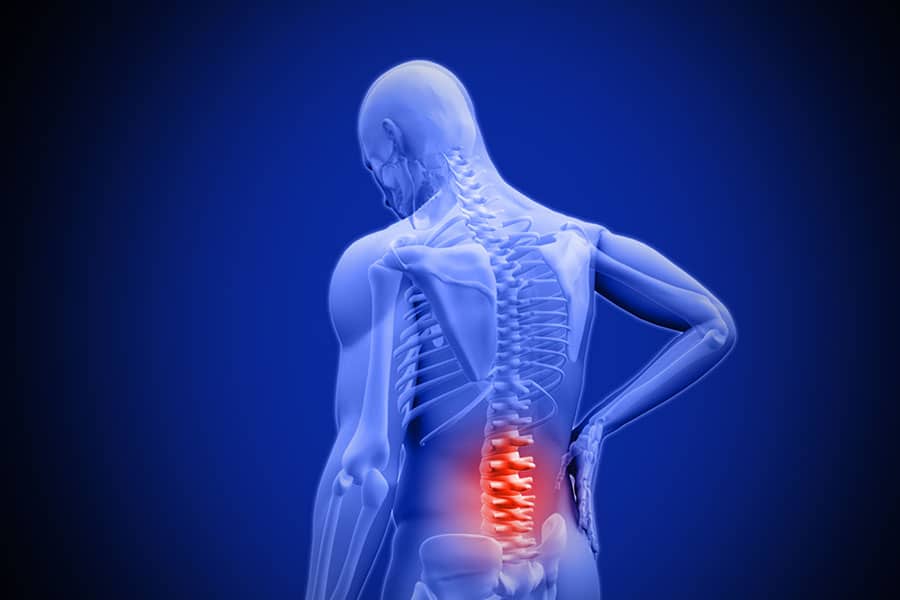
Clinical director at Spine and Nerve Centre Nigeria, Dr Craig Slapinski, has urged Nigerians with chronic back and neck pain not to suffer in silence, stressing that timely non-surgical treatments can restore lives before conditions worsen.
Slapinski made this known as Spine and Nerve Centre Nigeria launched its Lagos office to cater for patients battling severe pain with research showing that non-surgical provides safe, gentle and efficient relief for upwards of 90 per cent of patients that qualify for care.
The clinical director said, “This is significant for us. We opened in Abuja a little over a year ago, and now we’re bringing this service to Lagos. We want to offer a safe and effective alternative for people with chronic back and neck pain.”
Slapinski explained how the centre’s approach differs from traditional surgical intervention. “With surgery, you’re making an incision, cutting soft tissue, and often removing bone or part of the disc. Sometimes vertebrae are fused. That comes with a host of risks. There’s a chance you may come out of surgery worse than you went in, or your back may deteriorate years down the road,” he said.
“By contrast, our procedure is very safe and effective, with very few side effects. This is cutting-edge technology that’s quite common in the U.S. but brand new to Nigeria.”
The centre’s primary treatment uses specialised decompression tables designed to gently pull vertebrae apart without triggering the body’s natural muscle-guarding reflex. “If the patient feels the pull, then we’re engaging muscles, and we can’t target the disc or ligaments,” Dr Slapinski noted. “On this table, patients don’t feel anything at all, which lets us treat the disc directly.”
Treatment is paired with cold laser therapy, which directs a strong beam of light into soft tissue to boost ATP production — the energy source for cells. “When cells are injured or dormant, they don’t respond. By reactivating them, we accelerate the healing process,” he explained.
Patients also undergo active rehabilitation with physiotherapists and spinal manipulation with chiropractors. “It’s a whole programme designed to get the patient better,” Dr Slapinski said.
“It’s not completely passive; patients have to participate. We do ergonomic evaluations, teach specific exercises for chronic back pain, and help people adjust daily habits like prolonged sitting.”
Addressing the root cause of back pains, Dr Slapinski said most back and neck pain stems from problems with the intervertebral disc — the cushion between spinal bones. “As you get older, or if you’re bending wrong, lifting wrong, or sitting too long, that cushion wears out and degenerates. That puts pressure on the nerve,” he said.
He warned against delaying care. “Spondylosis degeneration is progressive. It gets worse as you get older. The sooner you deal with it, the better. If you wait, the pain can radiate down the legs or arms, cause weakness, and eventually impact mobility. Back pain is not something you have to live with. It often can be helped.”
On cost, Dr Slapinski said the non-surgical treatment is far less than surgery but varies by case. Patients start with an evaluation and imaging, after which the centre determines treatment length and cost.
We’ve got the edge. Get real-time reports, breaking scoops, and exclusive angles delivered straight to your phone. Don’t settle for stale news. Join LEADERSHIP NEWS on WhatsApp for 24/7 updates →
Join Our WhatsApp Channel