The Federal Capital Territory Administration (FCTA) has intensified efforts to combat child abuse, neglect and exploitation by equipping community leaders and grassroots stakeholders with skills to identify, prevent and respond to violations of children’s rights.
The initiative, being implemented through the FCT Women Affairs Secretariat, seeks to establish stronger community-based child protection structures that will enable residents to identify threats to children’s safety and take appropriate action.
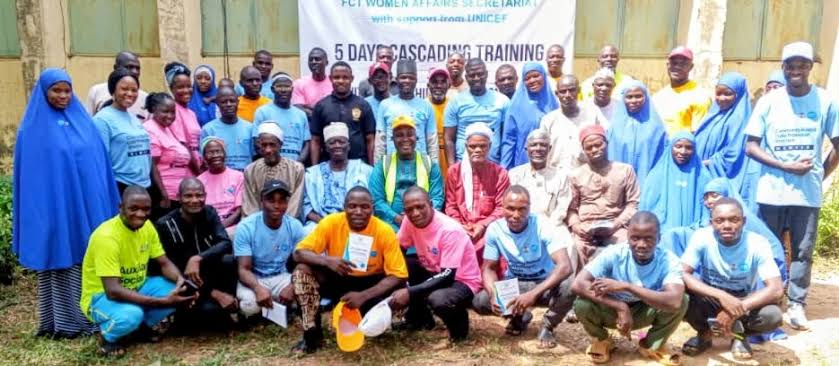
The director, Child Development Department, FCT Women Affairs Secretariat, Idris Yahaya Attah, disclosed this during an ongoing training on Community-Based Child Protection Structures (CBCPS) in Abaji area coouncil.
Attah said the training was designed to strengthen child protection mechanisms at the grassroots, stressing that communities must understand the provisions of the Child Rights Act, recognise different forms of abuse and know how to prevent and respond to reported cases.
He said the FCTA was concerned about the safety and welfare of children across the territory, adding that protecting children should not be left to government institutions alone but should involve families, traditional institutions, religious organisations and other community stakeholders.
The training, supported by the United Nations Children’s Fund (UNICEF), began last week in Kwali and the Abuja Municipal Area Council (AMAC) for auxiliary social workers and is currently taking place in Abaji and Kuje Area Councils.
Six community clusters are participating in the ongoing sessions in Abaji and Kuje, with five clusters in Abaji and two in Kuje, according to the organisers.
The desk officer, Child Protection Unit, Njideka Nwaeme, said the programme was structured to select 10 representatives from each participating community to form a Child Protection Council.
The councils comprise traditional rulers, male and female youth leaders, Christian and Muslim religious leaders, educationists, security personnel, health workers and auxiliary social workers.
She explained that the composition was intended to ensure that child protection responsibilities were shared among key groups capable of identifying and addressing threats to children’s welfare within their communities.
Nwaeme said participants were being trained on children’s rights, identification of different forms of abuse, including cyberbullying, care for children with special needs and community conflict management.
She added that the training adopted practical teaching methods, including role-play exercises, to help participants understand how to respond to child protection concerns rather than relying solely on theoretical lessons.
According to her, the practical sessions were designed to equip participants with the confidence and knowledge to identify abuse, handle disclosures appropriately and report cases to relevant authorities.
Some participants said the training had improved their understanding of child protection and strengthened their capacity to intervene in cases affecting children in their communities.
Danlami Musa Magaji from Kayarda Community said the sessions had increased awareness of the importance of children’s education and the need to eliminate child labour and abuse.
He said the knowledge acquired would help him and other participants identify, address and report cases of child abuse.
Similarly, a participant from Gaube Community, Ms Awhetu, said the training had equipped her with skills to support children who had experienced sexual abuse, physical violence and child labour.
She also highlighted the importance of community sensitisation, noting that prompt medical attention should be prioritised when a child is sexually assaulted, alongside reporting the incident to the appropriate authorities.
Another participant, Hauwawu Yusuf, from Kayarda Community, commended the initiative, saying it had strengthened her capacity to continue the voluntary child welfare activities she had been undertaking in her community.
Yusuf, a woman leader, said she had been assisting children from widowed families with school placement, while calling for greater economic empowerment of women to enable them to provide for and raise their children, particularly in households without fathers.
The participating communities in Kuje include Kayarda, which is hosting the training, Rije, Gaube, Kuchiyako, Kuyizhi and Old Kapagye.
The training is expected to continue next week in Bwari and Gwagwalada Area Councils as the FCTA extends the community-based child protection initiative to other parts of the territory.
We’ve got the edge. Get real-time reports, breaking scoops, and exclusive angles delivered straight to your phone. Don’t settle for stale news. Join LEADERSHIP NEWS on WhatsApp for 24/7 updates →
Join Our WhatsApp Channel