
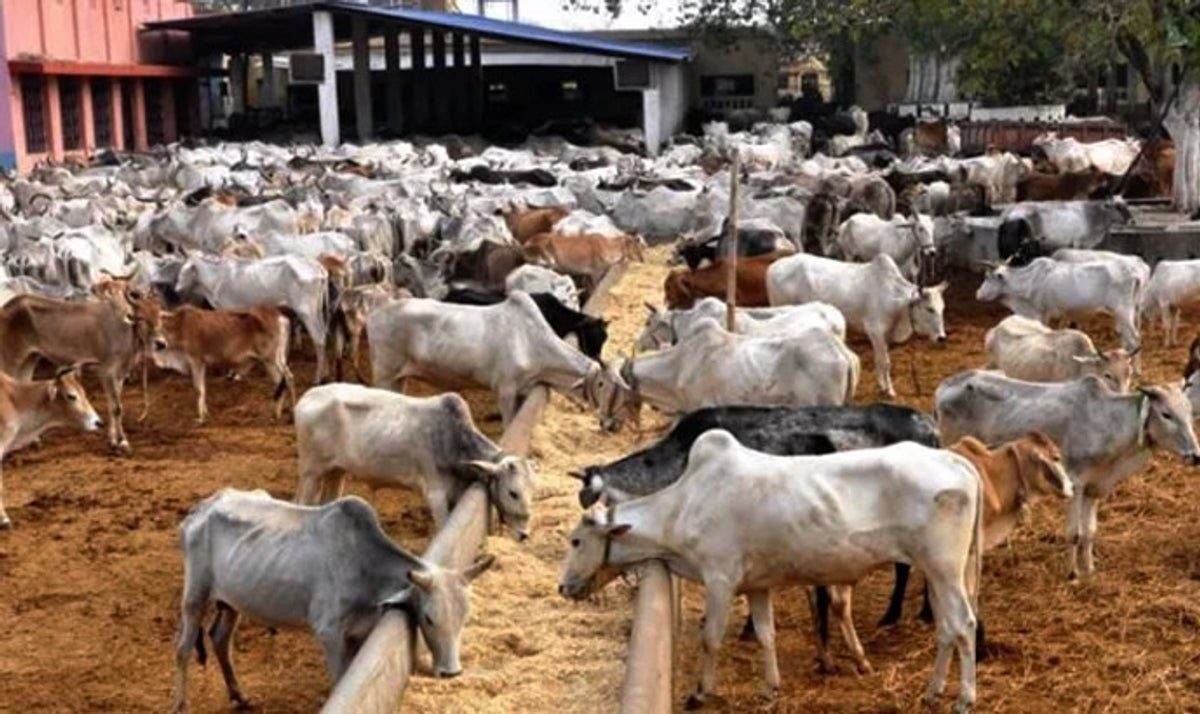
The federal government plans to establish national communal ranches in six states to reduce methane emissions from livestock, improve productivity, and address challenges associated with nomadic grazing.
The minister of Livestock Development disclosed this yesterday during a meeting with the ILRI–GATES Livestock Feed and Nutrition Project team, where discussions focused on the role of livestock feeding systems in methane emissions and climate change mitigation.
He said methane emissions from ruminant animals were primarily driven by poor feeding practices, particularly high-fibre diets, and stressed that a transition to protein-rich, climate-resilient feed options would significantly cut emissions while enhancing animal performance.
According to the minister, Adamawa, Benue, Kaduna, Kano, Plateau and the Federal Capital Territory (FCT) have been selected as pilot locations for the establishment of the national communal ranches, with land allocation expected before the next rainy season.
“Feed and fodder are our number one priority. If animals are properly fed and kept healthy, even our indigenous breeds can perform optimally,” he said, noting that nomadic movement is increasingly driven by feed scarcity rather than cultural practice.
He explained that the federal government plans to scale up year-round fodder production nationwide through solar-powered irrigation systems, micro-earth dams, and basic infrastructure within designated grazing reserves.
“This is no longer about theory. It is time for boots on the ground,” the minister said, adding that the initiative would contribute to climate action, strengthen food systems and reduce security risks linked to uncontrolled livestock movement.
On behalf of the ILRI–GATES Livestock Feed and Nutrition Project, the programme leader, Dr Anu Frank-Lawale, said the project aligned with the government’s livestock reform agenda and would support the deployment of practical, tested solutions.
He said the project focuses on the use of crop residues, fermented protein feeds as alternatives to conventional protein sources, climate-resilient forages and mycotoxin assessment in animal feeds across Nigeria, Kenya and Ethiopia.
Also, ILRI country representative, Dr Tunde Amole, said the project prioritises scaling proven forage varieties suitable for the Sahel, noting that methane emissions from livestock are essentially a feed-related issue.
“Methane emissions are not simply an animal issue; they are a feed issue,” he said, adding that improved feeding systems would reduce greenhouse gas emissions while improving livelihoods and food security.
We’ve got the edge. Get real-time reports, breaking scoops, and exclusive angles delivered straight to your phone. Don’t settle for stale news. Join LEADERSHIP NEWS on WhatsApp for 24/7 updates →
Join Our WhatsApp Channel