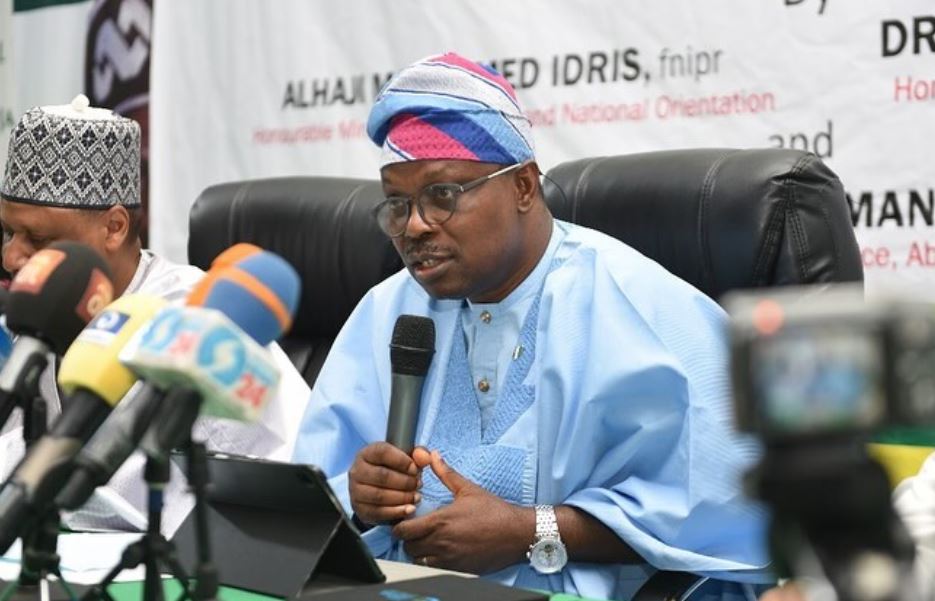
The federal government has expressed concern over Nigeria’s growing dependence on foreign aid for essential health services, warning that a projected 15 to 20 per cent drop in donor funding could reverse years of progress in HIV/AIDS, malaria, tuberculosis, immunisation, maternal health and epidemic preparedness.
Minister of state for health and social welfare, Dr. Iziaq Salako, stated this yesterday at the 9th Annual Health Conference of the Association of Nigeria Health Journalists (ANHeJ) in Abuja.
Delivering his keynote address on the theme: “Domestic Resource Mobilisation in the Face of Dwindling Foreign Grants and Aid,” Dr. Salako said Nigeria had benefitted significantly from development partners for two decades but that global economic pressures meant that donor support was becoming less predictable.
Represented by Dr Babatunde Akinyemi, the minister noted that the United States government had invested over $6 billion in Nigeria’s HIV response through PEPFAR since 2004, while USAID allocated $535 million to health programmes in 2023 alone. Nigeria has also received $2.5 billion from the Global Fund, $1.5 billion in World Bank health support, over $1.2 billion from Gavi for immunisation, and more than $1.6 billion in health investments from the Bill and Melinda Gates Foundation.
But the minister warned that shifts in global priorities, geopolitical tensions and donor fatigue were shrinking available aid and creating “short-term gaps” in critical programmes.
“Foreign health assistance is undeniably changing. Some longstanding donors have signaled programmatic transitions, and funding adjustments have already created gaps in HIV, malaria, immunisation, and other priority areas,” Salako stated.
He said Nigeria must now accelerate domestic financing through mechanisms such as the Basic Health Care Provision Fund (BHCPF), the National Health Insurance Authority (NHIA) Act, improved procurement efficiency, digital financial management systems, and blended financing involving public–private partnerships.
At the state level, Dr. Salako highlighted Lagos, Kaduna, Delta, and Abia as examples of subnational governments implementing innovative funding models for health system strengthening.
Special adviser to the president on health, Dr. Salma Ibrahim Anas said Nigeria must urgently strengthen domestic resource mobilisation to protect its health security.
She said the country’s current health financing structure was fragile and unsustainable, with out-of-pocket health spending still the dominant source of financing despite recent increases in per capita expenditure.
“Donor transitions threaten to unravel decades of progress. When grants slow down, stockouts occur, services break down, and the most vulnerable communities suffer catastrophic consequences,” she warned.
Anas said President Bola Ahmed Tinubu’s Renewed Hope Agenda, through the Nigeria Health Sector Renewal Investment Initiative (NHSRII), is addressing these risks by expanding health insurance coverage, strengthening primary healthcare, prioritising local drug manufacturing, and advocating increased BHCPF allocation from 1 per cent to 2 per cent of the Consolidated Revenue Fund.
She further disclosed that the Federal Government was pushing for the earmarking and upward review of the Sugar-Sweetened Beverage (SSB) tax, aligning with global recommendations for reducing non-communicable diseases.
Both officials stressed that domestic resource mobilisation will fail without accountability and strong state-level commitment. Most states, they noted, are still far from meeting the Abuja Declaration target of allocating 15 per cent of their annual budget to health.
They also underscored the critical role of health journalists in tracking funding flows, educating citizens about health insurance, reporting inefficiencies, and holding governments accountable.
The Federal Government reaffirmed its commitment to ensuring that the transition from donor dependence does not disrupt essential services, especially for vulnerable populations.
We’ve got the edge. Get real-time reports, breaking scoops, and exclusive angles delivered straight to your phone. Don’t settle for stale news. Join LEADERSHIP NEWS on WhatsApp for 24/7 updates →
Join Our WhatsApp Channel