
Stakeholders in Nigeria’s enterprise sector have called for reforms to improve access to finance for micro, small and medium enterprises (MSMEs), with emphasis on business formalisation, better-targeted interventions and stronger coordination among government agencies and financial institutions.
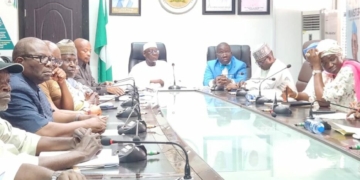
The call came during a panel discussion at a breakout session of the 32nd Nigerian Economic Summit in Abuja on Monday.
Minister of State for Industry, Trade and Investment, Senator John Owan Enoh, said the informal nature of many small businesses remained a major barrier to accessing financing. He said some enterprises had struggled to meet documentation requirements for intervention funds, including the N5 billion MSME component of the N200 billion intervention fund.
He urged measures to encourage business registration and formalisation, while calling for stronger capacity-building to enable small businesses to access credit and participate in the formal economy.
Enoh also said the Federal Government was working to connect MSMEs with larger manufacturers to create more dependable supply opportunities and deepen their participation in industrial value chains.
He further called for an updated census of MSMEs, noting that the current estimate of 39 million enterprises was based on 2020 data and no longer reflected present realities.
The Managing Director and Chief Executive Officer of FirstBank, Olusegun Alebiosu, said improving MSME access to finance required a coordinated approach involving commercial banks, microfinance banks, development finance institutions and government.
Alebiosu, represented by his Technical Adviser, Akinsope Roberts, said FirstBank had introduced financing products for businesses, including women-owned enterprises and traders. He, however, stressed that access to credit still depended on business viability and cash flow.
He said the bank’s FirstCredit product had disbursed more than N1 trillion since its introduction about six years ago. According to him, the facility provides short-term working capital, with some customers borrowing for three to five days to meet immediate stock and supply needs.
Alebiosu said MSMEs required different financing arrangements depending on their size and stage of development, adding that the needs of petty traders and micro-enterprises differed from those of larger businesses.
He called for closer coordination between financial institutions and government to ensure that credit reached businesses through appropriate products and repayment structures.
Economic Adviser to the Katsina State Governor, Khalil Nur Khalil, said governments needed to improve access to finance, training, capacity building and infrastructure to support MSME development.
Khalil identified reliable data, policy alignment, public-private partnerships and business-environment reforms as critical to improving the operating conditions of small businesses. He said accurate data would help governments identify businesses, understand their financing and operational needs, and design suitable policies.
He also called for better coordination among federal, state and local government policies, particularly to align industrial development strategies with MSME support programmes.
Managing director of Prothrive (GrandLos PAP), Oluyemisi Obe, called for financing schemes and support programmes that reflect the changing needs of businesses as they expand.
She said some MSMEs outgrew the financing initially provided to them but continued to face limitations because intervention programmes did not adequately address their growth. Obe cited her experience with the Lagos State Employment Trust Fund, which provided her business with a N5 million loan in 2016, saying the business had since expanded beyond the initial financing level.
She urged policymakers to conduct gap analyses to identify the needs of businesses at different stages of development and ensure that support programmes evolved alongside them. Obe also advocated legislation at federal and state levels to provide a lasting policy framework for MSME development and reduce policy disruption caused by changes in administration.
A Professor of International Studies at the Graduate School of International Management, Gaku Funabashi, called for an MSME development strategy tailored to Nigeria’s economic conditions rather than the wholesale adoption of policies from other countries.
He said policymakers should identify priority industries and determine the products and components MSMEs could supply to support their development.
We’ve got the edge. Get real-time reports, breaking scoops, and exclusive angles delivered straight to your phone. Don’t settle for stale news. Join LEADERSHIP NEWS on WhatsApp for 24/7 updates →
Join Our WhatsApp Channel