The Federal Ministry of Education, in collaboration with the Universal Basic Education Commission (UBEC), has sensitised education stakeholders from the North-West and North-East zones on the effective implementation of a $552.18 million investment fund to revitalise basic education in Nigeria.
The sensitisation workshop, held in Kano, focused on the rollout of the HOPE-EDU and HOPE-GOV programmes, funded by the World Bank and the Global Partnership for Education (GPE), to strengthen the delivery of Universal Basic Education (UBE) across the country.
At the event, the executive secretary of UBEC, Aisha Garba, said the initiative aligns with President Bola Ahmed Tinubu’s Renewed Hope Agenda and targets critical gaps in the nation’s basic education sector.
She said the programmes were expected to improve learning outcomes for over 29 million children, empower about 500,000 teachers, facilitate the construction of 13,000 classrooms, and address the challenge of out-of-school children nationwide.
Garba said while the Federal Ministry of Education and UBEC would provide funding and technical support, implementation would be driven at the state level.
“The success of this programme depends on transparency, accountability, and collaboration among all stakeholders. States must take ownership through effective planning, community engagement, and execution,” she said.
She therefore urged the participants to adopt data-driven monitoring mechanisms to track progress and ensure judicious utilisation of resources.
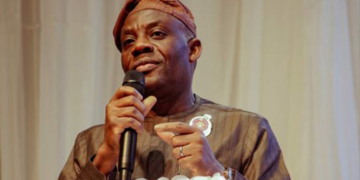
In his welcome address, Kano State commissioner for Education, Dr Ali H. Abubakar Makoda, described the initiative as timely, stressing the need for states to move beyond access to ensuring measurable learning outcomes.
Makoda said Kano State had prioritised education through increased funding, large-scale teacher recruitment, infrastructure development, and learning improvement initiatives, adding that the state was ready to integrate the HOPE-EDU programme into its ongoing reforms.
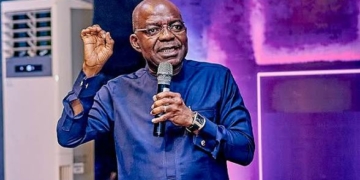
Also, the executive chairman of the Kano State Universal Basic Education Board (SUBEB), Mallam Yusuf Kabir, emphasised that effective implementation at the school level would determine the programme’s success.
He said the board had strengthened accountability systems, supervision, and teacher support mechanisms to ensure improved service delivery.
Kabir said SUBEB would focus on enhanced monitoring, better data utilisation, and stronger community engagement to achieve tangible results.
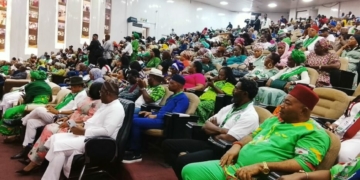
The workshop brought together commissioners for education, SUBEB chairmen and heads of key implementing departments from the two geopolitical zones to develop actionable strategies for the effective delivery of the programmes.
We’ve got the edge. Get real-time reports, breaking scoops, and exclusive angles delivered straight to your phone. Don’t settle for stale news. Join LEADERSHIP NEWS on WhatsApp for 24/7 updates →
Join Our WhatsApp Channel