… As sufficiency rises from 11 to 22 days
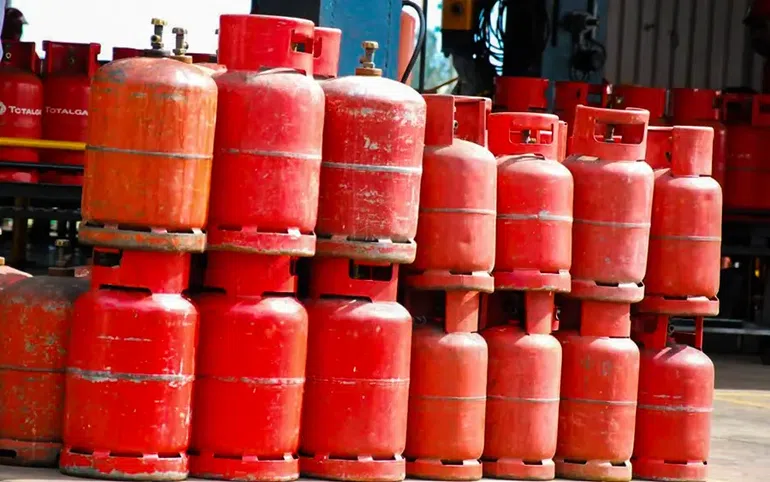
The federal government has ordered immediate action to stop the diversion, hoarding, and unauthorised export of Liquefied Petroleum Gas (LPG), declaring zero tolerance for profiteering after retail prices spiked to as much as N2,400 per kilogramme in some locations across the country.
The minister of state for Petroleum Resources (Gas) Hon. Ekperikpe Ekpo, who chaired Monday’s emergency stakeholders’ meeting in Abuja, directed security agencies — the Department of State Services, the Economic and Financial Crimes Commission and the Nigeria Police Force — to clamp down on illegal storage, diversion and market manipulation along major LPG corridors.
Ekpo urged security agencies, regulators, producers and market participants to turn commitments into immediate action.
He specifically called on the Department of State Services, the Economic and Financial Crimes Commission, and the Nigeria Police Force to prevent the diversion of products from legitimate supply chains and to crack down on illegal storage and hoarding along key LPG corridors.
“We must move from discussion to clear commitments, immediate action, and accountable follow‑through by every stakeholder.”
Ekpo said in his closing remarks. “I charge every stakeholder to deliver outcomes Nigerians can see and feel: more LPG in the market, faster movement to retail points, fewer artificial bottlenecks, stronger enforcement, clearer consumer information, and measurable relief in price pressure.”
The minister and regulators pointed to recent sharp local price spikes as a key driver for urgent action.
In some locations, retailers have pushed LPG prices as high as N2,400 per kilogramme, industry sources said — a level that regulators say is unsustainable and likely driven by diversion, hoarding and speculative trading.
Co‑ordinated interventions, he said, should include prioritising domestic supply, publishing transparent loading schedules and stock levels, sharing arrival and discharge timelines, and improving truck turnaround times to speed distribution to high‑demand areas.
He asked the retailers and plant operators to display prices clearly, avoid arbitrary increases, maintain safe dispensing practices, and report supply disruptions promptly.
Ekpo called on the consumer protection and public communication agencies to keep the public informed, provide reporting channels, counter misinformation, and promote safe LPG handling practices.
He pleaded that responsibilities must translate into visible improvements for Nigerians.
“I charge every stakeholder to deliver outcomes Nigerians can see and feel: more LPG in the market, faster movement to retail points, fewer artificial bottlenecks, stronger enforcement, clearer consumer information, and measurable relief in price pressure.”
Also peaking, the chief executive officer of the Nigerian Midstream and Downstream Petroleum Regulatory Authority (NMDPRA), Rabiu Abdullahi Umar, said the authority is developing a gas tariff regulation and a pricing framework that will be considered at a follow‑up meeting.
According to him, the Petroleum Industry Act empowers NMDPRA to pursue fair, cost‑reflective pricing and that the authority is proposing measures to restore LPG prices to levels seen about 18 months ago.
“We are recommending steps to get prices back to where they were a year, a year and a half ago — roughly between N800,000 and N900,000 per metric tonne,” Umar said, adding that returning to those levels would bring substantial relief to consumers.
Umar also announced intensified monitoring, publication of market updates, and investigative action against operators who hoard or manipulate the market.
He said NMDPRA will work with NLNG, local LPG plants and major producers to boost local availability, reduce avoidable distribution costs and support price stability.
The regulator reported improved supply levels following the engagement, saying national LPG sufficiency has risen from around 11 days to 22 days.
Average daily supply in June stood at about 5.040 million metric tonnes, up from 4.262 million metric tonnes in May.
Umar said the government is intervening to ramp up production, aiming to raise output from 170 million metric tonnes to 300 million metric tonnes to strengthen energy security. He noted logistical constraints at NLNG — including vessel size and turnaround time — are being addressed through planned meetings with the company.
Import plan and structural challenges
Despite Nigeria’s large gas reserves, Umar acknowledged a domestic supply gap driven by the incomplete domestication of local production and inadequate distribution infrastructure. He said the country plans to increase imports to close the deficit, with 165,000 metric tonnes projected for the third quarter of 2026.
He also warned that global price shocks and supply disruptions — including instability linked to tensions in the Middle East — have contributed to recent price volatility in the domestic LPG market.
Umar flagged unresolved delineation issues that limit regulatory oversight, and said further high‑level engagement with the Nigerian Upstream Petroleum Regulatory Commission, Chevron Nigeria Limited and the office of the Minister of State (Gas) is required to address shipping logistics and export‑permit processes that can affect domestic supply.
Market responsibilities laid out
At the meeting, the minister and regulator issued specific directions to market actors:
Producers and domestic suppliers: prioritise the Nigerian market, provide reliable supply forecasts, and ensure domestic allocations reach consumers without diversion.
Depot and terminal operators: publish loading schedules, report stock and evacuation levels, and improve truck turnaround times.
Marketers and importers: bring in additional volumes where required, share arrival and discharge timelines, price responsibly, and avoid withholding product.
Transport and logistics firms: increase truck availability, reduce delivery bottlenecks, and keep haulage costs transparent.
Retailers and plant operators: display prices clearly, avoid arbitrary hikes, and report supply disruptions promptly.
Consumer protection and communication agencies: keep the public informed, provide reporting channels, counter misinformation, and promote safe LPG handling.
Ekpo said the federal government will remain vigilant, monitoring developments and intervening to protect consumers while supporting responsible investment in a gas‑powered economy. He urged that regulatory and enforcement measures be visible to Nigerians through increased LPG availability and lower retail prices.
We’ve got the edge. Get real-time reports, breaking scoops, and exclusive angles delivered straight to your phone. Don’t settle for stale news. Join LEADERSHIP NEWS on WhatsApp for 24/7 updates →
Join Our WhatsApp Channel