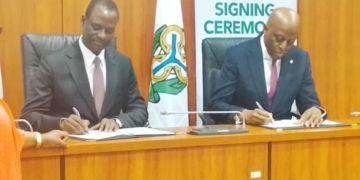
The federal government has said that industries and commercial enterprises in Abuja’s Idu industrial zone will receive more reliable electricity supply following the ground-breaking of a 50-megawatt power project.
The government said the initiative is being developed through a partnership involving Welbeck Electricity Distribution Limited, the Abuja Electricity Distribution Company and Shell Gas Limited.
Also, the project will be implemented in phases, with the first phase expected to deliver 10MW by December 2026. The remaining 40MW is scheduled to be rolled out in 2027.
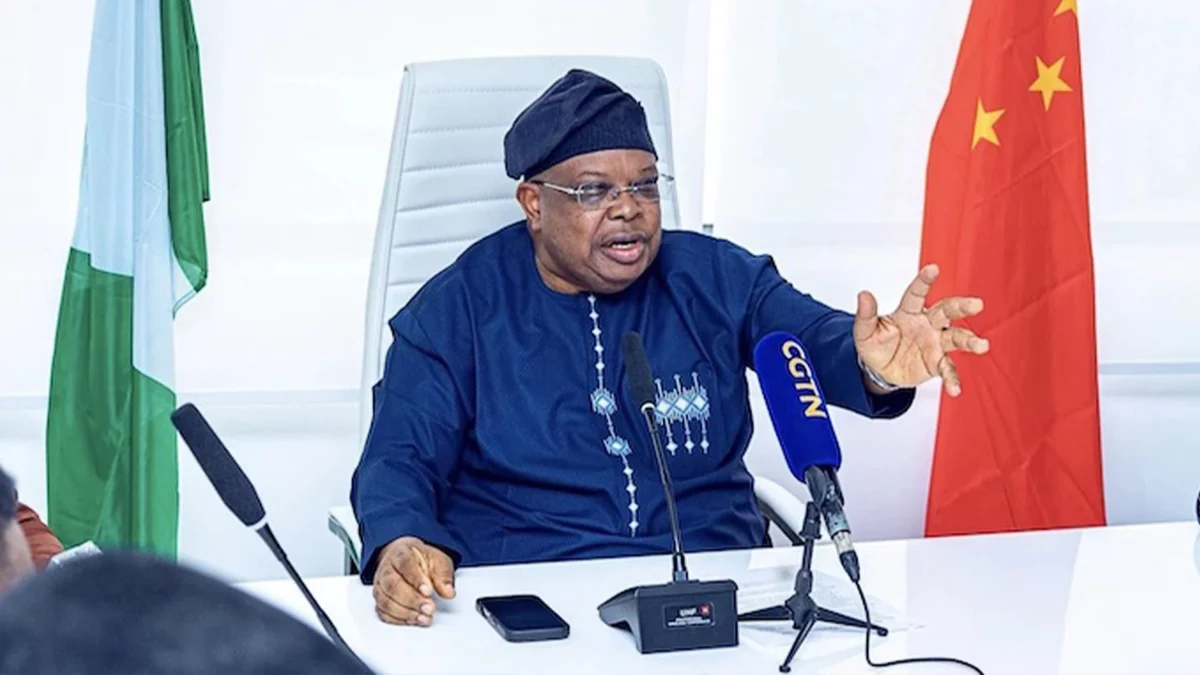
Speaking at the ground-breaking ceremony, the minister of Power, Joseph Tegbe, said the federal government was conducting technical audits of major industrial corridors across the country.
He identified the Lagos industrial axis, the Abuja-Kaduna corridor and the Enugu-Onitsha axis as priority areas for government intervention.
According to Tegbe, the Lagos industrial corridor accounts for about 40 per cent of Nigeria’s electricity demand. He added that the government’s interventions in the corridor were expected to create or preserve approximately 180,000 jobs within the next six months.
“Our target is that within six months we will fix the issues in the Lagos-Sagamu corridor regarding infrastructure and then move on to Abuja and then the Enugu-Onitsha axis,” he said.
The minister’s comments came two days after the commissioning of a 3MW hybrid mini-grid project at Yakubu Gowon University, Abuja, formerly known as the University of Abuja.
The mini-grid is designed to provide round-the-clock electricity to more than 58,000 students and residents of the university community.
Tegbe pledged the support of President Bola Ahmed Tinubu for the successful implementation of the Idu industrial power project.
He stressed the need for effective coordination among the generation, transmission and distribution segments of the electricity value chain.
“We need to ensure the transmission happens and then even distribution. I am sure Abuja Disco is represented here because if you want to effectively distribute to the industrial end users, there must be a handshake,” he said.
The minister also highlighted the provisions of the Electricity Act 2023, particularly its decentralisation of the power sector. The law allows sub-national governments and private investors to participate in electricity generation, transmission and distribution.
He said the greater involvement of states and private-sector operators would deepen participation in the sector and improve electricity supply across the country.
Tegbe said the new generation project would support industrialisation and economic growth along the Abuja-Kaduna corridor.
He identified the vandalism of power infrastructure as one of the major challenges facing the sector and urged host communities to protect electricity assets to ensure the sustainability of the project.
Also speaking at the event, the Minister of State for Industry, John Owan Enoh, said the government’s industrial policy was focused on promoting local production, value addition, economic diversification and the integration of Nigerian businesses into global markets.
“When you produce locally, you contribute to job creation and provide our abundant youth with a pathway for employment,” Enoh said.
We’ve got the edge. Get real-time reports, breaking scoops, and exclusive angles delivered straight to your phone. Don’t settle for stale news. Join LEADERSHIP NEWS on WhatsApp for 24/7 updates →
Join Our WhatsApp Channel