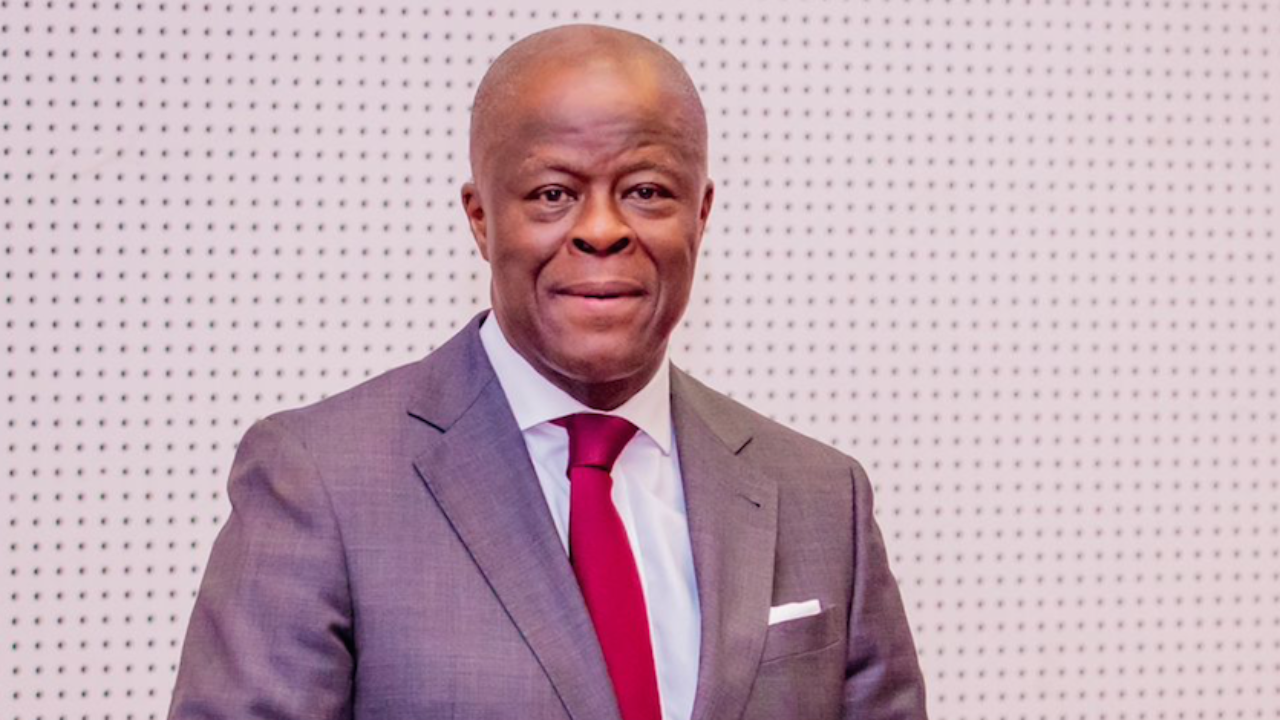
With the International Monetary Fund (IMF) and World Bank projection of the Nigerian economy growth at about five per cent this year, the Minister of Finance and Coordinating Minister of the Economy, Mr Wale Edun, has said the country is on the right path to achieve sustained growth of at least seven per cent by 2027–2028.
The Minister said the growth is driven by ongoing macroeconomic and structural reforms aimed at restoring stability, boosting productivity and deepening inclusion.
Speaking at the African Business Convention, the minister noted that global trade and investment dynamics are shifting rapidly, with increasing protectionism, fragmented supply chains and more cautious capital flows making it imperative for countries such as Nigeria to build resilience through domestic reforms.
The Minister who was represented by the Permanent Secretary of the Federal Ministry of Finance, Mr Raymond Omachi, said many African economies now spend more on debt servicing than they receive in development assistance, underscoring the urgency of productivity-led growth.
He noted that since May 2023, Nigeria had embarked on a disciplined and reform-oriented economic programme anchored on restoring macroeconomic stability and rebuilding government capacity to invest strategically in long-term growth drivers such as education, healthcare, infrastructure and human capital.
“To achieve seven per cent GDP growth by 2027–2028, Nigeria must return to a path of growth of at least seven per cent, that is what we are working on every day. Not oil-driven growth but a sustained growth, inclusive and productivity-led growth.
“The global economic environment is challenging but Nigeria’s direction is clear and we are following it consistently. The foundation is being laid, the reforms are taking hold and the ambition is unwavering. Seven per cent growth, a million lifted out of poverty in Nigeria is not a distant dream and aspiration, it is already here. It is a shared project, we need to work together.”
He noted that the reform process has been challenging, with short-term pains, but stressed that the measures are necessary to reposition the economy for sustainable expansion.
Among the key interventions, he highlighted foreign exchange market reforms, which he said have significantly narrowed the gap between the official and parallel markets, improving transparency and investor confidence.
“For Africa, growth must be domestically driven, private-sector led and productivity-focused. We must mobilise our own resources, use technology to overcome constraints, and convert our greatest asset our people into skilled, productive participants in the global economy. Nigeria, as Africa’s largest economy and most populous nation, has both a responsibility and an opportunity to lead.
“Since May 2023, Nigeria has embarked on a coherent disciplined, reform-oriented economic programme built on two core goals. First, to restore macroeconomic stability and credibility so private investment can thrive. Second, to rebuild government capacity so the state can invest strategically in the foundations of long-term growth, education, healthcare, infrastructure and human capital.
“To achieve this, the government has taken bold and sometimes difficult decisions. Reforms are often painful. They affect people in the short term, but they are necessary for long-term improvement.”
The minister also pointed to ongoing tax reforms focused on simplifying compliance, eliminating inefficiencies and strengthening administration, alongside broader structural reforms across power, energy, logistics, education and industry.
He said these measures are designed to build a competitive economy where capital is productive, effort is rewarded and opportunities are broad-based.
Edun added that to cushion the impact of reforms, the government has rolled out targeted social interventions, including direct cash transfers to vulnerable households, with over eight million households already reached and a target of 15 million.
Reiterating the central role of the private sector, he said the government’s responsibility is to provide macroeconomic stability, infrastructure, policy consistency and a transparent, business-friendly environment. Nigeria, he said, is seeking investments that build factories, develop skills, transfer technology and strengthen regional value chains.
He added: “The private sector is the engine of Nigeria’s goal. The government’s role is provide stability, infrastructure, policy consistency and a transparent business-friendly environment. We are seeking investment that builds factories, investments that build skills, technology and a regional value chain. Nigeria is not just open for business, Nigeria is reforming to accelerate business.”
Edun further stressed that achieving seven per cent growth and lifting millions of Nigerians out of poverty is no longer a distant aspiration but an achievable national objective anchored on consistent reforms and collective effort.
We’ve got the edge. Get real-time reports, breaking scoops, and exclusive angles delivered straight to your phone. Don’t settle for stale news. Join LEADERSHIP NEWS on WhatsApp for 24/7 updates →
Join Our WhatsApp Channel