
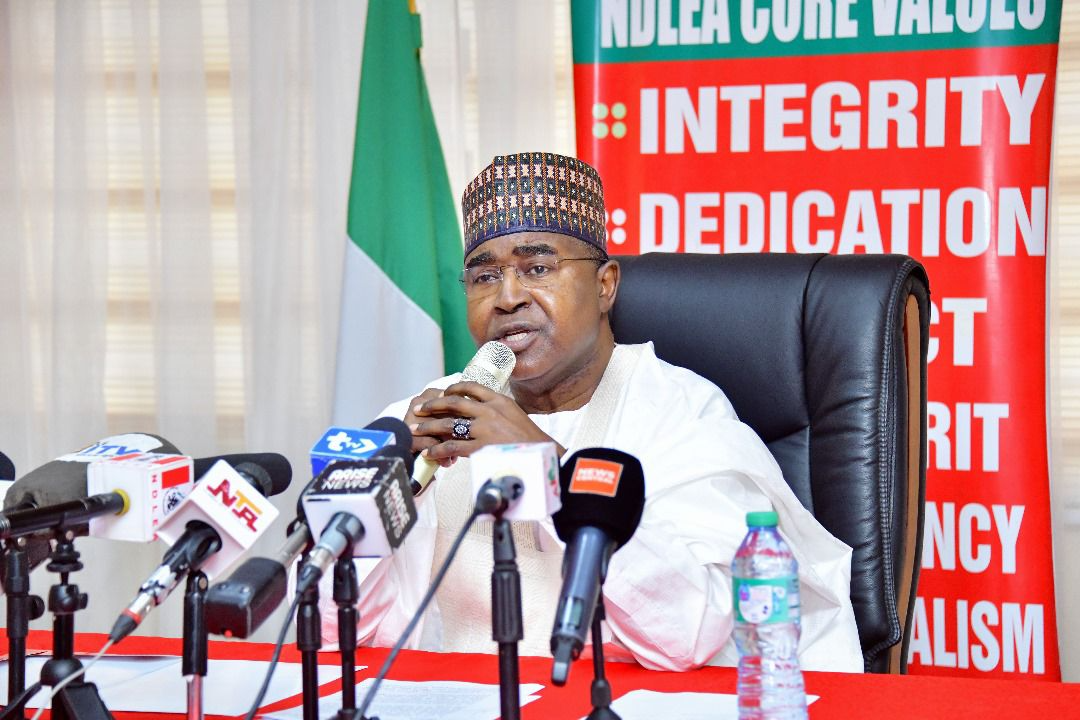
The federal government has vowed to prevent illicit drug use, dismantle drug trafficking networks, expand access to treatment and rehabilitation, and promote the well-being of Nigerians.
At the opening of the National Drug Use Summit yesterday, the secretary to the government of the federation (SGF), Senator George Akume, said the administration of President Bola Tinubu remains resolute in tackling the country’s growing drug problem through coordinated national action.
Represented by the permanent secretary, General Services Office, Dr Adamu Ibrahim Kana, Akume said no nation could achieve sustainable development when its youth population is threatened by drug abuse and addiction.
Akume said the meeting provided an opportunity to deepen collaboration among stakeholders and develop a coordinated response to Nigeria’s drug challenge in line with the Renewed Hope Agenda.
In his welcome address, the chairman/chief executive officer of NDLEA, Brig-Gen. Mohamed Marwa (rtd), described the summit as a platform for reflection, dialogue and collective action against illicit drug use and substance use disorders.
He said the country’s drug challenge could no longer be addressed by a single institution, calling instead for a whole-of-government and whole-of-society approach involving government agencies, communities, families, civil society organisations, religious and traditional leaders, development partners, the private sector and the media.
Marwa said the summit would help mobilise support for a coordinated National Action Plan focused on prevention, treatment, rehabilitation, improved data collection, effective policy implementation and stronger community resilience.
Speaking on the agency’s recent achievements, the NDLEA boss disclosed that in the last 18 months, the agency arrested 29,262 suspects, seized more than 5.3 million kilogrammes of assorted illicit drugs valued at over ₦1.5 trillion, and secured 5,225 convictions.
He added that the agency conducted 6,645 drug prevention and awareness campaigns across schools, worship centres, markets, workplaces, motor parks, correctional facilities and communities, reaching nearly five million Nigerians.
Also, the coordinating minister of Health and Social Welfare, Prof. Ali Pate, urged the participants to ensure the summit delivered practical outcomes rather than ending with resolutions alone.
He said success should be measured by the number of young people prevented from drug use, patients receiving effective care and families restored, pledging that the ministry would continue to coordinate national efforts against substance abuse.
Representing the UNODC country representative, Mr Cheikh Toure, Dr Akanidomo Ibanga said the summit demonstrated Nigeria’s commitment to addressing the evolving drug challenge through coordinated, evidence-based action.
He stressed the need to translate commitments under Nigeria’s National Drug Control Master Plan into measurable results, noting that the growing threat posed by emerging drugs requires urgent and collaborative responses.
We’ve got the edge. Get real-time reports, breaking scoops, and exclusive angles delivered straight to your phone. Don’t settle for stale news. Join LEADERSHIP NEWS on WhatsApp for 24/7 updates →
Join Our WhatsApp Channel