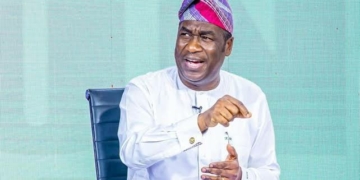
The federal government has moved to activate 112 as Nigeria’s single national emergency number, directing key security, safety and emergency-response agencies to draw up a unified framework for its nationwide operation.
The government has constituted a multi-agency committee comprising the Nigeria Police Force, Nigerian Communications Commission, National Emergency Management Agency, Federal Road Safety Corps and other relevant agencies to develop the operational roadmap and standard operating procedures for the emergency number.
The framework, which is expected to be submitted to the National Economic Council for endorsement, is aimed at replacing Nigeria’s fragmented emergency response system with a single access point for citizens in distress.
The initiative followed the recent approval by NEC of 112 as Nigeria’s universal toll-free emergency number, with the government seeking to eliminate delays and confusion over which agency citizens should contact during emergencies.
Speaking in Abuja at the National Emergency Number 112 Project stakeholders meeting, Vice President Kashim Shettima directed the committee to produce a clear roadmap for implementation, stressing the need to align the framework with global best practices.
The move is expected to provide Nigerians with a single channel for seeking urgent assistance during armed attacks, road crashes, fire outbreaks, medical emergencies, kidnappings and other life-threatening incidents.
The Inspector-General of Police, Olatunji Rilwan Disu, said the Nigeria Police Force fully supported the adoption of 112 as the country’s unified emergency number.
Disu said the current challenge for many citizens in distress was determining which emergency agency to call, adding that a single number should instead connect callers to the appropriate response agency.
Earlier, the Personal Assistant to the President on e-Governance in the Office of the Vice President, Mrs Lydia Aina, said Nigeria’s emergency response operations were spread across multiple agencies, systems and jurisdictions.
According to her, the arrangement had created fragmentation in the way emergencies were received, coordinated and handled across the country.
Aina said the government’s objective was to move from the existing fragmented system to a coordinated response mechanism and ultimately establish a fully integrated national emergency framework.
We’ve got the edge. Get real-time reports, breaking scoops, and exclusive angles delivered straight to your phone. Don’t settle for stale news. Join LEADERSHIP NEWS on WhatsApp for 24/7 updates →
Join Our WhatsApp Channel