…processors seek ban on foreigners’ direct access
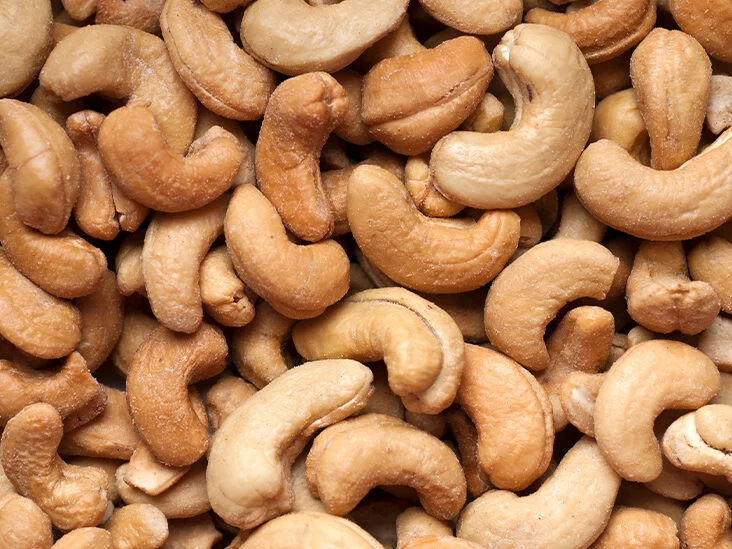
Nigeria’s cashew industry is entering a new phase of policy and investment opportunities after the federal government opted for an industry roadmap rather than an outright ban on raw cashew exports.
While growers are targeting one million tonnes of production, processors are pushing for tighter control of foreign access to farm-gate supplies.
Although farmers want competitive prices and assured markets for their produce, domestic processors said uncontrolled purchases by foreign buyers are driving up raw cashew prices and is undermining their competitiveness.
National Cashew Association of Nigeria (NCAN) said the validated roadmap provides a more sustainable alternative to an export ban, arguing that the government can achieve greater value addition by supporting farmers and processors simultaneously.
Its national president, Ademola Adesokan, told LEADERSHIP exclusively, that the industry was encouraged by the federal government’s decision to establish a policy framework instead of restricting exports.
“There is no export ban. The cashew industry has a bright future; stakeholders are very happy. We finally have a policy validated by stakeholders with collaboration with the Ministry of Industry, Trade and Investment and the Ministry of Agriculture and Food Security,” Adesokan said.
Earlier in the year, cashew growers feared that a proposed blanket export ban could hurt farmers, five million jobs would be lost if financing, infrastructure and market constraints remained unresolved.
However, the roadmap, validated in Abuja by industry stakeholders, targets increasing raw cashew production from the current 300,000 to 350,000 metric tonnes annually to one million metric tonnes within 10 years.
It also targets processing 50 per cent of production locally, a major shift from the present structure in which more than 85 per cent of Nigeria’s cashew output is exported in raw form.
According to NCAN, the commercial opportunity lies in expanding production rather than shutting off export markets.
Adesokan said improved seedlings, extension services and farmer training would be necessary to increase output, while processors would require support to expand domestic capacity.
He said the policy was consistent with the federal government’s broader value-addition strategy and could generate employment in rural communities while increasing foreign exchange earnings.
“President Bola Ahmed Tinubu renewed hope, vision of value addition to our agricultural commodities before export, which will be huge for job creation in our rural areas and FX earnings for the country. These are very exciting times for the industry,” Adesokan said.
Figures from the Nigerian Export Promotion Council (NEPC) indicate that the stakes are already significant. It said Nigeria’s cashew industry generates more than $446.92 million, equivalent to over N635 billion in the early parts of 2026.
The council ranked cashew fourth among 243 distinct products exported from Nigeria in 2024.
Cashew export value also rose from $219.78 million in the first half of 2024 to $398.135 million in the corresponding period of 2025, underlining the growing importance of the commodity to Nigeria’s non-oil export earnings.
While growers see an expanding export market, processors are concerned that the economics of sourcing raw nuts locally are becoming increasingly difficult.
The president of the Cashew Processors and Packagers Association of Nigeria (CAPPAN), Air Vice Marshal Tunde Awoyoola (rtd), who is also managing director of Nutslink Ltd, Ibadan, said the major obstacle confronting domestic processors was the high cost of raw cashew nuts.
Awoyoola who spoke exclusively with LEADERSHIP said Nigerian processors are buying raw cashew at prices that are almost twice those obtainable in some other African producing countries, making locally processed cashew less competitive in international markets.
CAPPAN blamed part of the problem on direct purchases by foreign buyers at farm gates, saying the practice distorts the domestic value chain by competing directly with local processors for available supplies.
“The greatest challenge limiting export of Nigerian processed cashew nuts is that our price is not competitive in the international market. This is mainly because the price at which we buy raw cashew nuts in Nigeria is almost double the price at which it is sold in other African producing countries,” he said.
He argued that foreign buyers’ direct access to farms was contributing to artificial scarcity and price inflation, leaving processors unable to operate profitably.
“It is worthy of being mentioned that the inflated price is deliberately created by foreigners who get direct access into our farm gates, disrupt the cashew value-chain and create artificial scarcity which results in outrageous price-hike,” Awoyoola said.
Awoyoola said foreigners should be prevented from buying directly at farm gates, while the newly developed cashew roadmap should be approved and implemented without delay.
“Ban foreigners’ direct access to the Nigerian farm gates in order to protect the value-chain,” he said.
The federal government’s roadmap attempts to address some of the structural weaknesses identified by both sides of the industry.
Speaking at the validation workshop, minister of state for industry, John Owan Enoh, represented by permanent secretary Chris Osa Isokpunwu, said Nigeria’s large raw-cashew output was not translating into equivalent economic value because most of the crop leaves the country unprocessed.
The roadmap proposes measures covering productivity, ageing plantations, improved seedlings, infrastructure, financing, quality standards and processing capacity.
Government also planned to establish a Nigerian Cashew Project Office to coordinate implementation with the Federal Ministry of Agriculture and Food Security, NCAN, GIZ and other stakeholders.
For NCAN, the key test is implementation. Adesokan said the target was no longer simply a policy aspiration, arguing that the process of putting the framework into operation had already begun.
“The thing for the government to do would have been to ban, which would have led to lots of job losses in our rural areas. The government set a policy framework to support every part of the value chain. Farmers will be supported through extension services, training, and improved seedlings, with harvests starting in 18 months. Processors will be supported so we can start processing more at home,” he said.
He added that the industry’s long-term target was clear: “The goal is 1M metric tons of raw cashew nut production from 300kMT and 50 per cent processed at home in 10 years. The plan is there, and implementation has started, so it’s not just a plan anymore.”
For CAPPAN, however, the immediate priority remains restoring the economics of local processing.
Awoyoola said several processing companies were already operating at losses and that some had shut down and laid off hundreds of workers.
“The policy measures that the federal government needs to put in place to encourage investment in local processing are: Ban foreigners’ direct access to the Nigerian farm gates in order to protect the value-chain,” he said.
He added, “A Nigerian Cashew Policy Roadmap has been developed by the FMITI and FMAFS with the involvement of experts and stakeholders. The federal government needs to expedite its approval and implementation.”
We’ve got the edge. Get real-time reports, breaking scoops, and exclusive angles delivered straight to your phone. Don’t settle for stale news. Join LEADERSHIP NEWS on WhatsApp for 24/7 updates →
Join Our WhatsApp Channel