The federal government, on Tuesday called for the strategic use of public procurement to strengthen Africa’s logistics and supply chain systems, reduce post-harvest losses and improve food security across the continent.
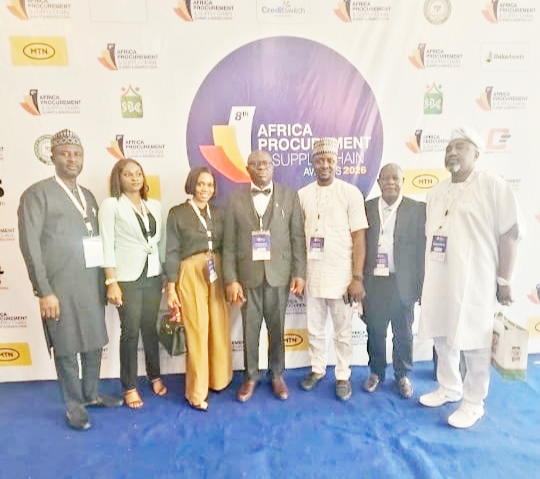
The permanent secretary, Federal Ministry of Agriculture and Food Security, Marcus Ogunbiyi, made the call at the Africa Procurement and Supply Chain Summit and Awards 2026 in Lagos.
Ogunbiyi, according to a statement signed by head, Department of Information, Federal Ministry of Agriculture and Food Security, Ezeaja Ikemefuna, said public procurement had evolved beyond an administrative function into a strategic instrument for economic transformation, institutional strengthening and improving citizens’ quality of life.
Speaking on the theme, “Public Procurement is Live: Creating Opportunities for Sustainable Growth in Africa,” the permanent secretary said governments’ spending of between 12 and 20 per cent of GDP through public procurement placed a significant responsibility on public institutions to ensure that procurement decisions generated broader economic and social value.
He said every procurement decision could stimulate industrial growth, create jobs, improve infrastructure and deliver greater value to citizens, particularly when aligned with national development priorities.
Ogunbiyi said the agricultural sector stood to benefit significantly from more efficient procurement systems, particularly in addressing logistics and supply chain deficiencies that contribute to food losses, higher production costs and rising food prices.
“These challenges are even more pronounced for farmers, who depend on efficient logistics to receive seeds, fertilisers, machinery and extension services on time, while harvested produce must move quickly from farms to aggregation centers, processing facilities, storage hubs and markets.
“This is particularly significant for Africa, where supply chain inefficiencies remain one of the greatest constraints to economic growth and regional competitiveness. Poor transport networks, inadequate logistics infrastructure, fragmented cross-border systems, high freight costs, limited warehousing capacity, and delays in the movement of goods continue to increase the cost of doing business and undermine the efficiency of public investments.
Weak logistics and transportation systems contribute significantly to post-harvest losses, reduce farmers’ incomes, increase food prices, and weaken food security across the continent”,he said.
He urged governments to deploy transparent, well-planned procurement processes to invest in roads, railways, inland waterways, ports, cold-chain infrastructure, warehouses and digital logistics platforms capable of linking producers to markets and facilitating trade under the African Continental Free Trade Area (AfCFTA).
The permanent secretary also called for greater adoption of digital procurement platforms, e-contract management, artificial intelligence, data analytics, blockchain and smart logistics solutions, alongside stronger regional cooperation to modernise procurement and supply chain systems.
He said such reforms would help African countries build resilient supply chains, improve efficiency and maximise the economic opportunities created by continental integration.
We’ve got the edge. Get real-time reports, breaking scoops, and exclusive angles delivered straight to your phone. Don’t settle for stale news. Join LEADERSHIP NEWS on WhatsApp for 24/7 updates →
Join Our WhatsApp Channel