
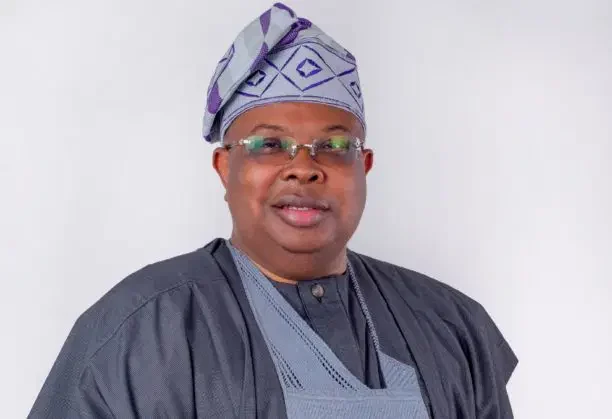
The Chairman of the National Tax Policy Implementation Committee (NTPIC), Joseph Tegbe, has underscored the importance of properly documenting earnings and filing tax returns, even for individuals whose income falls within the tax-exempt threshold.
Speaking at the 2026 BusinessDay Tax Reform Conference, themed “Navigating the New Tax Regime: What It Means for Your Wallet,” Tegbe said Nigeria’s emerging tax regime is structured to reduce the burden on workers and small businesses while strengthening the country’s fiscal sustainability and economic competitiveness.
He described the reforms as the most comprehensive overhaul of Nigeria’s tax architecture in decades, aimed at simplifying the tax system, improving fairness, and encouraging economic growth.
“These reforms are designed to make taxation simpler, fairer, and more predictable for Nigerians,” Tegbe said. “For most workers and small businesses, the new regime means paying the same or even lower taxes while operating within a more transparent system.”
According to him, the reforms also seek to strengthen tax administration through improved coordination among key institutions, including the Nigeria Revenue Service, the Joint Revenue Board of Nigeria, the Tax Appeal Tribunal, and the Office of the Tax Ombud, while accelerating the digitalisation of tax processes.
The new tax regime is anchored in four major legislation: the Nigeria Tax Act, 2025; the Nigeria Tax Administration Act, 2025; the Nigeria Revenue Service (Establishment) Act, 2025; and the Joint Revenue Board of Nigeria (Establishment) Act, 2025.
Under the framework, individuals earning less than N800,000 annually will pay no personal income tax, while workers can claim rent relief of up to 20 per cent, capped at N500,000, among other benefits.
Small businesses are also expected to benefit significantly. Companies with annual revenue below N100 million and assets under N250 million will be exempted from Company Income Tax, while nano-enterprises earning below N12 million annually will not pay income tax.
Tegbe noted that beyond improving revenue efficiency, the reforms are designed to create a tax system that encourages enterprise, investment, and long-term economic growth.
“The ultimate objective is to build a tax system that works for both government and citizens-one that supports development while protecting the pockets of ordinary Nigerians,” he said.
Other dignitaries present at the conference included Olusegun Adesokan, Executive Secretary of the Joint Revenue Board of Nigeria; Michael Ango, Acting Executive Chairman of the FCT Internal Revenue Service; Uche Uwaleke; and Sam Amadi, among others.
We’ve got the edge. Get real-time reports, breaking scoops, and exclusive angles delivered straight to your phone. Don’t settle for stale news. Join LEADERSHIP NEWS on WhatsApp for 24/7 updates →
Join Our WhatsApp Channel