
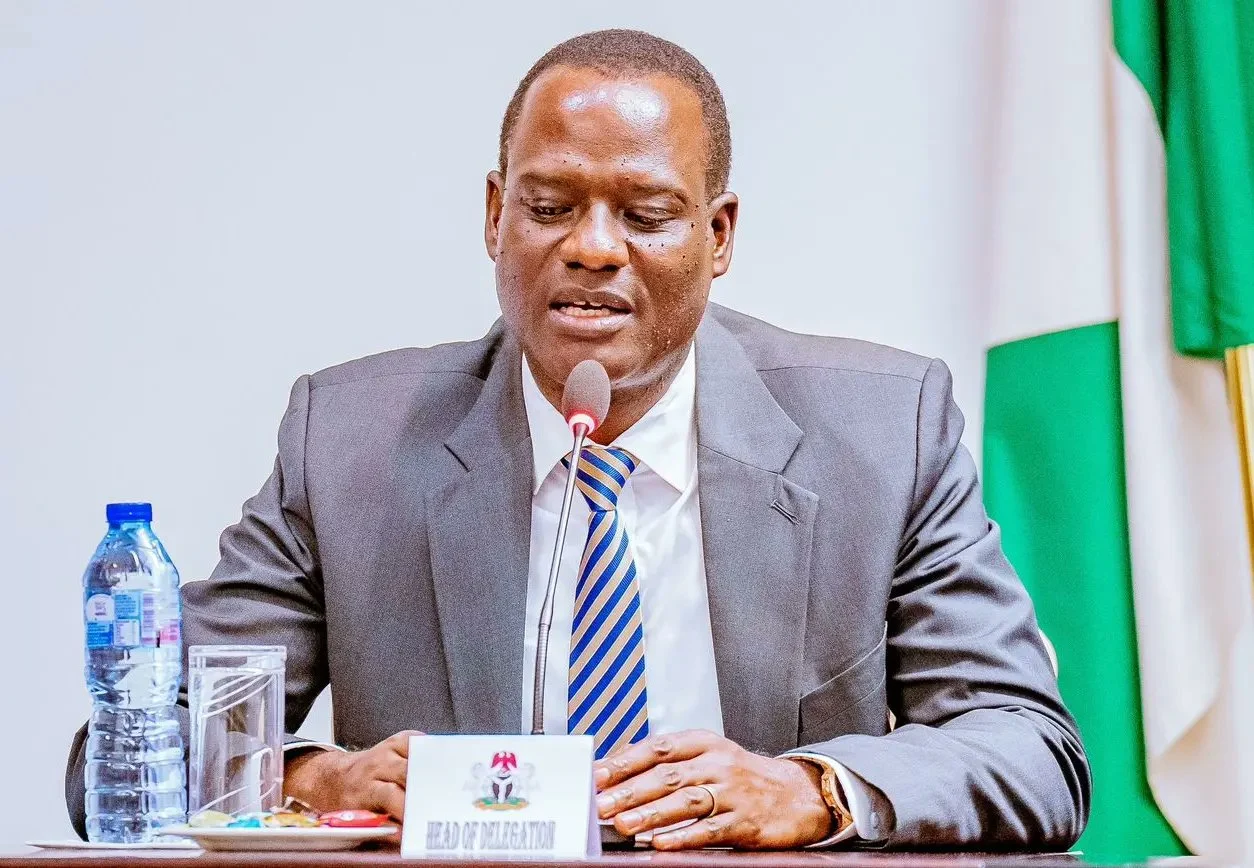
The minister of finance and coordinating minister of the economy, Taiwo Oyedele, has proposed a specialised Commercial Dispute Resolution Tribunal to address business disputes within set timelines.
The minister made the proposal at the Capital Market Academics of Nigeria (CMAN) Second Biennial Conference in Abuja.
The conference had the theme, ‘The Nigerian Capital Market as a Catalyst for Equitable and Inclusive Growth’.
He said delays in resolving commercial disputes remain one of the biggest obstacles to investment, noting that cases currently take an average of 15 years to progress through the High Court, Court of Appeal and Supreme Court.
According to him, such prolonged litigation creates uncertainty, discourages investors and significantly increases the cost of doing business in Nigeria.
To address the challenge, the minister proposed a dedicated Commercial Dispute Resolution Tribunal staffed by judges and arbitrators with specialised expertise in commercial, financial and capital market matters.
He said the tribunal should operate with digital case management systems and mandatory timelines to ensure the swift resolution of disputes involving businesses, suppliers, joint venture partners and other commercial entities.
The minister explained that the proposed tribunal would complement existing investment protection mechanisms by providing a more efficient avenue for resolving commercial disagreements that often delay investments and weaken investor confidence.
He stressed that virtually every financial instrument, including bonds, syndicated loans, private placements and structured notes, is founded on enforceable contracts, making speedy dispute resolution essential for the growth of the capital market.
Beyond judicial reforms, the minister urged Nigerians to reconsider their long-held perception of public borrowing, insisting that debt should be judged by what it finances rather than by its size.
Oyedele argued that borrowing is not inherently harmful and should instead be viewed as a financial tool capable of supporting economic growth when channelled into productive investments.
The minister also challenged the mindset of many Nigerian entrepreneurs who resist bringing in external investors in order to retain full ownership of their businesses.
He noted that owning 100 per cent of a small enterprise often creates less value than holding a substantial stake in a much larger and well-capitalised company.
Also, director-general of the Securities and Exchange Commission (SEC), Dr Emomotimi Agama, called for stronger collaboration between regulators and academics, saying research-driven policymaking is essential for strengthening Nigeria’s capital market and promoting inclusive economic growth.
Agama described the Capital Market Academics of Nigeria as an important bridge between academic research and financial market regulation.
He said the Commission regards academics as strategic partners whose ideas can shape policies that strengthen investor confidence and support market development.
Agama noted that Nigeria’s capital market is undergoing major reforms following the enactment of the Investments and Securities Act, 2025, and the implementation of a new 10-year Capital Market Master Plan.
He said the reforms require rigorous research, constructive scrutiny and honest debate to ensure that regulatory policies remain responsive to emerging realities and aligned with global best practices.
The SEC chief also commended CMAN for choosing a conference theme focused on equitable and inclusive growth, describing it as timely and relevant to Nigeria’s economic development agenda.
The president of the Capital Market Academics of Nigeria (CMAN), Prof. Uche Uwaleke, called for stronger collaboration between academia and the financial services industry, saying closer partnerships are essential to deepening Nigeria’s financial markets and accelerating economic growth.
Uwaleke said Nigeria possesses abundant intellectual capacity within its universities and extensive practical expertise across its financial institutions but lacks a structured framework to connect both sectors for national development.
According to him, countries with resilient financial systems have succeeded by fostering continuous collaboration among universities, regulators, government agencies and industry players.
We’ve got the edge. Get real-time reports, breaking scoops, and exclusive angles delivered straight to your phone. Don’t settle for stale news. Join LEADERSHIP NEWS on WhatsApp for 24/7 updates →
Join Our WhatsApp Channel