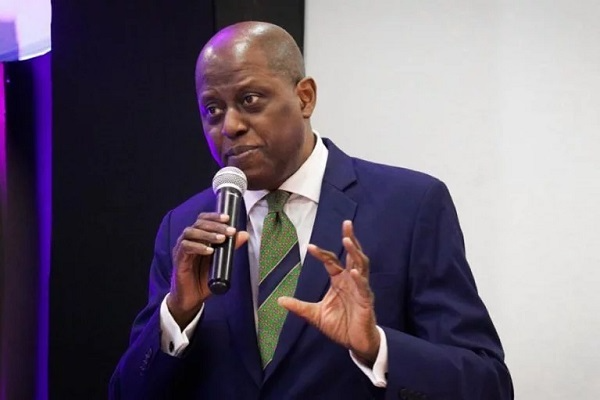
Nigeria, in the first 10 months of the year, recorded a total of $20.98 billion in foreign capital inflow, a 70 per cent rise over total inflows in 2024, governor of the Central Bank Nigeria (CBN), Olayemi Cardoso has revealed.
This is even as he said, $30 billion in potential investments is being reclaimed following Nigeria’s exit from the Financial Action Task Force (FATF) grey list.
Cardoso, in his keynote address at the 60th Annual Bankers’ Dinner on Friday said, the surge in investor confidence reflects the payoff of extensive macroeconomic reforms, disciplined monetary policy, and restored credibility in Nigeria’s financial system.
The CBN governor assured that Nigeria is entering 2026 with “renewed resilience, strengthened buffers, and improving fundamentals,” noting that the past year marked one of the most ambitious reform cycles in the nation’s recent history.
According to him, these reforms have reduced opacity and manipulation, and restored discipline to the market. “The naira now trades within a narrow, stable range. The once-substantial gap between the official and parallel markets has shrunk to under two per cent down from over 60 per cent.
“Foreign capital inflows reached $20.98 billion in the first ten months of 2025, a 70 per cent increase over total inflows for 2024 and a 428 per cent surge compared to the $3.9 billion recorded in 2023, reflecting a clear resurgence in investor confidence. Diaspora remittances have also strengthened with confidence returning to official channels following enhancements in transparency, settlement efficiency, and reporting.
“Remittances increased by approximately 12 per cent this year, and we expect this momentum to continue as the Non-Resident BVN, launched earlier this year, becomes more widely adopted in 2026. We are committed to maintaining the current flexible exchange-rate framework that allows the naira to act as a shock absorber while limiting excessive volatility.
“To strengthen this framework further, we will shortly be unveiling the revised FX Manual to expand market participation and tighten
documentation standards, enhance EFEMS surveillance, and ensure consistent implementation to avert possibility of policy reversal, “ he pointed out.
On Nigeria’s exit from the Financial Action Task Force (FATF) grey list, the CBN governor noted that, the milestone was the result of a coordinated national effort led by the Federal Government, with critical contributions from the CBN, the Ministry of Justice, the NFIU, the EFCC, and our regional partners.
He noted that ,“through stronger supervision, improved reporting standards, enhanced intelligence-sharing, and governance tools such as EFEMS and the FX Code, we addressed the deficiencies identified by FATF during its on-site assessment.
“Nigeria’s grey-listing carried a significant cost: countries in this category typically experience a 7.6 per cent of GDP drop in capital inflows in the first year, for Nigeria, that translates to more than $30 billion in potential investment. Exiting the list therefore signals a major restoration of confidence and eases compliance frictions for correspondent banks.”
Cardoso, highlighting Nigeria’s broader macroeconomic turnaround, pointed to inflation which has fallen from 34.6 per cent in November 2024 to 16.05 per cent in October 2025, marking seven consecutive months of disinflation.
Food inflation reduced to 13.12 per cent, down sharply from 21.87 per cent in August. He added that Nigeria recorded its strongest quarterly GDP growth in four years, expanding by 4.23 per cent in Q2 2025 on the back of stronger telecommunications, financial services and improved oil output.
On the banking sector, Cardoso affirmed that, the ongoing recapitalisation exercise is “firmly on schedule,” with 27 banks having raised capital and 16 already meeting or surpassing their required thresholds ahead of the March 31, 2026 deadline. Stress tests show the industry remains fundamentally sound even as regulators tighten cyber-risk oversight, credit-governance guidelines and operational discipline.
He noted that, Nigeria’s digital-finance transformation has accelerated, with over 12 million contactless payment cards in circulation and more than 40 fintech innovators operating within the CBN sandbox. He added that the country continues to lead the continent’s fintech landscape, serving as home to eight of Africa’s nine unicorns.
Looking ahead, Cardoso outlined six priorities for 2026, including strengthening the banking system, delivering durable price stability, expanding digital payments, fostering responsible fintech innovation, improving institutional capacity, and deepening regulatory and stakeholder collaboration. “Our mandate is clear,” he said. “Stability remains the bedrock on which investment flourishes, purchasing power is protected, and shared prosperity becomes possible.”
He reassured stakeholders that the CBN would maintain its disciplined approach to monetary policy, strengthen fiscal coordination, and continue deploying technology and analytics to ensure Nigeria’s economic reforms remain credible and irreversible.