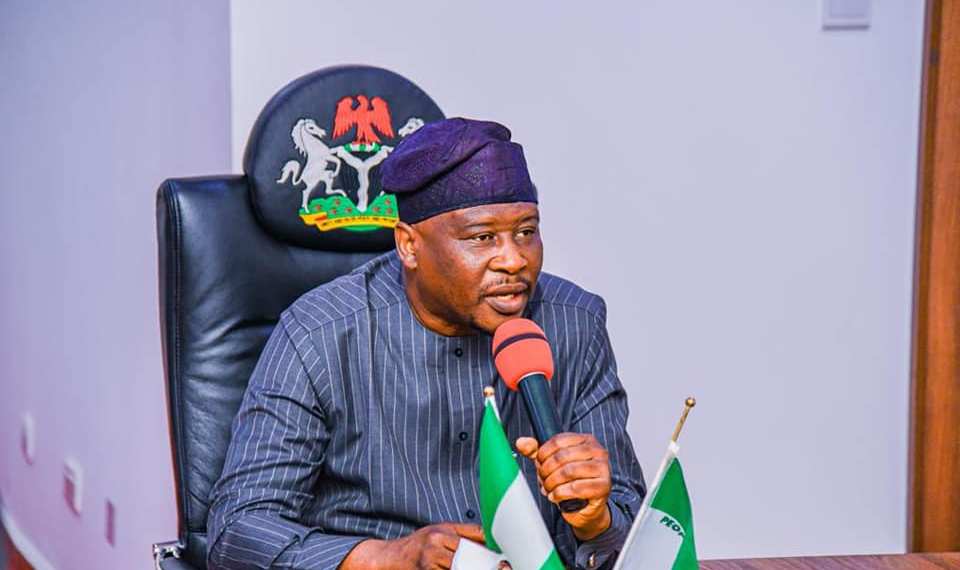
For Governor Ahmadu Umaru Fintiri, the conversation about representing Adamawa North in the Senate raises an important question: How can the experience, achievements, lessons and relationships accumulated through years of public service be translated into greater development for the people?
The answer lies in three fundamental responsibilities: consolidating achievements already recorded, addressing shortcomings and unfinished development priorities, and pursuing new opportunities through the institutions and resources of the Federal Government.
Fintiri’s political journey has taken him through the legislative and executive arms of government. From serving as a member and Speaker of the Adamawa State House of Assembly to becoming Acting Governor and subsequently Executive Governor in 2019, he has acquired experience across different dimensions of governance.
That background provides a basis for examining what he could contribute to the National Assembly, particularly in legislative engagement, executive oversight, intergovernmental cooperation and constituency representation.
The transition from Governor to Senator would not simply be a change of political office. It would represent a shift from managing the development priorities of an entire state to advancing the interests of Adamawa North through federal legislation, oversight, advocacy and institutional engagement.
Fintiri’s senatorial aspiration is the opportunity to consolidate the development programmes undertaken during his administration. Since assuming office in 2019, the Fintiri administration has pursued interventions in road infrastructure, education, healthcare, rural development, agricultural support, human capital development and public service delivery.
These initiatives have extended to communities across Adamawa North, comprising Mubi North, Mubi South, Maiha, Michika and Madagali, collectively known as the M5.
However, development is a continuous process. Constructing a road is one achievement; ensuring its maintenance, economic usefulness and connection to wider transportation networks is another. Building schools is important, but sustaining educational quality, improving teaching standards and expanding access to opportunities remain essential.
The same principle applies to healthcare facilities, water infrastructure, agricultural interventions and community development.
At the Senate, Fintiri would have the opportunity to pursue federal support for programmes that complement existing state investments, while working with relevant institutions to address remaining development gaps.
No administration, regardless of its achievements, can reasonably claim to have solved every problem or met every expectation.
Good governance requires more than celebrating accomplishments. It also demands the willingness to recognise shortcomings, evaluate policy outcomes, acknowledge areas where expectations were not fully met and pursue corrective measures.
For Fintiri, a senatorial role would offer another opportunity to reflect on the successes and limitations of his administration and advocate solutions to challenges that remain unresolved.
Communities still requiring improved road access, stronger healthcare services, educational facilities, employment opportunities, agricultural support and reliable infrastructure deserve continued attention.
Some challenges may require better implementation at the state level. Others demand federal investment, stronger legislation, improved coordination or sustained institutional engagement.
A credible senatorial agenda should therefore identify unfinished projects, evaluate development gaps and establish measurable priorities for the five local government areas.
The objective should not be to defend every decision of yesterday, but to preserve what worked, correct what did not and improve outcomes for tomorrow.
The Nigerian Senate is more than a chamber for debating bills and passing resolutions. It is an important institution for national policymaking, legislative oversight, public accountability and engagement with the Federal Government.
Fintiri’s experience as Governor has involved interactions with federal institutions, fellow governors, national political leaders, development partners and other stakeholders.
These professional and political relationships could provide opportunities for collaboration, although their value would ultimately depend on how effectively they are translated into concrete outcomes.
For Adamawa North, the relevant opportunities include federal infrastructure investment, agricultural development, educational support, healthcare improvements, economic initiatives and stronger engagement with ministries, departments and agencies.
A Senator’s influence is measured not merely by access to influential personalities, but by the quality of legislation, effectiveness of oversight, strength of advocacy and tangible benefits secured through lawful institutional processes.
Security remains a critical development concern in Adamawa North, particularly in communities that have experienced the devastating consequences of insurgency and displacement.
As Governor, Fintiri has participated in security coordination and recovery efforts involving affected communities, security agencies and relevant government institutions.
His experience provides a perspective on the relationship between security, humanitarian recovery, infrastructure, economic opportunity and lasting peace.
In the Senate, that experience could inform contributions to national debates on counterinsurgency, border security, rehabilitation of affected communities, reconstruction and sustainable peacebuilding.
For communities in Madagali, Michika, Maiha, Mubi North and Mubi South, security is not merely a national policy question. It is directly connected to farming, trade, education, investment and everyday livelihoods.
Roads and physical infrastructure are important, but the long-term prosperity of Adamawa North will also depend on its people.
The Fintiri administration has placed emphasis on education, youth empowerment, women’s development and social support programmes.
At the federal level, further opportunities exist through educational institutions, technical and vocational training, entrepreneurship programmes, agricultural financing, scholarships and skills-development initiatives.
A future senatorial programme could focus on connecting qualified young people and women across M5 to these opportunities through transparent, accessible and equitable processes.
Particular attention would be needed for rural communities and groups that have historically faced barriers to participation.
The measure of progress should not simply be the number of programmes announced, but the number of people who acquire useful skills, secure sustainable livelihoods and improve their economic circumstances.
Constitutionally, a Senator elected from Adamawa North represents that senatorial district. However, national legislation and federal policy decisions frequently have implications beyond constituency boundaries.
Fintiri’s experience governing all 21 local government areas of Adamawa State could inform his contributions to matters affecting the wider state.
His knowledge of the state’s agricultural potential, infrastructure requirements, educational needs, economic challenges and development priorities would be relevant when considering federal policies.
Such a role would also require cooperation with other Senators, members of the House of Representatives, the Adamawa State Government and relevant federal institutions.
Effective representation of Adamawa North and constructive engagement on issues affecting the entire state are complementary responsibilities.
Every generation of political leadership inherits achievements, challenges and responsibilities from those who came before it.
The contributions of previous Senators representing Adamawa North form part of the district’s political and development history.
Any future representation should build on worthwhile initiatives, acknowledge areas where progress was limited and respond to changing circumstances.
Yesterday provides lessons from previous legislative representation and development efforts.
Today demands attention to infrastructure, security, livelihoods, education, healthcare, agricultural productivity and the immediate concerns of communities.
Tomorrow requires long-term investments in young people, economic diversification, institutional capacity and sustainable development.
The discussion surrounding Ahmadu Umaru Fintiri’s senatorial aspiration is ultimately a discussion about continuity, improvement and the future development of Adamawa North.
We’ve got the edge. Get real-time reports, breaking scoops, and exclusive angles delivered straight to your phone. Don’t settle for stale news. Join LEADERSHIP NEWS on WhatsApp for 24/7 updates →
Join Our WhatsApp Channel