The federal government has said the First Niger Bridge linking Anambra and Delta States is expected to reopen to traffic next week, subject to the completion of major rehabilitation works.
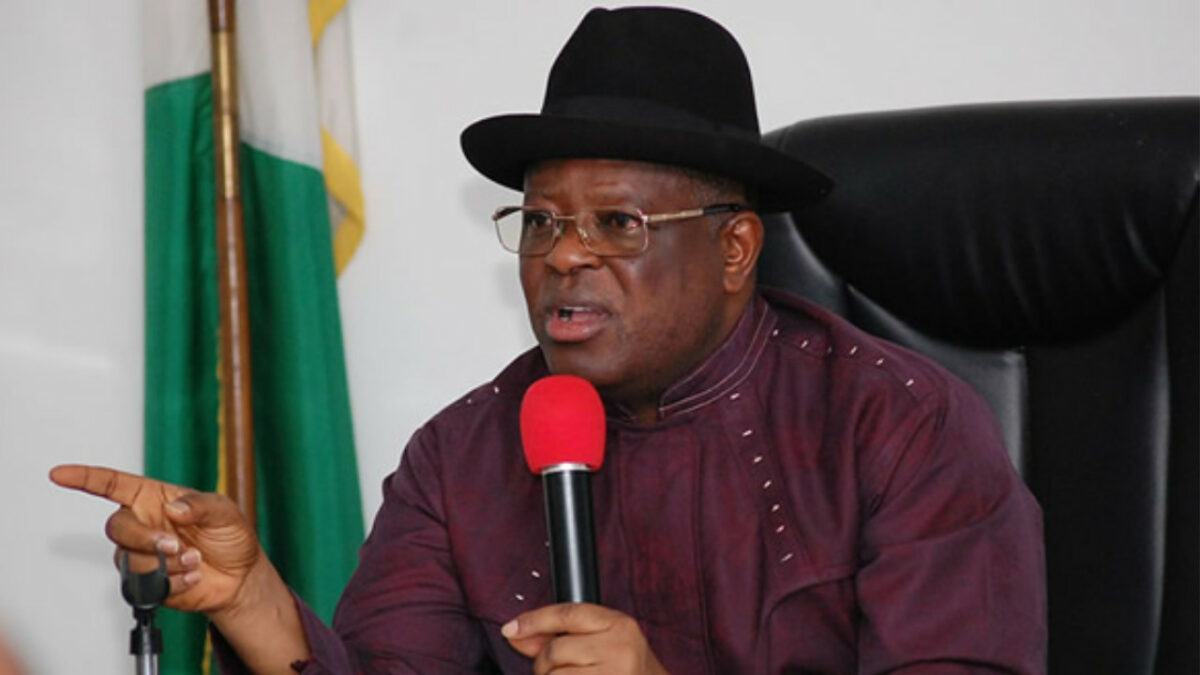
Minister of Works, David Umahi, gave the indication on Wednesday after inspecting the ongoing repairs at the Onitsha Bridge Head.
The bridge was shut to traffic earlier this month following the discovery that vandals had removed critical structural components, including bolts, nuts and sections of the expansion-joint steelwork.
The closure, which was initially scheduled to end on September 21, was extended by one week after persistent rainfall disrupted the rehabilitation work. The revised reopening date had been set for September 28, subject to favourable weather and completion of the repairs.
Umahi said the contractor, SKECC, had made considerable progress, noting that the vandalised bolts had been replaced and properly secured.
He added that the specialised expansion joint removed by vandals had been manufactured and flown into the country for installation.
While commending the work completed within about 10 days, the minister said the bridge would not be reopened until the necessary structural repairs had been satisfactorily completed.
“We are not going to be stampeded to open the bridge until the major structural work has been achieved,” Umahi said.
Umahi also directed the contractor to carry out additional work on the bridge, including repainting its structural components, caps and internal carriageway sections.
He ordered the removal of illegal advertisements mounted on the facility and directed the installation of additional solar-powered streetlights.
The minister further directed the completion of CCTV cameras on the bridge, with the surveillance system to be connected to the Second Niger Bridge.
He also ordered an empirical assessment of the bridge’s structural elements above and below the water level to determine their condition.
According to him, the assessment report must be submitted before the current phase of rehabilitation is concluded.
On the approach roads, Umahi directed a review of the proposed asphalt works, saying concrete should be used on sections that are likely to be reconstructed in the future.
He explained that the measure would prevent public funds from being spent on asphalt that could later be removed during reconstruction.
The minister added that one carriageway could be opened once the concrete attained the required strength, while rehabilitation work continued on the other carriageway.
Meanwhile, Delta State Commissioner for Works, Rural Roads and Public Information, Charles Aniagwu, commended the Federal Government for the pace and quality of the rehabilitation.
Aniagwu recalled that Umahi had inspected the bridge on August 28 and subsequently directed the replacement of the vandalised bolts, nuts and expansion-joint components.
He said the directives had been implemented, adding that damaged sections of the asphalt surface had also been removed and replaced.
“We are pleased with the speed of work. We also appreciate our people who demonstrated a whole lot of patience to understand that you are after their safety,” Aniagwu said.
The commissioner said the rehabilitation had significantly improved the condition of the bridge and expressed confidence in the durability of the work.
He also commended motorists and other road users for their cooperation, saying their patience had contributed to the smooth execution of the rehabilitation.
We’ve got the edge. Get real-time reports, breaking scoops, and exclusive angles delivered straight to your phone. Don’t settle for stale news. Join LEADERSHIP NEWS on WhatsApp for 24/7 updates →
Join Our WhatsApp Channel