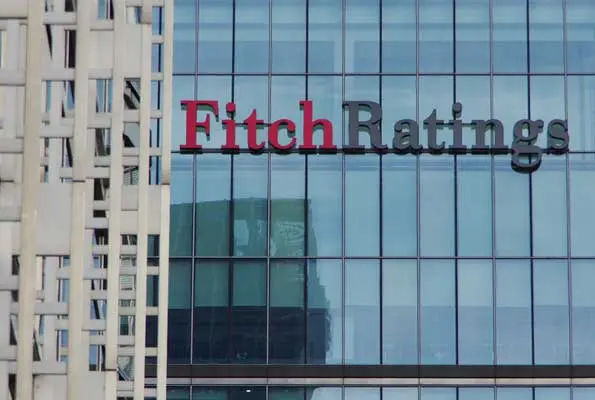
Fitch Ratings has affirmed Angola’s Long-Term Foreign-Currency Issuer Default Rating at ‘B-’ with a Stable Outlook, citing improving external buffers, declining government debt and expectations of stronger oil revenues in 2026.
In its latest sovereign rating, Fitch said Angola’s credit profile remains constrained by weak governance indicators, elevated inflation, heavy dependence on oil exports and a high share of foreign currency-denominated public debt.
Fitch noted that these challenges are being mitigated by sustained current account surpluses, international reserves above peer averages and a steadily improving debt position.
“Angola’s ratings reflect weak governance indicators, high inflation, high levels of foreign-currency-denominated government debt and one of the highest commodity dependencies among Fitch-rated sovereigns,” the agency said.
It added that these constraints are “balanced by current account surpluses and international reserves above peer medians and a declining government debt ratio.”
Fitch said the Stable Outlook indicates that upside and downside risks to the country’s credit profile are broadly balanced. “The Stable Outlook reflects our view that risks to the ratings are broadly balanced,” the agency stated.
According to Fitch, higher global oil prices could boost government revenues and strengthen fiscal and external buffers, but this positive outlook could be undermined by pre-election spending pressures and uncertainty surrounding a projected recovery in oil production.
“Higher oil prices could generate windfall revenues, supporting fiscal consolidation and external buffers, but this upside is offset by the risk of expenditure slippage, particularly in the context of approaching elections,” the report noted.
Fitch projected that Angola’s international reserves will increase in 2026 despite significant external debt repayments estimated at between three and four per cent of gross domestic product through 2027.
The agency said reserves were broadly stable in 2025 and stood at the equivalent of 6.2 months of current external payments, well above the median of 4.3 months for countries rated in the ‘B’ category.
It also expects Angola’s current account surplus to widen sharply in 2026 from 0.4 per cent in 2025, driven by higher oil prices and increased production as new oilfields begin operations.
On fiscal performance, Fitch estimated that Angola’s general government deficit stood at 4.5 per cent of GDP in 2025, but said this would narrow significantly in 2026 as stronger oil receipts and improved tax administration lift revenues. “Non-oil tax revenues are projected to reach 5.5 per cent of GDP in 2026, aided by revenue administration improvements,” the agency said.
Fitch further projected that Angola’s debt burden will continue to decline, falling from 51 per cent of GDP at the end of 2025 to below 46 per cent in 2026. “Government debt is projected to decline below the projected ‘B’ median from 2026,” the agency stated.
The ratings firm also highlighted Angola’s successful return to international capital markets following the issuance of a dual-tranche $2.5 billion Eurobond in March 2026, accompanied by a partial buyback of its $1.75 billion 2028 Eurobond.
According to Fitch, the transaction, together with support from multilateral lenders and other financing instruments, will help reduce reliance on the more expensive domestic debt market and improve the country’s debt profile.
On political risks, Fitch warned that the 2027 presidential election presents a key source of uncertainty, particularly as President João Lourenço is constitutionally barred from seeking a third term.
“The electoral landscape is increasingly competitive following the narrow 2022 result,” the agency noted, adding that concerns over electoral integrity and social unrest could trigger higher government spending ahead of the polls
We’ve got the edge. Get real-time reports, breaking scoops, and exclusive angles delivered straight to your phone. Don’t settle for stale news. Join LEADERSHIP NEWS on WhatsApp for 24/7 updates →
Join Our WhatsApp Channel