
Stakeholders and organised private sector operators (OPS) are urging the federal government, state governments and MDAs to collaborate on long-term flood management strategies, including improved drainage infrastructure, regular desilting of waterways, enforcement against illegal construction on flood channels and expanded access to affordable insurance for businesses.
For many entrepreneurs and MSMEs already grappling with high energy costs, inflation, foreign exchange volatility, and elevated borrowing costs, the annual destruction caused by flooding has become yet another expensive obstacle threatening business survival and Nigeria’s broader economic growth.
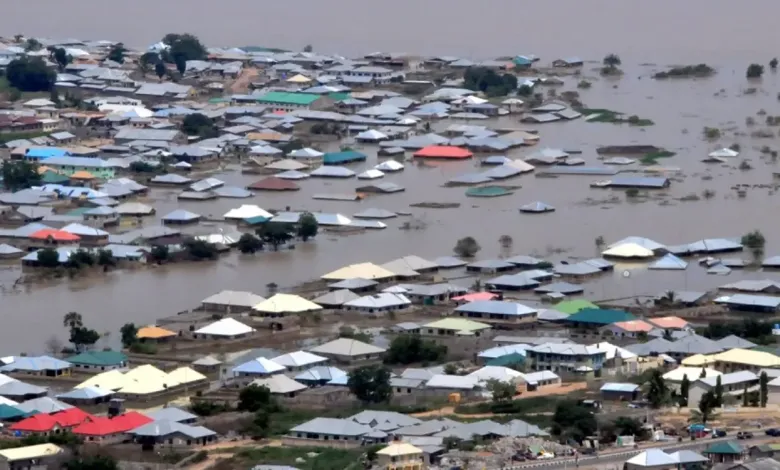
The devastating floods sweeping across parts of Nigeria are taking a heavy toll on small and medium-sized enterprises (SMEs), warehouses and manufacturing firms, with industry stakeholders warning that the disaster could trigger fresh supply chain disruptions, product shortages and higher consumer prices if urgent mitigation measures are not implemented.
From submerged warehouses and damaged production equipment to destroyed inventories and interrupted logistics, businesses say the economic consequences of the flooding extend far beyond immediate physical damage, threatening jobs, investment and the country’s fragile manufacturing recovery.
Manufacturers and business operators argue that while flooding has become an annual occurrence in many parts of the country, inadequate drainage infrastructure, poor urban planning, and the increasing impact of climate change continue to expose businesses to avoidable losses.
Speaking on the development, the director-general of the Manufacturers Association of Nigeria (MAN), Segun Ajayi-Kadir, said flooding has become a major operational risk for manufacturers, particularly those located in industrial clusters vulnerable to heavy rainfall.
According to him, beyond destroying assets, flooding disrupts production schedules, damages raw materials and finished goods, increases maintenance costs, and weakens manufacturers’ ability to meet delivery timelines.
“Many manufacturing facilities rely on uninterrupted logistics and stable infrastructure. Whenever floods cut off access roads or inundate industrial premises, production slows or stops completely. The financial implications are enormous because damaged inventories, idle machinery and delayed deliveries translate directly into revenue losses,” he said.
Ajayi-Kadir stressed that the impact eventually reaches consumers through rising prices, as businesses struggle to recover mounting operational costs.
He called for stronger investment in flood-control infrastructure around industrial estates, improved drainage systems, and stricter enforcement of physical planning regulations to reduce future losses.
Echoing similar views, the National Vice President of the Nigerian Association of Small and Medium Enterprises (NASME), Dr Abdulrashid Yerima, said SMEs are particularly vulnerable because most lack insurance coverage and emergency recovery funds.
“Many small businesses operate on very thin margins. A single flood incident that destroys inventory or business equipment can wipe out years of investment,” he said.
According to Yerima, many neighborhood businesses including retail outlets, food processing firms, fashion enterprises and small manufacturers have suffered severe losses due to floodwater entering their business premises.
“Unlike large corporations that may have contingency plans, many SMEs simply cannot recover quickly after disasters. Some eventually close permanently because they lack access to affordable financing for rebuilding,” he added.
He urged financial institutions to introduce climate-risk financing and emergency intervention facilities for businesses affected by natural disasters.
Warehouse operators are also reporting growing concerns over inventory losses as prolonged rainfall continues across several states.
Chief Executive Officer of a Lagos-based logistics and warehousing company, Simon Ndudi, said businesses are spending significantly more on flood prevention measures, including elevated storage systems, water pumps and reinforced drainage around warehouse facilities.
“Even with preventive measures, once floodwater enters a warehouse, the losses can be massive. Food products, pharmaceuticals, electronics, packaging materials and other sensitive goods become unsellable. In many cases, businesses also incur additional costs disposing of damaged products,” he said.
He noted that transport disruptions caused by flooded roads further delay deliveries and increase distribution costs across supply chains.
Economic analysts say repeated flooding is gradually becoming an important inflationary risk because damaged agricultural produce, manufacturing inputs and finished goods ultimately reduce market supply.
On his part, chief executive Officer of the Centre for the Promotion of Private Enterprise (CPPE), Dr. Muda Yusuf, said the economic implications of flooding go beyond environmental concerns.
“Flooding affects production, distribution and market access simultaneously. When factories cannot produce, warehouses lose inventory and transport networks become impassable, the result is reduced supply and increased costs across multiple sectors of the economy,” Yusuf explained.
He added that businesses eventually pass part of these additional costs to consumers through higher prices.
According to him, repeated climate-related disruptions reinforce the need for greater investment in resilient infrastructure, better urban planning and stronger disaster preparedness.
Industry experts also expressed concern over the growing vulnerability of industrial facilities located within flood-prone areas, noting that many factories were originally established decades ago when weather patterns were less extreme.
They warned that unless businesses increasingly integrate climate-risk assessments into investment decisions, annual flooding could continue eroding profitability and discouraging industrial expansion.
Beyond direct business losses, manufacturers warn that prolonged disruptions could affect employment, as companies facing declining revenues may be forced to scale down operations or delay expansion plans.
Meanwhile, national president of Association of Small Business Owners of Nigeria (ASBON), Dr Femi Egbesola urged insurance and pension managers to deepen microinsurance penetration for Small and Medium Enterprises (SMEs), pointing out that over 98% of small businesses lack cover due to high operational costs, slow claims, and low trust.
He added that many SMEs whose businesses are uninsured will face mounting business closure due to the devastating impact of the flood.
We’ve got the edge. Get real-time reports, breaking scoops, and exclusive angles delivered straight to your phone. Don’t settle for stale news. Join LEADERSHIP NEWS on WhatsApp for 24/7 updates →
Join Our WhatsApp Channel