
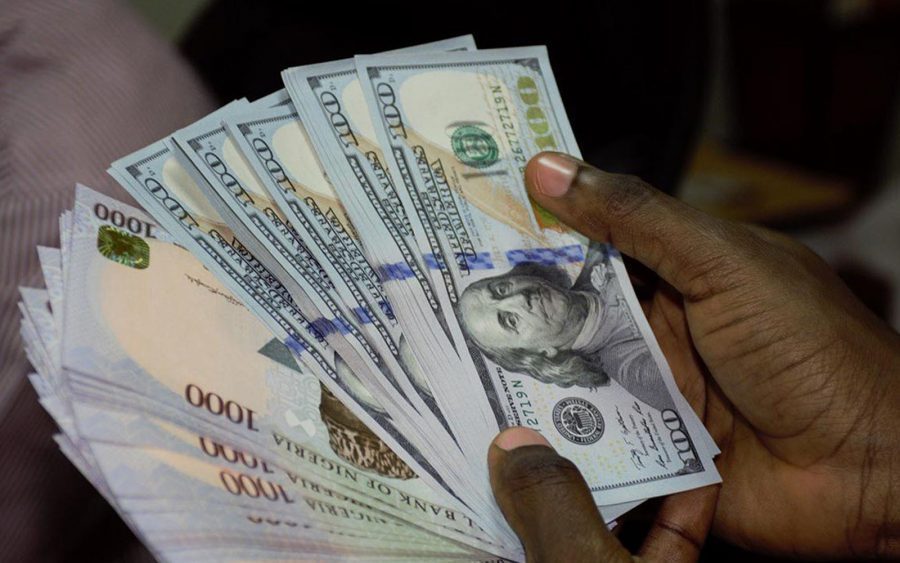
Total inflows into the Nigerian Foreign Exchange Market (NFEM) climbed to a five-month high of $4.36 billion in July, driven largely by increased interventions by the Central Bank of Nigeria (CBN) and stronger participation from local sources, according to the latest data from FMDQ.
The data indicated that total inflows rose by 31.9 per cent month on month from $3.31 billion recorded in June, with local sources accounting for 66.7 per cent of total market inflows during the period.
According to the report, inflows from local sources surged by 79.8 per cent to $2.91 billion in July, compared to $1.62 billion in the preceding month. The sharp increase was attributed to a significant rise in CBN interventions, which expanded by about 11.8 times month on month, alongside a 31.9 per cent increase in inflows from non-bank corporates.
The gains, however, were partly moderated by weaker inflows from individuals, which declined by 54 per cent, and exporters, whose contributions fell by 12.9 per cent during the review period.
In contrast, inflows from foreign sources weakened by 13.9 per cent to $1.45 billion from $1.69 billion recorded in June, reflecting softer foreign portfolio investment (FPI) and lower inflows from other corporate investors.
FPI inflows dropped by 18.5 per cent, largely due to a 53.2 per cent decline in equity investments and a 16.1 per cent reduction in fixed income investments. Similarly, inflows from other corporate investors fell by 48.4 per cent.
However, foreign direct investment (FDI) inflows posted a remarkable rebound, rising by 388.3 per cent during the month, helping to cushion the broader decline in foreign inflows.
Despite improved market liquidity, the naira came under mild pressure at the end of last week, depreciating by 0.5 per cent week on week to close at N1,369.09 per United States dollar, as existing forex supply was outweighed by local demand.
Nigeria’s gross external reserves also recorded their first weekly decline in three months, falling by $107.73 million to $51.92 billion as of July 30, 2026.
Similarly, the domestic currency weakened across most forward contracts. The one-month forward rate depreciated by 0.2 per cent to N1,392.17 per dollar, while the three month and six-month contracts declined by 0.5 per cent and 0.1 per cent to N1,430.46 and N1,484.50 per dollar, respectively. The one-year forward contract remained unchanged at N1,592.05 per dollar.
Analysts at Cordros Research said they expect the naira to remain broadly stable in the near term, supported by resilient portfolio inflows, sustained investor confidence, and Nigeria’s widening current account surplus.
The analysts also projected that foreign exchange inflows from both local and foreign sources would remain resilient, backed by continued market confidence and attractive carry trade opportunities.
They, however, cautioned that lingering global uncertainties, particularly geopolitical tensions, could keep foreign investors cautious and moderate the pace of growth in foreign exchange liquidity.
We’ve got the edge. Get real-time reports, breaking scoops, and exclusive angles delivered straight to your phone. Don’t settle for stale news. Join LEADERSHIP NEWS on WhatsApp for 24/7 updates →
Join Our WhatsApp Channel