

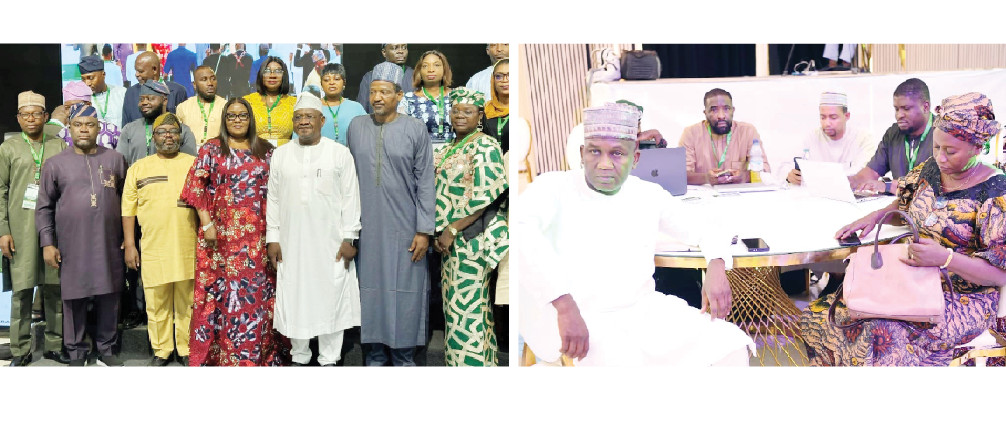
At a time when Nigeria’s economic direction is shaped by reforms, adjustments and cautious optimism, policymakers are shifting focus from policy formulation to measurable outcomes.
This renewed emphasis on performance took centre stage in Jalingo, Taraba State, where the Federal Ministry of Finance convened a high-level retreat to strengthen fiscal governance and entrench results-based public administration.
The two-day retreat, between 31st March to April 2nd, 2026, which held at the Banquet Hall of TY Danjuma House, brought together senior officials of the ministry, its agencies, and key policy drivers from across the country, for the 2026 Central Results Delivery Coordination Unit (CRDCU) framework.
The retreat with the theme, “Consolidating the Achievements of the Eight Presidential Priorities: The Role of the Federal Ministry of Finance in Results Delivery,” underscored a broader national push to institutionalized accountability, efficiency and measurable performance in public sector management.
Far from a routine government meeting, the retreat focused on transitioning from performance measurement to tangible results, reviewing and validating 2026 ministerial deliverables, as well as setting key performance indicators (KPIs) and quarterly and annual targets.
The participants during the retreat also examined 2025 high-impact deliverables, drawing lessons to shape 2026 outcomes, while sessions on CRDCU reporting frameworks highlighted the need for verifiable data, structured templates, and evidence-based reporting.
The convergence comes at a critical period for Nigeria’s economy, which continues to grapple with global uncertainties, fluctuating revenues, and the socio-economic impact of ongoing reforms.
Against this backdrop, the Jalingo retreat was widely viewed as a strategic intervention, aimed at strengthening economic management and improving citizens’ welfare.
Declaring the retreat open, Governor Agbu Kefas, who was represented by the Secretary to the State Government (SSG), Chief Barr. Gebon T. Kataps, reaffirmed the state government commitment to aligning with federal fiscal reforms.
He stressed that sub-national governments must play a proactive role in translating national policies into tangible development outcomes, noting that economic recovery requires stronger synergy between federal and state actors, particularly in budgeting, revenue generation and expenditure management.
At the heart of the discussions was the concept of results-based governance, an approach that prioritises outcomes over intentions.
For decades, Nigeria’s public sector has been criticised for being input-driven, where success is measured by budget size rather than impact.
The CRDCU, a strategic institution driving this shift, is mandated to track performance, coordinate delivery across ministries and to ensure that government programmes translate into visible improvements in citizens’ lives.
Officials emphasised that the Federal Ministry of Finance, as the custodian of fiscal policy and public financial management, plays a pivotal role in this transition. Beyond policy design, the ministry is now under increasing pressure to ensure effective implementation, monitor outcomes and sustain economic gains.
While there is cautious optimism that the recent reforms, particularly in revenue optimisation, expenditure control and debt management are yielding results, participants however acknowledged the short-term hardships these measures have imposed on citizens.
Discussions further highlighted the need to strike a delicate balance between reform and social protection, with stakeholders calling for policies that stabilise the economy while cushioning vulnerable populations. Institutional strength also emerged as a recurring theme, with participants stressing that effective governance depends not only on policies but on the systems that drive implementation.
The CRDCU was identified as a critical mechanism for bridging the gap between policy promises and real-world outcomes through performance tracking, verification and accountability.
In depending Sectorial participation, deliberations at the retreat was also extended to key sectors including agriculture, energy, infrastructure and social services, where emphasis was placed on programme evaluation, impact assessment and beneficiary verification to ensure that interventions reach intended targets.
The retreat also spotlighted the role of oversight institutions in promoting transparency and fiscal discipline, even as participants underscored the importance of compliance with revenue remittance frameworks, adherence to budgetary provisions and robust auditing systems as essential tools for rebuilding public trust and ensuring value for money.
Beyond the technical sessions, informal engagements added depth to the discussions at the banquet hall, where a gala night hosted by the Taraba State Government provided an avenue for networking and candid interactions among policymakers, fostering consensus and alignment on key policy directions.
As Nigeria continues its pursuit of economic stability and sustainable growth, the emphasis on results-driven governance is expected to intensify.
To say The least, the Jalingo retreat signals a clear shift in mindset, one that prioritises delivery, accountability and measurable impact.
For Taraba State, hosting the retreat reinforces its role as an active participant in national economic reforms, while the Federal Government’s commitment to bridging the gap between policy and performance remains evident.
Ultimately, the success of these efforts will not be measured by the number of meetings held, but by the extent to which they translate it into improved living standards for Nigerians.
We’ve got the edge. Get real-time reports, breaking scoops, and exclusive angles delivered straight to your phone. Don’t settle for stale news. Join LEADERSHIP NEWS on WhatsApp for 24/7 updates →
Join Our WhatsApp Channel
